
WHO GETS TO CALL HIM KING
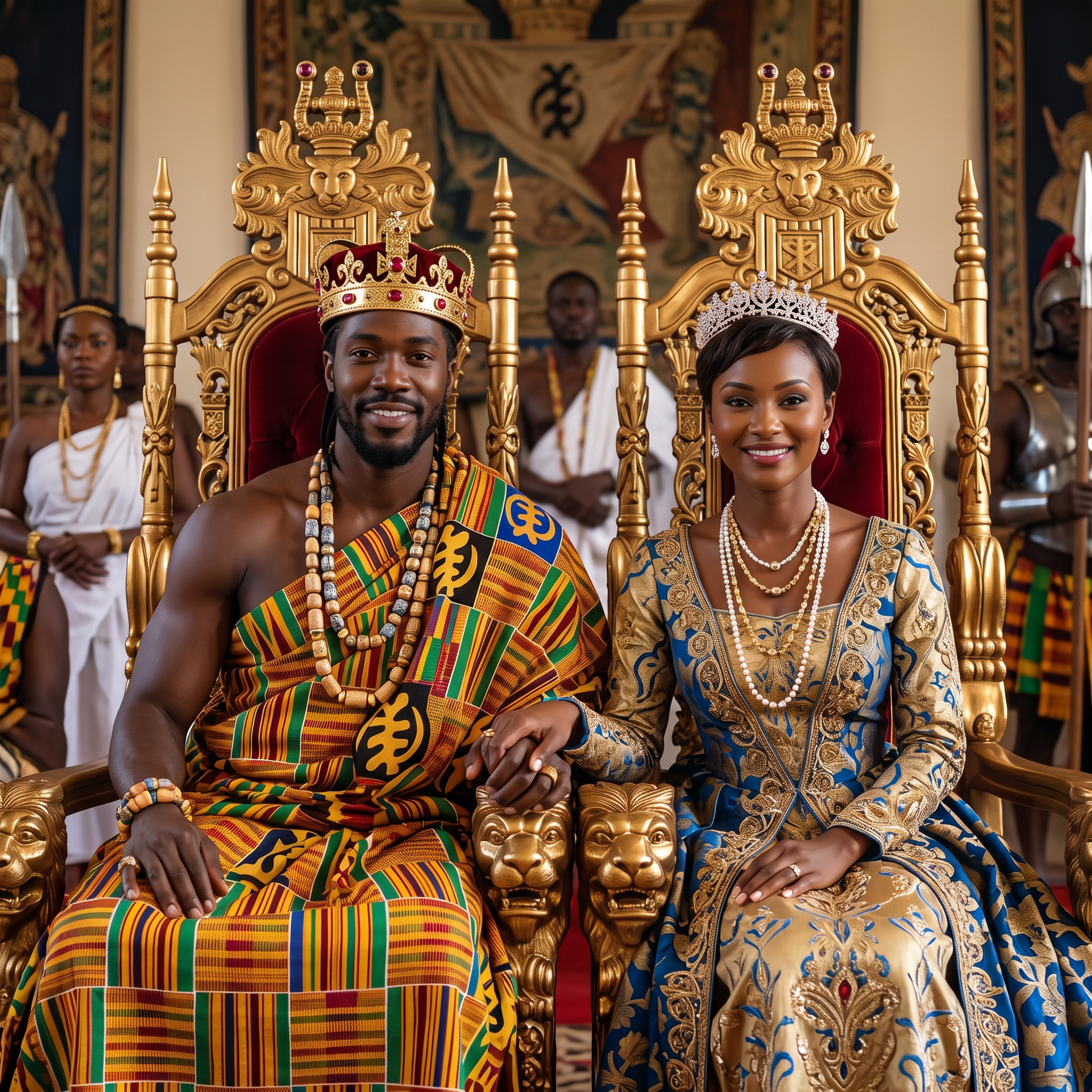
Dr. Spirit Ashaia Davis and Dom sit side by side on ornate gold thrones beneath a crowned lion crest, sure of themselves before they're sure of each other. From the slowburnlove.com romance series Spirit and Dom WHO GETS TO CALL HIM KING blog post.
A woman named Lindsay Clancy stood trial for strangling her three children, five year old Cora, three year old Dawson, and eight month old Callan. Her defense leaned on postpartum psychosis and a dangerous mix of prescribed medication. The jury deliberated for close to forty hours and came back deadlocked, eleven to one. Eleven jurors wanted to acquit her by reason of insanity.
One did not. A Black man.
He was the one Black juror on an otherwise all white panel. When that fact came out on live television, a CBS host visibly stalled out trying to process it. I felt it was unnecessarily overdramatic, but her reaction became its own news cycle. People online ran with the moment and turned him into a hero overnight, a lone man standing against eleven white jurors who allegedly pressured him for a week to fold. One white woman commentator went so far as to call him a "Black King."
And that. Do white women really know what they are saying when they call a Black man a "Black King"? Because in this instance, it is highly questionable.
Court documents and family interviews revealed this "King" has a history of domestic violence allegations, including a 2021 charge for assaulting his wife that his own thirteen year old nephew called 911 to report. There's a pending eviction. There's an active restraining order that nephew later took out against him, one he was apparently carrying while he sat in that jury box judging someone else's fitness as a parent and a person.
Don't get me wrong, I doubt I would have given her not guilty by reason of insanity either. What I do know is I could never imagine choking my own children in my right mind. Massachusetts jury questionnaires ask directly whether you've been arrested or served with a court order. Either he didn't check those boxes or the system didn't bother to check, and either way it was a miscarriage of the legal system's administrative ability.
Then there's the issue of “white women’s tears”. A dynamic where at times white defendants facing serious charges receive immense public and medical empathy, postpartum psychosis defenses among them, while Black defendants rarely get offered that same systemic understanding. And it was as if the Black juror was being punished for refusing to go along with what everyone expected.
A Black man in a room full of white people trying to talk him out of holding a woman accountable for killing her own children is a compelling image. It taps into the exhaustion of being the only one in the room, the pressure to fold just to keep the peace.
Then, the rush to crown him as King.
But where in the world does that negate his alleged previous behavior? The whole situation almost sounds like an opportunity for him to be abusive toward a woman again, just with a guilty verdict attached to it instead of his own hands. We didn't know anything about who he actually is, what he carried into that jury room, or what he'd done in his own home. We built a hero out of one act of strength or defiance without asking what the story behind it actually was.
Who gets to call him King
When Black women speak of a Black man being a King, we're speaking from lineage, a language built by people who have had to define kingliness for ourselves because nobody was handing it to us. That word carries history. It carries expectation. It carries accountability, because a King in our tradition isn't just a man who won't back down, he's a man who protects and provides and tells the truth even when it costs him his throne.
A white woman borrowing that word to score a point in a news cycle is performing. It's that same energy as a white woman I've never met calling me "girl" like we've got some kind of shared history. You don't get to reach into a culture, grab the parts that sound good, and drape them over a man you know nothing about because it plays well for likes. If you don't know what the word “King” costs, you shouldn't be handing it out.
And honestly, if she had known what a Black King really is, she wouldn't have used it here at all. Most of us know exactly what we mean when we say it, and it has nothing to do with defiance for its own sake. A Black King represents community, not the self. The woman on trial was not community. She was white, which makes it even more interesting that a white woman would be the one calling him a king in this particular instance.
Because if his allegations are true, how did a man with an active restraining order and a dismissed assault charge end up seated on a jury deciding someone else's fate, then get handed a crown before anyone thought to check? We are quick to defend Black men in the moment, sometimes before we know the full story, because we know how often the story gets twisted against us as Black people. But sometimes that instinct means we skip past the red flags right in front of us and end up enabling their bad behavior instead. What actually matters is what a Black man does when nobody is watching.
What a Black King actually means
A man who shows up consistently, not just in a single dramatic moment
A man who protects the people closest to him instead of harming them
A man who can be corrected without collapsing into ego or rage
A man who takes care of his responsibilities, his children, his home, his word
A man whose strength is measured by what he builds and holds together, not by what he refuses to give an inch on
What a Black King means for Black women
Speaking to him with the same respect you want reflected back, especially in front of other people
Trusting him with responsibility and letting him carry it instead of managing him out of every decision
Acknowledging what he does right out loud, not just naming what he gets wrong
Standing with him publicly the way you'd want him standing with you
Giving him room to be honest, even when the truth is inconvenient, instead of punishing vulnerability