
THIS WEEK TOLD ON US
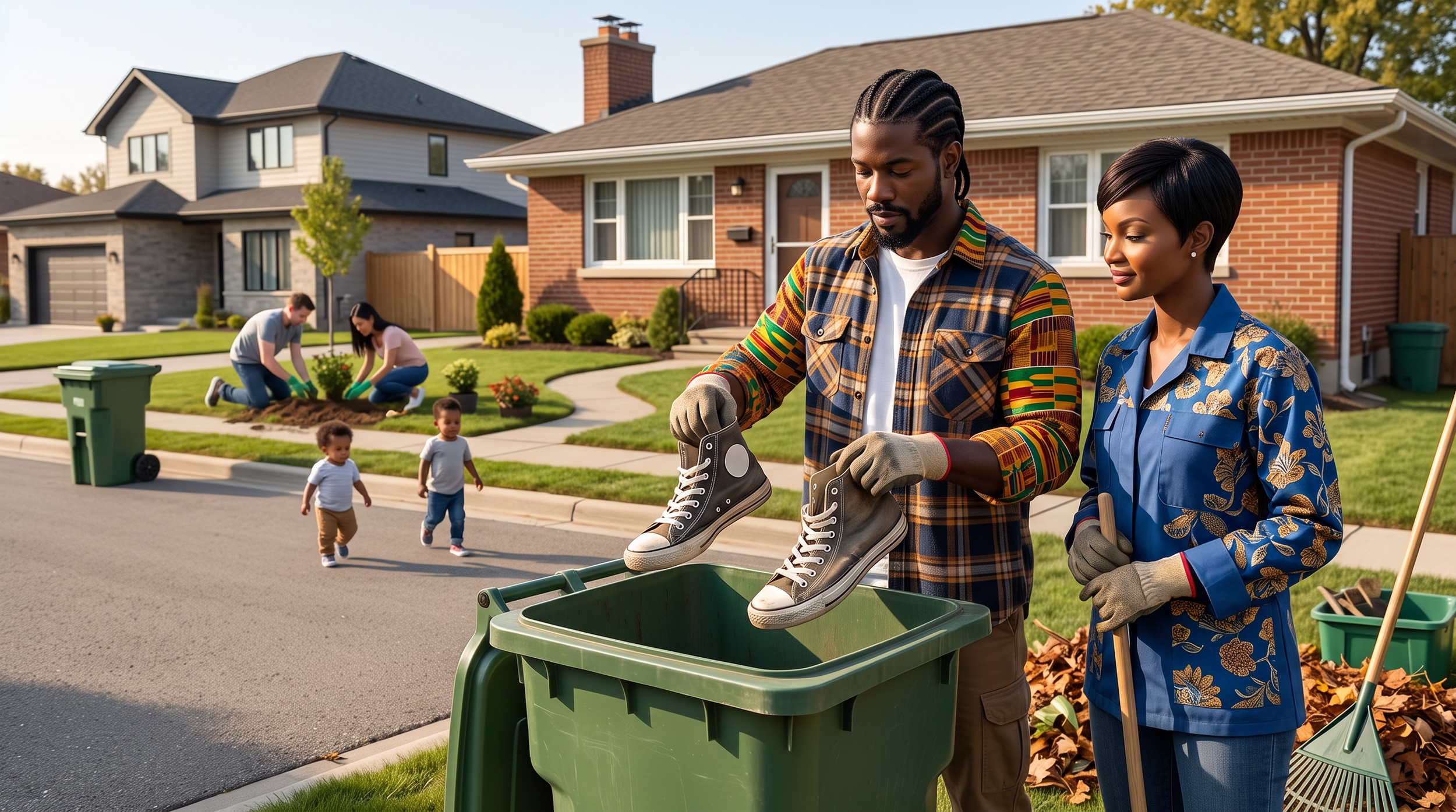
This Week Told On Us Dr. Spirit Ashaia Davis and Dom throw away a pair of black high-top sneakers. Behind them, two small children running down the sidewalk nearby unsupervised. The scene contrasts the couple's close attention to the sneakers against the trouble happening in the neighborhood backdrop.
Some weeks hand you a theme whether you asked for one or not. This week it was mirrors. Corporate mirrors, interpersonal mirrors, and the kind of mirrors we hold up to each other in community when we're honest enough to look.
Converse and the hood
By now you've probably seen it. Converse ran a campaign photo for the Chuck 70 X collection featuring K-pop star Karina, and the lighting on her white skirt created a silhouette – intentionally or unintentionally - that a lot of people immediately clocked as a Klan hood, with the sneakers she held dangling above it reading like the feet of someone hanging from a tree. Then a second image surfaced from the brand's Malaysia account, this one from a separate Converse x Palmes campaign, showing a man climbing a ladder toward shoes hanging from a tree branch while someone else watched from a distance. Two campaigns, two teams, two continents, and somehow both landed on the same nightmare shape.
Converse apologized. Pulled the ads. Said the standard corporate sentence about understanding why it was upsetting and doing better. I believe they're sorry they messed up. But I don't believe an entire creative and approval chain looked at a white pointed silhouette with shoes dangling beneath it and nobody in the room flinched.
A Black creative director, a Black stylist, a Black photo editor, someone with that ancestral history sitting in their body, would have caught this before it left the building. Not because Black people are magic pattern detectors for racism. But because we carry the visual vocabulary of what harm has looked like in this country, and it doesn't take us a second glance to recognize it. When everyone in the room comes from the same background, it's easy to miss things that would be obvious to someone with a different life experience. And this is the kind of thing that happens when a team doesn’t include enough different perspectives.
White women's tears and the fastest costume change in America
Let's talk about white women’s tears and when some of them come at you sideways, confrontational, testing, sometimes outright disrespectful. They’ve got their chest out and their voice raised and are fully in control of the interaction, until you respond. The second you match their energy, hold a boundary, or simply refuse to shrink, they shift. Suddenly they’re crying. Suddenly they’re the victim. Suddenly you are the aggressor and everyone watching forgets she crossed your boundaries first, she threw the first punch and now there are tears involved.
This isn't new and it isn't accidental. It's a script that's been running since before any of us were born, the one where Black self-defense gets recorded as Black aggression the moment a white woman's emotional distress enters the room. Her fear, real or performed, outweighs your reality every single time in the eyes of a watching crowd. That works because the culture around her has already decided her tears are somehow more credible than the truth, than justice.
Not every white woman who cries is manipulative. But most Black women have a story, sometimes several, where we were calm, we were right, and we still became the villain of the story the moment someone else's face got wet that did not look like us.
Black men who want love out loud and misogynoir in the same breath
I see the same Black men talk publicly about wanting a real partner, wanting loyalty, wanting a Black woman who can cook and nurture and hold him down and that’s beautiful. I want that for them too.
Then I scroll a little further and the same timeline has a joke about Black women's attitudes, a meme mocking our hair or our tone or our "too independent" energy, a comment section where he's cosigning the idea that we're difficult, hard to love. You cannot post longing for us in one breath and contempt for us in the next and expect that math to add up as being able to have a healthy relationship with you.
Misogynoir isn't generic sexism. It's sexism with race baked all the way through it, and when it comes from Black men it does a particular kind of damage because it's coming from inside the house. It tells the world it's safe to pile on Black women because even our own men are doing it publicly, for likes, for engagement, for a laugh. Then those same men wonder why we're guarded, why we're slow to soften, why we come into relationships already braced for impact.
Five things Black men can do when they see these posts
Stop scrolling past it. Silence in the comment section reads as agreement, even when you don't mean it that way.
Say something directly to the man who posted it, privately if that's more comfortable, but say it.
Ask yourself if you've laughed at or shared something similar, and be honest about the answer.
Interrupt the joke in real time, in the barbershop, the group chat, the comment thread, wherever it's happening around you.
Talk openly with the Black women in your life about what you're seeing, instead of assuming they haven't noticed.
Five things Black women can do in response
Name what you're seeing out loud instead of quietly absorbing it as another data point about your worth.
Protect your energy by muting or unfollowing accounts that consistently profit off disrespecting you, even if the person behind them is someone you know.
Build and lean on circles of women who will reality check you instead of letting you spiral into "maybe they're right about us."
Hold the men who claim to want you to a standard that matches their words, not just their intentions.
Keep loving loudly on your own terms anyway, because the goal was never to let someone else's contradiction shrink you.