
SLOW BURN LOVE LETTERS



RADICAL SELF-WORTH, CULTURAL LINEAGE, AND UNAPOLOGETIC JOY
Hollywood keeps remaking the same stories while so many Black, African, and diaspora stories sit on a shelf. I started the SlowBurnLove series because I was tired of seeing Black love told only through struggle. My stories go through things, but they end in a soft landing. This post is about decolonizing the heart. That means letting go of hyper-independence, generational trauma bonds, and respectability politics, and choosing ease, structure, and unapologetic joy instead. Black love does not need endless endurance to be valid. Inside, you will find five ways Black men and five ways Black women can build sanctuary at home, honor our ancestors, and create a legacy that lasts. The soft landing is ours to write.

Love that plays together stays together. Unapologetic joy is part of the legacy too. Spirit and Dom share a warm embrace inside a brightly colored indoor play center, unguarded love in a space built for family and community. From slowburnlove.com RADICAL SELF-WORTH, CULTURAL LINEAGE, AND UNAPOLOGETIC JOY
Soft Landings and Untold Stories
Every few years, Hollywood reaches back into the same vault. Roots gets remade. Superman gets another origin story. Spider-Man gets another actor, another city, another reboot. Meanwhile, so many stories from Black, African, and diaspora communities sit on a shelf somewhere, or get made on a small budget and never find the audience they deserve.
The excuse is always the same. Executives say these stories will not appeal to the mainstream, or they only greenlight the ones carrying the familiar negative tropes. Pain sells, they say. Yet the reboot of A Different World recently proved that theory wrong. Black students, Black professors, Black love, Black ambition, and Black joy all live on one campus, and America and the world is showing up for it.
That is exactly why I started writing the SlowBurnLove book series. I was tired of seeing Black love and community told only through struggle. My stories go through things, because life does. But they end in a soft landing. This is my ancestral work, using fiction to show how Black couples and individuals build legacy, structural security, and emotional safety in a world that has spent centuries attempting to tear it down.
But we have work to do. We have to decolonize our hearts. That means moving away from struggle narratives, generational trauma bonds, hyper-independence, and open up to royal, generous, ease-filled love in our homes and communities. It means unlearning the hypervigilance we carry into romance so our homes can feel like sanctuaries instead of battlefields. It means choosing a slow burn built on respect, warmth, and shared pride, where passion and structure live together, because true intimacy needs both.
So how do we take the lessons, resilience, and traditions of our ancestors and turn them into boundary-respecting, legacy-building relationships that are ours? Here are five places for Black men to start and five for Black women. Every one of them comes from what we have actually lived.
Five ways Black men can build the soft landing
• Take off the armor at the front door. Many of us were taught that survival required hardness, and for good reason. Black men have had to be guarded at work, in traffic, and in the street. But the armor that keeps you safe out there makes you unreachable at home. Practice being soft where it is safe to be soft.
• Expand what provider means. Providing is more than a paycheck. In our community, legacy looks like home ownership, life insurance, a will, a plan for the children, and a name that carries weight. Pair that structure with emotional presence. A man who builds security and also shows up in conversation is building a legacy that lasts.
• Heal the father wound out loud. So many of us grew up with absent fathers, wounded fathers, or fathers who loved us but never said it. Do not carry that silently into a marriage. Find your brotherhood, your elders, your therapist, your barbershop table where the real talk happens. Healing in community is an old tradition, and we can bring it back.
• Let her rest. Black women have been called strong for so long that people forget strength is not the same as being unbreakable. When she is carrying everything, step in without being asked. Make her softness safe by protecting it, publicly and privately.
• Become a keeper of legacy. Show your sons what tenderness looks like. Honor your elders. Tell the family stories. When a Black man treats love as a lineage instead of a performance, the whole community benefits.
Five ways Black women can build the soft landing
• Unlearn hyper-independence. We learned to do it all because many times no one else was coming. That was survival, and it deserves respect. But it can become a wall that keeps out the very love you want. Practice letting someone carry part of the load, and notice that receiving is not weakness.
• Say what you need without fear of abandonment. Clear communication is a gift to a relationship. Instead of hinting, testing, or going silent, name the need plainly. If the fear of being left shows up when you speak, speak anyway. That is how trust gets built.
• Release respectability politics in love. You do not have to shrink, perform perfection, or edit your whole self to be worthy of a committed partner. Your authenticity is not a risk to the relationship. It is the foundation. Honor your own pacing and your own attachment style, and look for a partner who can honor them too.
• Give him room to be human. Many Black men have been hurt, misread, and boxed in by the world long before they met you. Do not make him pay for the men who came before him, and do not require him to be flawless. Invite his tenderness, and let him fumble toward it.
• Build structure together. Romance is beautiful, but sustainable love needs a framework. Talk about money, boundaries, family expectations, and the traditions you want to create. Lean on trusted community, aunties, couples who have made it, and spiritual practice. Structure is not the opposite of passion. It is how passion survives.
The soft landing is ours to write
If Hollywood will not tell these stories, we will. We will write them, film them, live them, and pass them down. Our love has always been rich, and it has always been more than the struggle the world wanted to reduce it to. Our ancestors survived so we could do more than endure. They wanted us to live, to rest, to laugh, and to build homes where peace is the default.
So this week, and every week after, choose the slow burn. Choose the sanctuary over the battlefield. Choose to love in a way that is generous, structured, honest, and proud. Let the world keep rebooting the same old stories. We have new ones to tell, and every one of them ends with a soft landing.
Until next time,
Melissa Pozio
Slow Burn Love
Disclaimer: The content on Slow Burn Love is for informational and educational purposes only and does not substitute for professional medical advice, diagnosis, or treatment. Always seek the advice of a physician or qualified mental health provider with any questions you may have regarding a medical or psychological condition. If you are in a crisis, please reach out to a local emergency service or a crisis hotline immediately.
“HILLMAN IS STAYING OPEN” AND SO IS OUR NEED FOR SAFE SPACES
Eight days. That is how long it took Netflix to renew A Different World for a second season, and I am still smiling about it. The show gives us a version of Black life that is a real and important part of American society, yet so many people never see us this way, including other Black people. It also reminds me why many organizations remain mostly Black. Black organizations create safe spaces in communities that have very few. But safe spaces are not only found on campus colleges. They are built at home too. This week I am asking couples a hard question. Are you holding your partner, or are you just managing them?
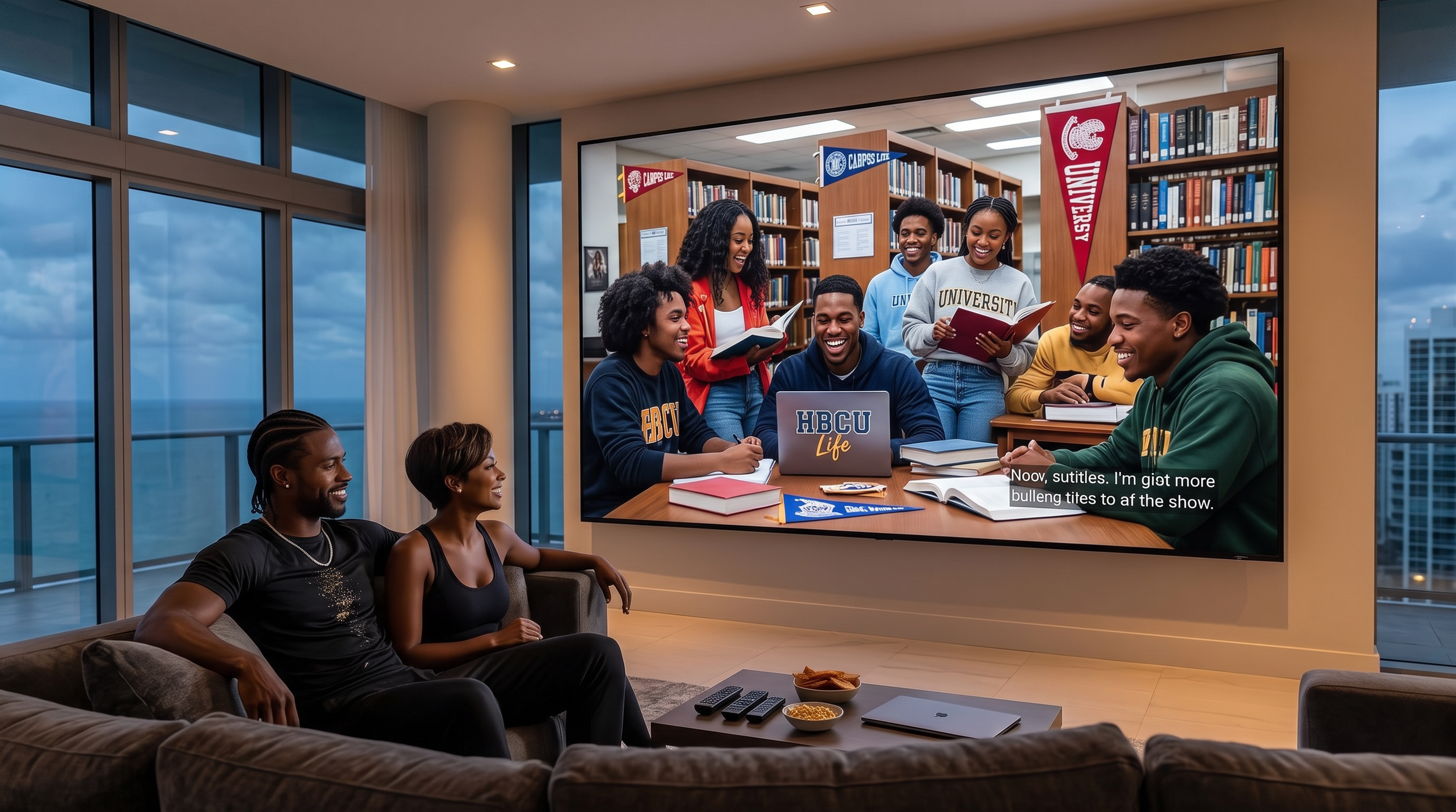
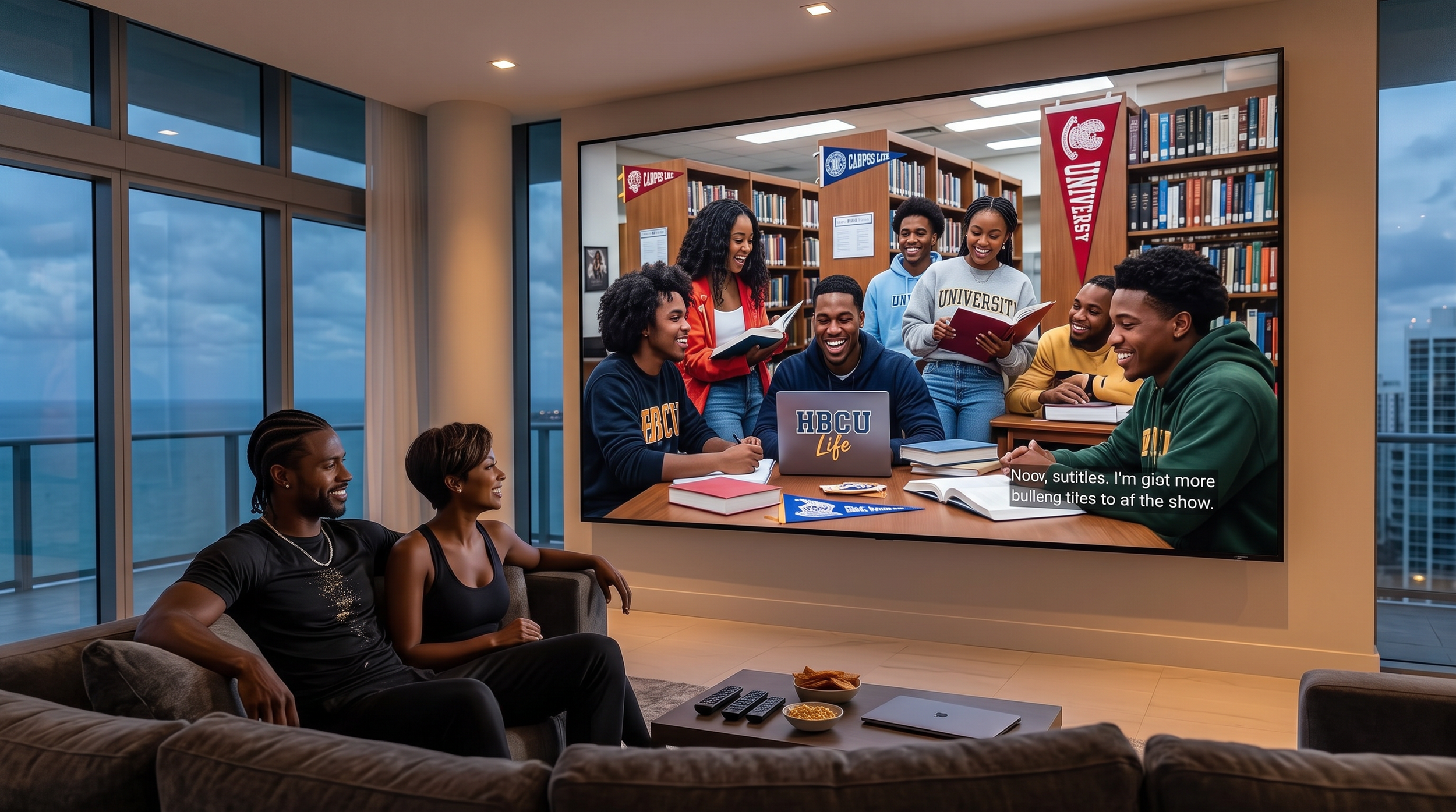
Spirit and Dom of slowburnlove.com settle in for a night at home with a popular HBCU show, proof that sanctuary can be as simple as a couch, a snack, and someone you feel safe enough to laugh beside.
On September 24, 2026 Netflix released the new A Different World, the sequel to the show so many of us GENx and Xennials grew up watching. Eight days later, on October 2, Netflix announced a second season. Eight days - in a world that treats Black stories like a gamble, the audience answered fast.
The show debuted at number four on Netflix's global English list, landed in the top ten in fifteen countries, and pulled in 4.2 million views early on. African American Showrunner Felicia Pride promised more friendship, more romance, more Black joy, and more HBCU greatness for the next season.
And I absolutely love that! Watching takes me back to my HBCU days at Hampton that although only lasted freshman year – a serious lifetime regret – will forever live in my heart as one of the best times of my life!
A Version of Black Life Many Do Not See
This show lives in a part of Black American life that is real but we rarely see on television. An important piece of American society, that includes Black people thriving without or hardly any white people present.
We are young, brilliant, messy, ambitious, funny, and in love, all at the same time and all in the same place. We are not in crisis or in a headline. We are in class, in the dining hall, in situationships, and in the middle of figuring out who we are. It reminds us that Black love is not only survival, it is also a Tuesday night, a bad text, a good laugh, and a second chance.
The world the show builds is a mirror for us who have had the HBCU experience and a window for the future of Black youth. For some of us it reflects and feels like home. For others it shows what we were never shown was possible.
The National Pan-Hellenic Council, Why it Should Remain Mostly Black
Around the turn of the century, Fraternities and Sororities were built because Black students needed mutual support in places that offered them very little. That need remains more prevalent as much as it did over 100 plus years ago. Many of us still live, got to school and work in communities with very few spaces built for us. These Black organizations give us opportunity to exhale and be understood without needing to explain ourselves to others.
Black fraternities and sororities are meant to serve as safe spaces. They hold sisterhood, brotherhood, service, scholarship, and accountability, and they do it inside a culture that already knows us. Keeping that circle mostly Black is not about shutting the world out. It’s about protecting rooms that took generations to build. Safe spaces are rare for us, and when we have them, we should guard them, without the need to explain ourselves.
The Cost of Always Feeling Guarded
Black people have had to remain strong in spaces that have not been safe for us and perhaps this is the reason why many Black men and women in relationships feel forced to keep their guards up with each other. We guard our homes against a world that does not always see us as safe. We guard our hearts against people who have taken more than they gave. We learn early to protect, provide, and prepare, and that is a sign of how much as Black people we love.
But armor does not know the difference between an enemy and a lover. The same shield that keeps danger out can keep tenderness out too.
True power in intimacy shows up when kings and queens drop their emotional shields and allow themselves to be held, and held soft. Not managed. Not examined. Just Held. That is what moves a couple past surface-level affection and into deep emotional intimacy, the kind where you can say "I am scared" and your partner’s response is “I am safe”.
So ask yourself, are you holding your partner, or are you just managing them?
Managing looks like keeping the peace without actually having it. It’s handling the bills, the kids, the schedules, and the calendar, while the two of you sit in separate emotional rooms. It works from the outside. No one gets hurt but no one feels loved either.
Take a moment to look at where fear of betrayal might be holding back trust in your relationship. Look at the expectations you have never said out loud. Maybe you expect your partner to just know. Maybe you expect to be let down, so you hold back first. Unspoken expectations turn into quiet resentment, and fear dressed up as independence turns into distance. Trust is built when someone gets to see you without the armor and stays.
Sanctuary Is Simple
Deep intimacy does not require a grand gesture. Some of the most healing love is plain and tactile.
It is a shared meal at a table with the phones away. It is a hand on the back of a neck while someone cooks. It is a quiet Sunday at home with music on low. It is a blanket, a long hug that lasts a few seconds longer than usual, and feet tangled together in the bed.
Your home should be a place where no one has to code switch, a physical sanctuary for Black joy where you shouldn’t have to prove anything. The outside world will make its demands on you but your front door should be the place where those demands stop. If we cannot count on the world to give us safe spaces, we can build them one dinner and one loving embrace at a time with each other.
Protection and peace are not enemies, but they are not the same thing. Protection says "I will stand guard." Peace says "You can rest." Here is how each of us can start trading one for the other.
Five ways Black men can trade protection for peace
• Say the scared thing out loud. You do not have to be a wall. Tell her when you are tired, worried, or hurting, and let her carry some of it with you.
• Let her take care of you. Accept the meal, the massage, the encouragement, and the help. Receiving is not weakness. It is trust.
• Listen without fixing. Sometimes she wants a partner, not a plan. Ask whether she needs solutions or just your presence.
• Make home a place where you are off duty. Put down the provider role for an evening and just be present. Be silly, be still, and be soft.
• Be affectionate without an agenda. Touch her, hold her, and pull her close without it leading anywhere. That teaches her body that she is safe with you.
Five ways Black women can trade protection for peace
• Release the title of the strong one. You are strong, but you are also allowed to be supported. Let him see you tired and let him show up.
• Say what you need before you are resentful. Do not make him guess. Clear asks are an act of love, and they protect your peace.
• Let him lead in some moments. Let him plan the date, make the decision, or handle the problem without taking the wheel back at the first mistake.
• Receive love without testing it. Stop auditing every kind gesture. Let a good thing be good.
• Rest in his presence. Put down the checklist and the mental load for a night. Sit beside him and let your shoulders drop.
Let Your World Be Different
This week, one of my favorite TV series about Black college life, Black students falling in and out of love and community coming together was revitalized and got a second season. The world got a little more proof that our everyday lives are different and our everyday love with each other and community is worth telling. That matters. And it also matters what we do as Black people inside our own doors.
Safe spaces are rare for us, whether it is a chapter room, a campus, or a living room. If we are lucky enough to have one, we should treat it like the treasure it is. Take the armor off and let your community see who you really are and your partners into your emotional safe space.
Ask yourself where you can trade protection for peace. Then pick one small thing from the list above and do it.
Until next time,
Melissa Pozio
Slow Burn Love
Disclaimer: The content on Slow Burn Love is for informational and educational purposes only and does not substitute for professional medical advice, diagnosis, or treatment. Always seek the advice of a physician or qualified mental health provider with any questions you may have regarding a medical or psychological condition. If you are in a crisis, please reach out to a local emergency service or a crisis hotline immediately.
WHAT WE LET DISAPPEAR
Somebody removed my uncle's historical marker. We don't know yet if it was the city or someone who'd rather we forget our history, but the result is the same. A piece of the record is gone. And it's not just happening to my family. Markers honoring Black history are disappearing across the country, Nolan Wells' family is fighting for a truth the official record wouldn't hold, and our own Black institutions keep drifting toward what feels safe instead of what's needed. Even in our love lives, we're watching Black women get cut down for likes. People who don't know their history are doomed to repeat it, and we're watching the repeat in real time. This week on Slow Burn Love Letters, I'm talking about what we let disappear, what it costs us, and how two people who are still works in progress can build something real while we fight to remember.
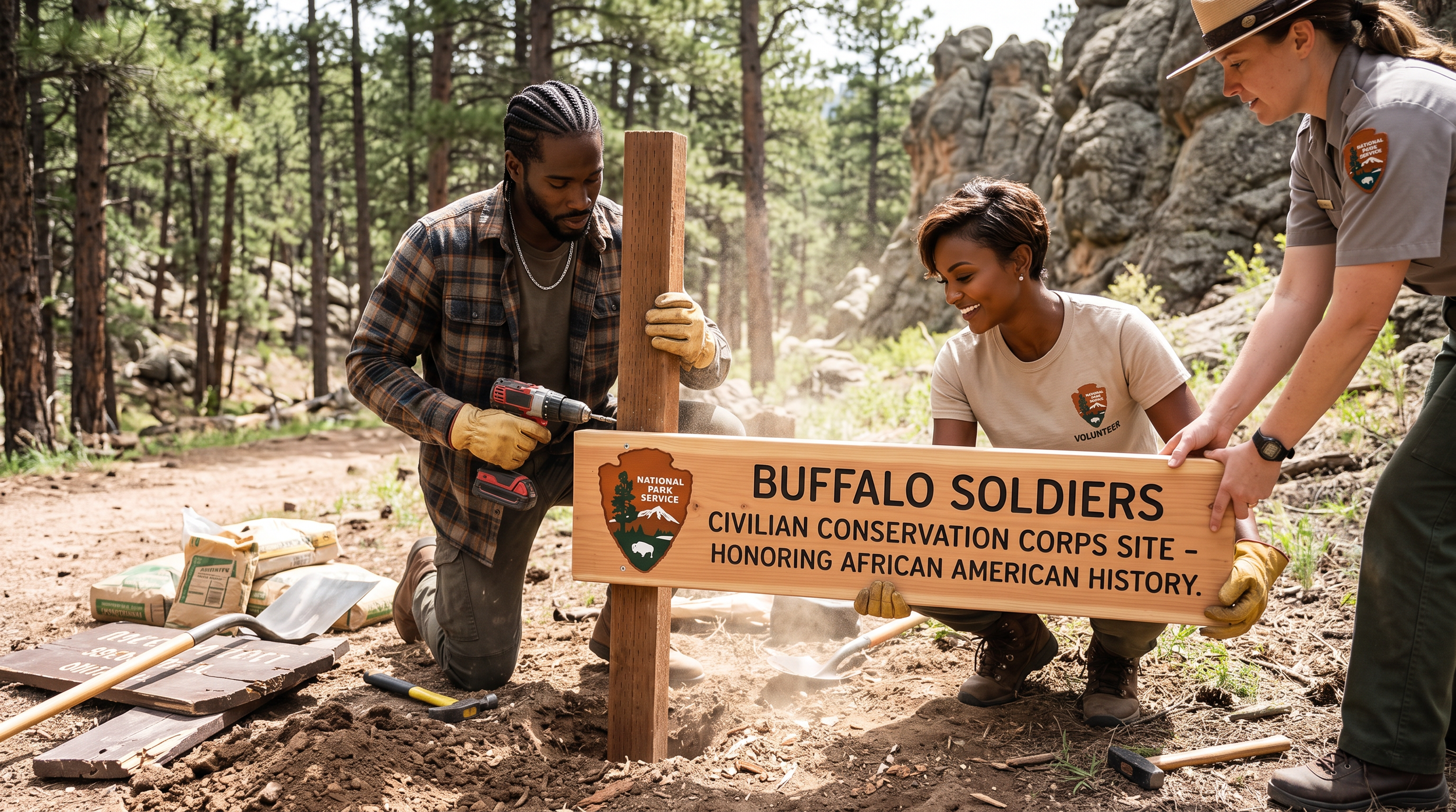
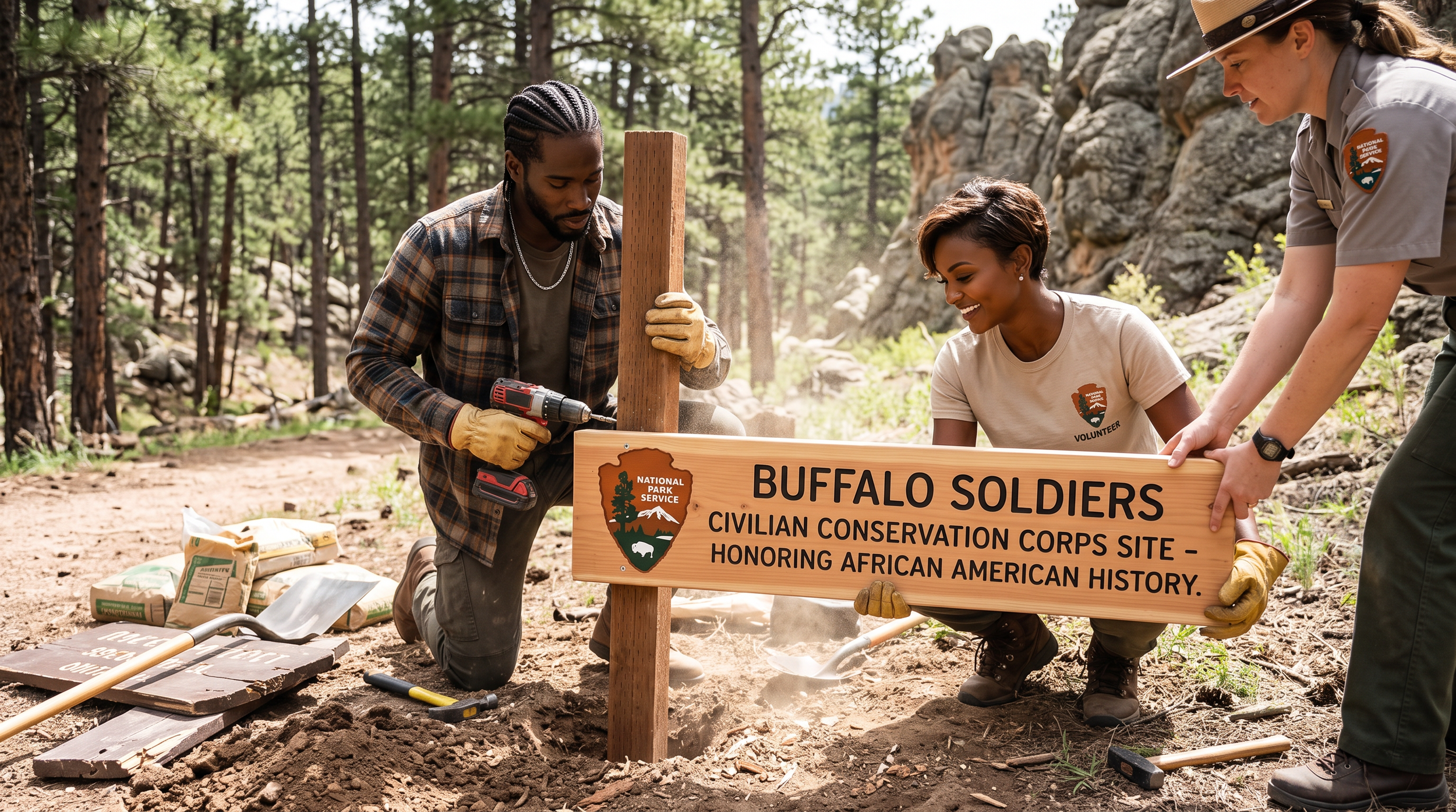
Spirit and Dom from Spirit & Dom, Soul Ties and Sovereign Surrender, work side by side in a pine forest to restore what was lost. Dom kneels in the dirt with a drill and a wooden post while Spirit, smiling in her volunteer shirt, helps lift a new sign that reads "Buffalo Soldiers, Civilian Conservation Corps Site, Honoring African American History." A visual for "What We Let Disappear" on SlowBurnLove.com, reminding us that when history gets torn down, we can put it back up together.
Someone removed my uncle's historical marker. We don't know yet if it was the city or someone with a grudge against remembering Black History, either way, a piece of the record that took real labor and real grief to put up is just gone. People who don't know their history are doomed to repeat it. And here we are, watching the repeat happen in real time, all over the country, not just to one marker about my family but to many in Black American History.
There's an NPR series called "Off the Mark" that's been tracking this exact thing across the South. Markers honoring Black history are going missing or getting damaged and no one is being held accountable. One of the stories that stuck with me is out of Lithonia, Georgia, where in 2024 a 200 pound marker honoring a lynching victim named Reuban Hudson disappeared overnight from a busy corner near city hall. Someone had to plan that. Someone had to want that story gone enough to want to haul 200 pounds of steel off a pole in the dark. Some states have started passing laws making it harder to remove or amend a marker once it goes up, which sounds protective until you realize it also means the people who control what gets written down in the first place get to lock their version in permanently – even if it’s racist or offensive history.
This is not an abstract saying. This is actual "history repeating itself".
The Erasure Isn't Just Physical
Nolan Wells is 18 years old and dead, and the erasure happening to his story is a different kind. A grand jury reviewed his case and came back saying there's no evidence of criminal conduct and no evidence his death was racially motivated. Ruled consistent with drowning. Case closed, according to the official record.
But his family didn't accept that record. They ran their own forensic examination of his phone and found something the official investigation apparently missed – people in his group chats kept talking to each other after he died, not realizing their messages were still syncing to his phone. His parents had asked for a joint examination with the DA's office months earlier and were told they'd have to hand the phone over without being present, so they declined. The family didn’ t trust that. If they weren't in the room, they'd have no way to know whether anything got missed, mishandled, or left out of what eventually became the official record. That's a family who already understood that whoever controls the evidence controls the story, and they weren't going to let their son's last hours get written by someone who wasn’t going to be honest about it.
Even Our Own Institutions Aren't Immune
I appreciate the work the Divine Nine does for the community. My Grandparents, father, cousins aunts are all members active and inactive in life and death. Four million members, organizing power, history going back over a century. They've gotten louder politically the last couple years, PACs, non-protits, government jobs, voter mobilization, candidates showing up at conventions looking for the room's blessing. That matters for the community.
They're professional class institutions, built through college campuses and licensed careers, and that shapes what politics feel acceptable to the room. But the Democratic Party didn't get built in boardrooms. It got built through unions, tenant organizers, and people with genuinely socialist politics who were fighting for redistribution, not respectability, people with actual lived experience in a system that did not accept them not just because of their color, but their social caste. When our most visible Black leaders keep playing it safe because “safe” is what impresses a room full of degree holders and power brokers, we're forgetting where our real power came from. It didn’t come from playing it safe. It came from everyday people fighting hard for what Black communities actually needed – actually standing against the systems that suppress us and not standing beside them, the big companies and politicians who decide how much change we’re allowed to have.
And Then There's What We're Doing To Each Other
A Black man on a Black love Facebook page asked whether you'd rather date a white woman who makes $100k a year but calls you the N word in heated arguments, or a Black woman who makes $50k a year raising two kids on her own.
That is not a real question. And the only thing it does is force Black women to defend their worth against slurs instead of just being allowed to exist as their beautiful selves. People who post this kind of content use misogynoir for likes, hatred of Black women that's racialized and gendered at the same time. Some call what that post is doing proximity seeking - treating access to whiteness as if it’s a prize so valuable that a person is willing to put up with being disrespected just to get it. Some call it self hate. Whatever you call it, a man willing to trade actual respect for the theoretical privilege of being insulted by someone white is performing his own erasure and calling it preference.
If we're going to talk about who's cutting down and diluting our history, we have to talk about the ones doing it from inside the community too.
So Where Does All of this Land
Every single thing I just laid out, my uncle’s marker, Nolan Wells, the centrist Democrats, misogynoir, this is the world we live in, and sometimes it’s our own people trying to convince us we're worth less than what we deserve. That we should be grateful for a watered down version of justice, a watered down version of political courage, a watered down version of community, a watered down version of love for one another.
I refuse it. And I think the refusal has to start in the places closest to us, within us, because that's the one place we actually control.
Same Mistakes
No one will ever have their shit completely together until they stop breathing. You don't need to wait until every area of your life is together to demand a healthy relationship from anyone. You just need to decide your journey is worthy of being shared with someone who adds peace, stability and respect to your life instead of someone who drags you into their chaos and calls it passion.
There's a massive difference between not having every piece of life figured out and being an unhealed, boundary less drain on someone else. A grounded partner isn't looking for a flawless life where nothing ever goes sideways. What they're actually looking for is self awareness, emotional accountability and momentum. Someone who "has it together" is aware of their strengths, takes responsibility for their own journey, and works through their stuff without expecting a partner to fix it for them. If you're self aware, doing the work, and holding space for your own growth, you're already operating at the level of having it together no matter where you think you may have failed.
When our own lives feel messy, our subconscious plays a trick on us. We pull in people whose lives are in worse shape than ours so we avoid having to face our own vulnerability. Attracting a broken partner can feel safe, because if they need saving, they can't judge you, and you get to feel valuable by being the one who fix them. That's not loving them, that’s loving on your ego.
A healthy partner doesn't need you to be a finished product. They want a partner, not a project and not a savior. They meet you where you are, they support your growth, and they let you support theirs, without either person constantly rescuing the other. You don't need to build a perfect empire before you deserve love. You need to anchor into self-respect. Two people can both be works in progress and still build something clean and stable together, as long as both of you are carrying your own weight.
That's how we fight the erasure. By refusing to let each other become disposable to each other.
Five Things Black Men Can Do
• Do your own emotional work before you ask a woman to hold your healing for you
• Describe what you need directly instead of testing her or going cold
• Celebrate her wins out loud, even the ones that don't center you
• Protect her peace the way you protect your own reputation
• Show up consistently, not just when it's convenient or flattering to you
Five Things Black Women Can Do
• Stop performing "I don't need anything" when you actually need something, say it
• Let a man show up for you without managing the outcome for him
• Choose potential he's actively building toward, not potential you're inventing for him
• Set the boundary the first time it's crossed, not the tenth
• Give yourself the same grace mid journey that you'd give him
They may be able to take the marker of the past off the pole. But they cannot take our willingness to remember, to demand the truth, and to build something real with each other while we fight for each other in love.
Until next time,
Melissa Pozio
Slow Burn Love
Disclaimer: The content on Slow Burn Love is for informational and educational purposes only and does not substitute for professional medical advice, diagnosis, or treatment. Always seek the advice of a physician or qualified mental health provider with any questions you may have regarding a medical or psychological condition. If you are in a crisis, please reach out to a local emergency service or a crisis hotline immediately.
THIS WEEK TOLD ON US
A Converse ad that looked like a KKK hood, white women's tears that flip Black self defense into Black aggression, and Black men who talk love while posting things that tear Black women down. This week gave us three different mirrors and one hard truth underneath all of them. Visibility without accountability doesn't heal anything. This post breaks down what actually happened with the Converse campaign, names the script that turns white women's emotional reactions into weapons, and calls out the contradiction of wanting Black love while cosigning misogynoir.
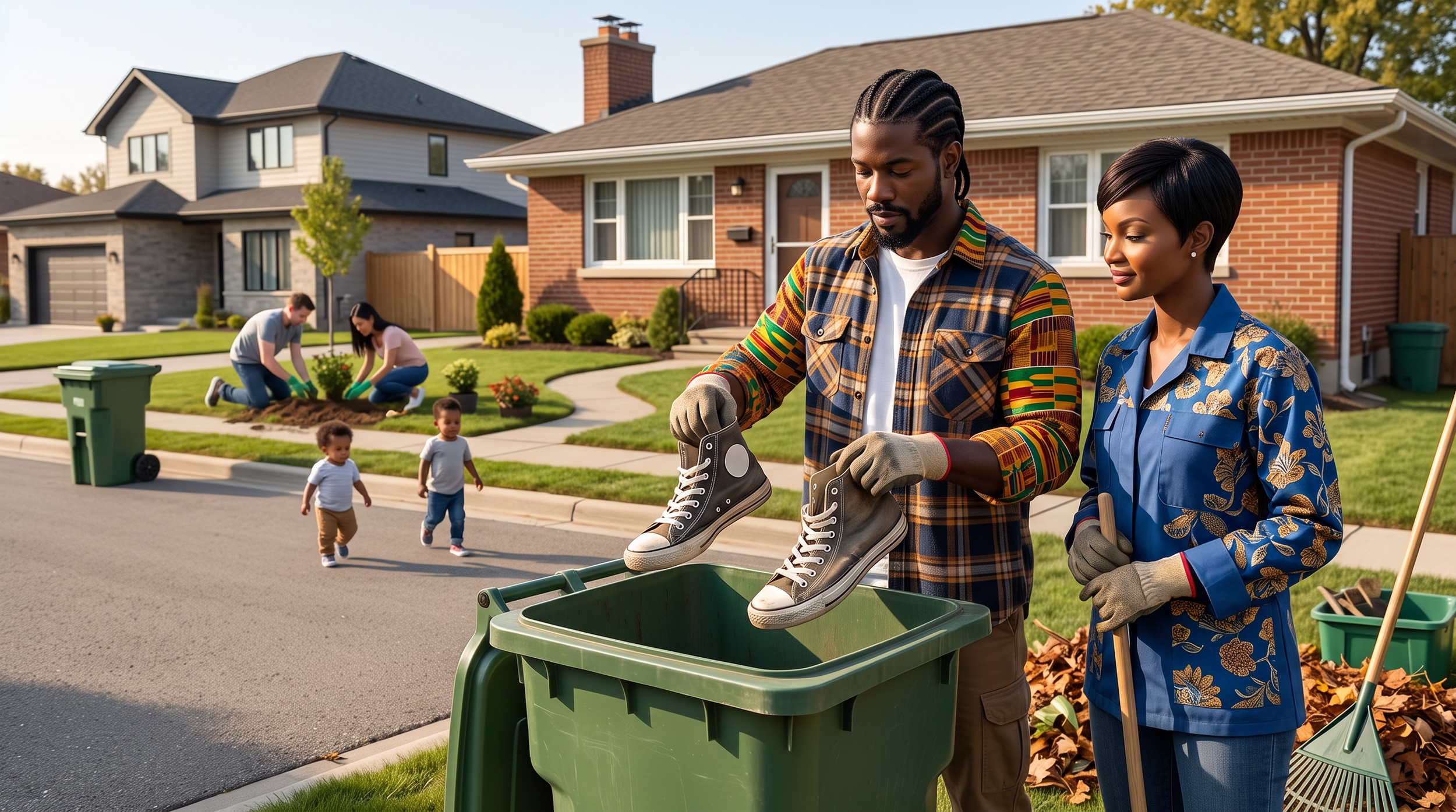
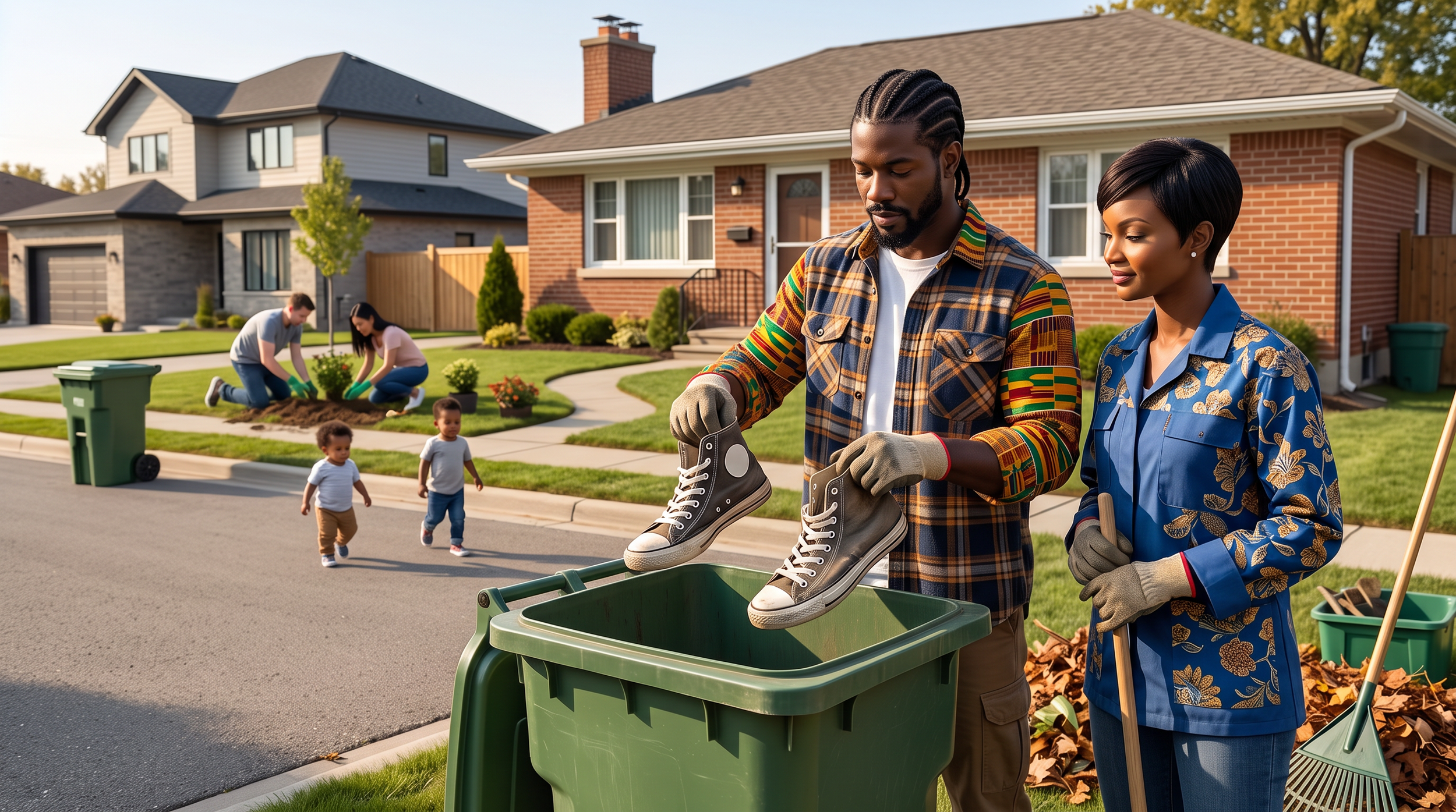
This Week Told On Us Dr. Spirit Ashaia Davis and Dom throw away a pair of black high-top sneakers. Behind them, two small children running down the sidewalk nearby unsupervised. The scene contrasts the couple's close attention to the sneakers against the trouble happening in the neighborhood backdrop.
Some weeks hand you a theme whether you asked for one or not. This week it was mirrors. Corporate mirrors, interpersonal mirrors, and the kind of mirrors we hold up to each other in community when we're honest enough to look.
Converse and the hood
By now you've probably seen it. Converse ran a campaign photo for the Chuck 70 X collection featuring K-pop star Karina, and the lighting on her white skirt created a silhouette – intentionally or unintentionally - that a lot of people immediately clocked as a Klan hood, with the sneakers she held dangling above it reading like the feet of someone hanging from a tree. Then a second image surfaced from the brand's Malaysia account, this one from a separate Converse x Palmes campaign, showing a man climbing a ladder toward shoes hanging from a tree branch while someone else watched from a distance. Two campaigns, two teams, two continents, and somehow both landed on the same nightmare shape.
Converse apologized. Pulled the ads. Said the standard corporate sentence about understanding why it was upsetting and doing better. I believe they're sorry they messed up. But I don't believe an entire creative and approval chain looked at a white pointed silhouette with shoes dangling beneath it and nobody in the room flinched.
A Black creative director, a Black stylist, a Black photo editor, someone with that ancestral history sitting in their body, would have caught this before it left the building. Not because Black people are magic pattern detectors for racism. But because we carry the visual vocabulary of what harm has looked like in this country, and it doesn't take us a second glance to recognize it. When everyone in the room comes from the same background, it's easy to miss things that would be obvious to someone with a different life experience. And this is the kind of thing that happens when a team doesn’t include enough different perspectives.
White women's tears and the fastest costume change in America
Let's talk about white women’s tears and when some of them come at you sideways, confrontational, testing, sometimes outright disrespectful. They’ve got their chest out and their voice raised and are fully in control of the interaction, until you respond. The second you match their energy, hold a boundary, or simply refuse to shrink, they shift. Suddenly they’re crying. Suddenly they’re the victim. Suddenly you are the aggressor and everyone watching forgets she crossed your boundaries first, she threw the first punch and now there are tears involved.
This isn't new and it isn't accidental. It's a script that's been running since before any of us were born, the one where Black self-defense gets recorded as Black aggression the moment a white woman's emotional distress enters the room. Her fear, real or performed, outweighs your reality every single time in the eyes of a watching crowd. That works because the culture around her has already decided her tears are somehow more credible than the truth, than justice.
Not every white woman who cries is manipulative. But most Black women have a story, sometimes several, where we were calm, we were right, and we still became the villain of the story the moment someone else's face got wet that did not look like us.
Black men who want love out loud and misogynoir in the same breath
I see the same Black men talk publicly about wanting a real partner, wanting loyalty, wanting a Black woman who can cook and nurture and hold him down and that’s beautiful. I want that for them too.
Then I scroll a little further and the same timeline has a joke about Black women's attitudes, a meme mocking our hair or our tone or our "too independent" energy, a comment section where he's cosigning the idea that we're difficult, hard to love. You cannot post longing for us in one breath and contempt for us in the next and expect that math to add up as being able to have a healthy relationship with you.
Misogynoir isn't generic sexism. It's sexism with race baked all the way through it, and when it comes from Black men it does a particular kind of damage because it's coming from inside the house. It tells the world it's safe to pile on Black women because even our own men are doing it publicly, for likes, for engagement, for a laugh. Then those same men wonder why we're guarded, why we're slow to soften, why we come into relationships already braced for impact.
Five things Black men can do when they see these posts
Stop scrolling past it. Silence in the comment section reads as agreement, even when you don't mean it that way.
Say something directly to the man who posted it, privately if that's more comfortable, but say it.
Ask yourself if you've laughed at or shared something similar, and be honest about the answer.
Interrupt the joke in real time, in the barbershop, the group chat, the comment thread, wherever it's happening around you.
Talk openly with the Black women in your life about what you're seeing, instead of assuming they haven't noticed.
Five things Black women can do in response
Name what you're seeing out loud instead of quietly absorbing it as another data point about your worth.
Protect your energy by muting or unfollowing accounts that consistently profit off disrespecting you, even if the person behind them is someone you know.
Build and lean on circles of women who will reality check you instead of letting you spiral into "maybe they're right about us."
Hold the men who claim to want you to a standard that matches their words, not just their intentions.
Keep loving loudly on your own terms anyway, because the goal was never to let someone else's contradiction shrink you.
Where this leaves us
Three different stories, one thread running underneath all of them. Visibility without accountability doesn't heal anything. Converse can apologize all it wants, but until the rooms making these decisions actually reflect the communities they're profiting from, we'll keep seeing "accidents" that look suspiciously familiar. White women's tears will keep working as a weapon as long as the rest of us keep accepting them as evidence. And Black men who want Black love have to stop treating Black women's dignity as content, while Black women are the only ones who do the work naming it.
This is the accountability part of my love letter to you. I love us – our community enough to keep pointing at the patterns instead of pretending they don’t exist. We don't get free by looking away from ourselves or from what's aimed at us. We get free by naming it, out loud, every single got damn time.
Until next time,
Melissa Pozio
Slow Burn Love
Disclaimer: The content on Slow Burn Love is for informational and educational purposes only and does not substitute for professional medical advice, diagnosis, or treatment. Always seek the advice of a physician or qualified mental health provider with any questions you may have regarding a medical or psychological condition. If you are in a crisis, please reach out to a local emergency service or a crisis hotline immediately.
WHO GETS TO CALL HIM KING
This week a white woman social media commentator called the lone Black holdout juror in the Lindsay Clancy trial a "Black King," then his record surfaced, a 2021 domestic violence charge, a restraining order his own thirteen year old nephew helped take out against him, a pending eviction. He may have been right to push for a guilty verdict. But that was never the question. The question is how the word “King” with real lineage, one that means protection, accountability, and bloodline got handed to a community member before anyone checked who he actually was, and whether we crown Black men too fast while skipping past the red flags standing right in front of us.
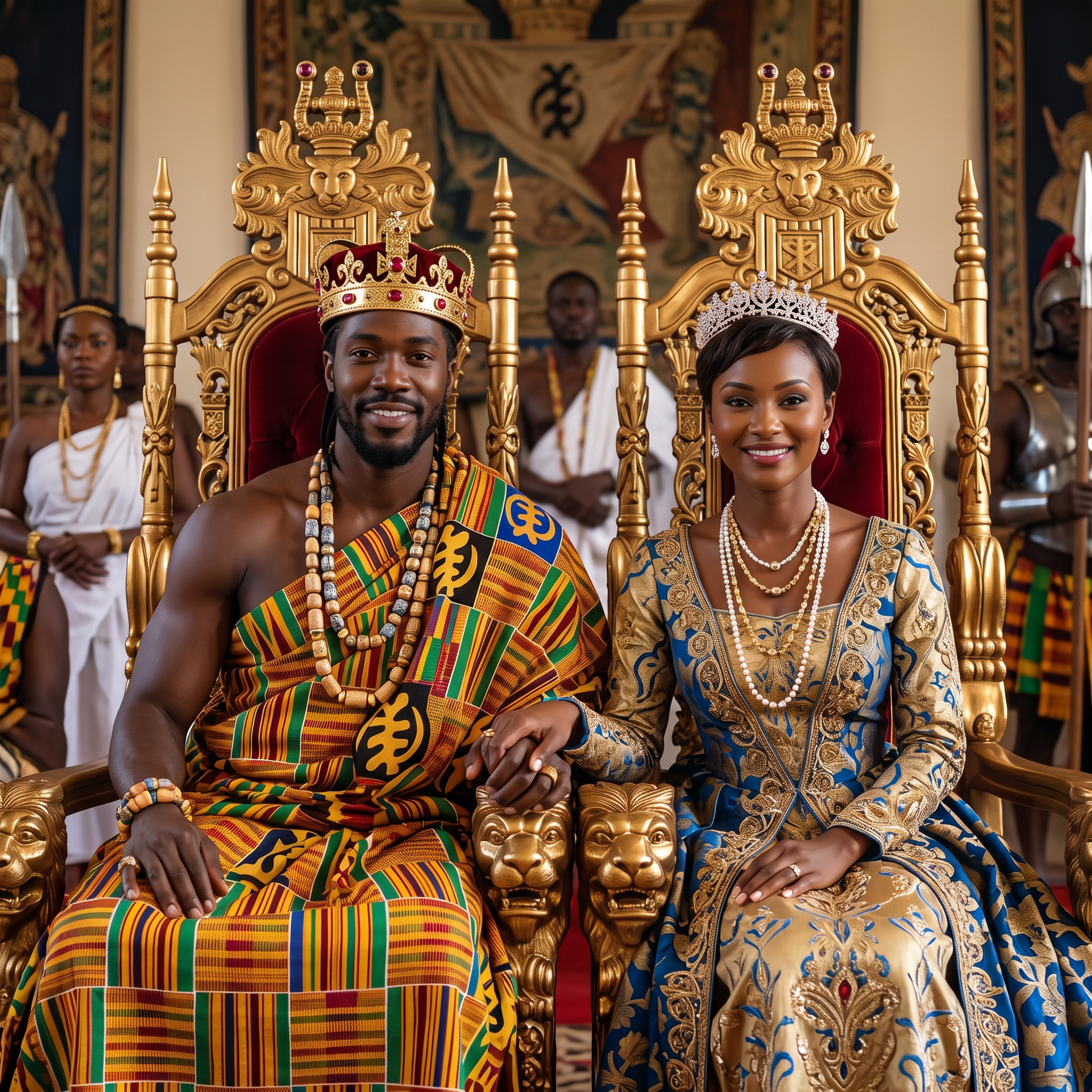
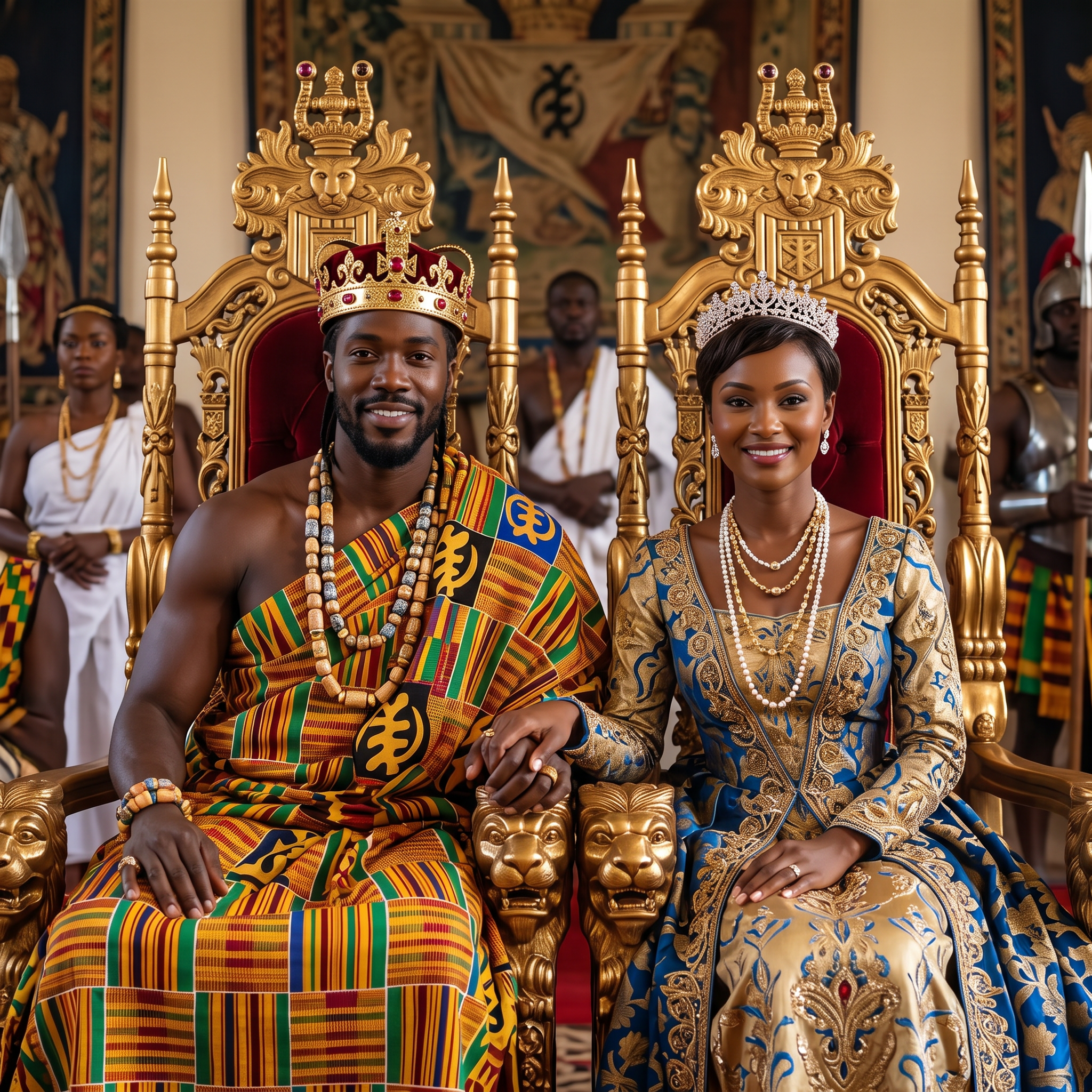
Dr. Spirit Ashaia Davis and Dom sit side by side on ornate gold thrones beneath a crowned lion crest, sure of themselves before they're sure of each other. From the slowburnlove.com romance series Spirit and Dom WHO GETS TO CALL HIM KING blog post.
A woman named Lindsay Clancy stood trial for strangling her three children, five year old Cora, three year old Dawson, and eight month old Callan. Her defense leaned on postpartum psychosis and a dangerous mix of prescribed medication. The jury deliberated for close to forty hours and came back deadlocked, eleven to one. Eleven jurors wanted to acquit her by reason of insanity.
One did not. A Black man.
He was the one Black juror on an otherwise all white panel. When that fact came out on live television, a CBS host visibly stalled out trying to process it. I felt it was unnecessarily overdramatic, but her reaction became its own news cycle. People online ran with the moment and turned him into a hero overnight, a lone man standing against eleven white jurors who allegedly pressured him for a week to fold. One white woman commentator went so far as to call him a "Black King."
And that. Do white women really know what they are saying when they call a Black man a "Black King"? Because in this instance, it is highly questionable.
Court documents and family interviews revealed this "King" has a history of domestic violence allegations, including a 2021 charge for assaulting his wife that his own thirteen year old nephew called 911 to report. There's a pending eviction. There's an active restraining order that nephew later took out against him, one he was apparently carrying while he sat in that jury box judging someone else's fitness as a parent and a person.
Don't get me wrong, I doubt I would have given her not guilty by reason of insanity either. What I do know is I could never imagine choking my own children in my right mind. Massachusetts jury questionnaires ask directly whether you've been arrested or served with a court order. Either he didn't check those boxes or the system didn't bother to check, and either way it was a miscarriage of the legal system's administrative ability.
Then there's the issue of “white women’s tears”. A dynamic where at times white defendants facing serious charges receive immense public and medical empathy, postpartum psychosis defenses among them, while Black defendants rarely get offered that same systemic understanding. And it was as if the Black juror was being punished for refusing to go along with what everyone expected.
A Black man in a room full of white people trying to talk him out of holding a woman accountable for killing her own children is a compelling image. It taps into the exhaustion of being the only one in the room, the pressure to fold just to keep the peace.
Then, the rush to crown him as King.
But where in the world does that negate his alleged previous behavior? The whole situation almost sounds like an opportunity for him to be abusive toward a woman again, just with a guilty verdict attached to it instead of his own hands. We didn't know anything about who he actually is, what he carried into that jury room, or what he'd done in his own home. We built a hero out of one act of strength or defiance without asking what the story behind it actually was.
Who gets to call him King
When Black women speak of a Black man being a King, we're speaking from lineage, a language built by people who have had to define kingliness for ourselves because nobody was handing it to us. That word carries history. It carries expectation. It carries accountability, because a King in our tradition isn't just a man who won't back down, he's a man who protects and provides and tells the truth even when it costs him his throne.
A white woman borrowing that word to score a point in a news cycle is performing. It's that same energy as a white woman I've never met calling me "girl" like we've got some kind of shared history. You don't get to reach into a culture, grab the parts that sound good, and drape them over a man you know nothing about because it plays well for likes. If you don't know what the word “King” costs, you shouldn't be handing it out.
And honestly, if she had known what a Black King really is, she wouldn't have used it here at all. Most of us know exactly what we mean when we say it, and it has nothing to do with defiance for its own sake. A Black King represents community, not the self. The woman on trial was not community. She was white, which makes it even more interesting that a white woman would be the one calling him a king in this particular instance.
Because if his allegations are true, how did a man with an active restraining order and a dismissed assault charge end up seated on a jury deciding someone else's fate, then get handed a crown before anyone thought to check? We are quick to defend Black men in the moment, sometimes before we know the full story, because we know how often the story gets twisted against us as Black people. But sometimes that instinct means we skip past the red flags right in front of us and end up enabling their bad behavior instead. What actually matters is what a Black man does when nobody is watching.
What a Black King actually means
A man who shows up consistently, not just in a single dramatic moment
A man who protects the people closest to him instead of harming them
A man who can be corrected without collapsing into ego or rage
A man who takes care of his responsibilities, his children, his home, his word
A man whose strength is measured by what he builds and holds together, not by what he refuses to give an inch on
What a Black King means for Black women
Speaking to him with the same respect you want reflected back, especially in front of other people
Trusting him with responsibility and letting him carry it instead of managing him out of every decision
Acknowledging what he does right out loud, not just naming what he gets wrong
Standing with him publicly the way you'd want him standing with you
Giving him room to be honest, even when the truth is inconvenient, instead of punishing vulnerability
That's reciprocity, not decoration. A King isn't made by a title someone hangs on him after one viral moment. He's made in the small consistent choices two people make to treat each other with that kind of regard, long before anyone else is watching.
Being called a King isn't something a man crowns himself with, and it isn't something a stranger online can hand out either. It's something built in relationship, day by day, between two people who are actually paying attention to each other.
Where that leaves us
I want to be clear about something. What Lindsay Clancy did to her children was devastating, and based on what's been reported, I likely would have been that holdout juror as well. But holding one position isn't what makes a person exceptional, it’s living an exceptional life.
I believe our Black men are Kings. I also believe the word means something, it’s ancestral, it’s bloodline, it’s love, something that is earned in the places where nobody is filming, not handed out in a comment section by someone who's never had to define it for herself.
Until next time,
Melissa Pozio
Slow Burn Love
Disclaimer: The content on Slow Burn Love is for informational and educational purposes only and does not substitute for professional medical advice, diagnosis, or treatment. Always seek the advice of a physician or qualified mental health provider with any questions you may have regarding a medical or psychological condition. If you are in a crisis, please reach out to a local emergency service or a crisis hotline immediately.
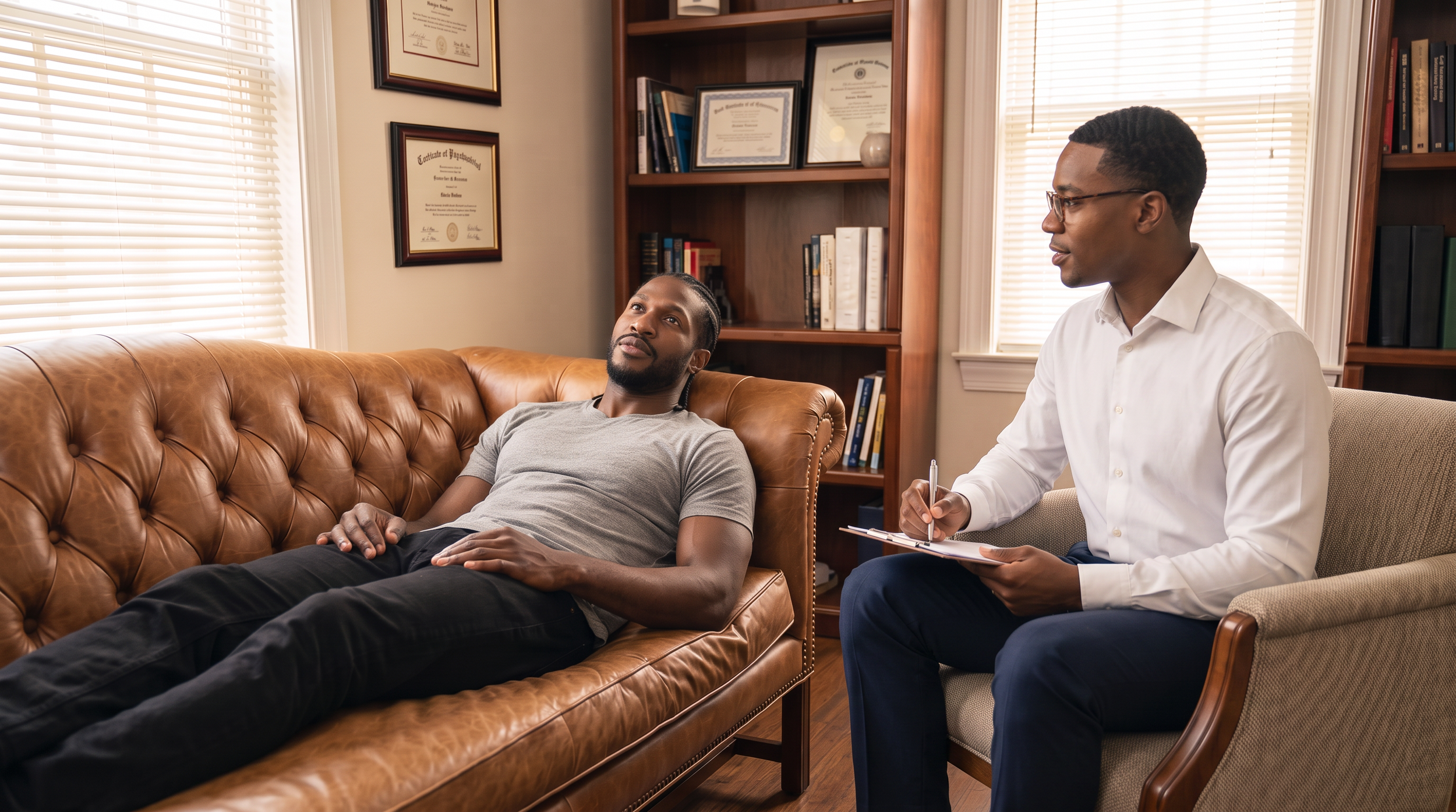
CONDITIONED OPPRESSION: WHY WON’T BLACK MEN GO TO THERAPY, THE COST OF ALWAYS BEING STRONG
Black men are taught early that strength means silence. Conditioned Oppression: Why Won't Black Men Go To Therapy, The Cost Of Always Being Strong looks at where that conditioning comes from and what it actually costs the men who carry it. This piece unpacks the generational pressure to perform toughness, the stigma that keeps therapy off the table, and the quiet toll of never being allowed to fall apart. It's not a takedown. It's an honest look at what happens when survival becomes identity, and what healing could look like if the armor came off. Read the full piece on SlowBurnLove.com. Part of the #SpiritandDom series.
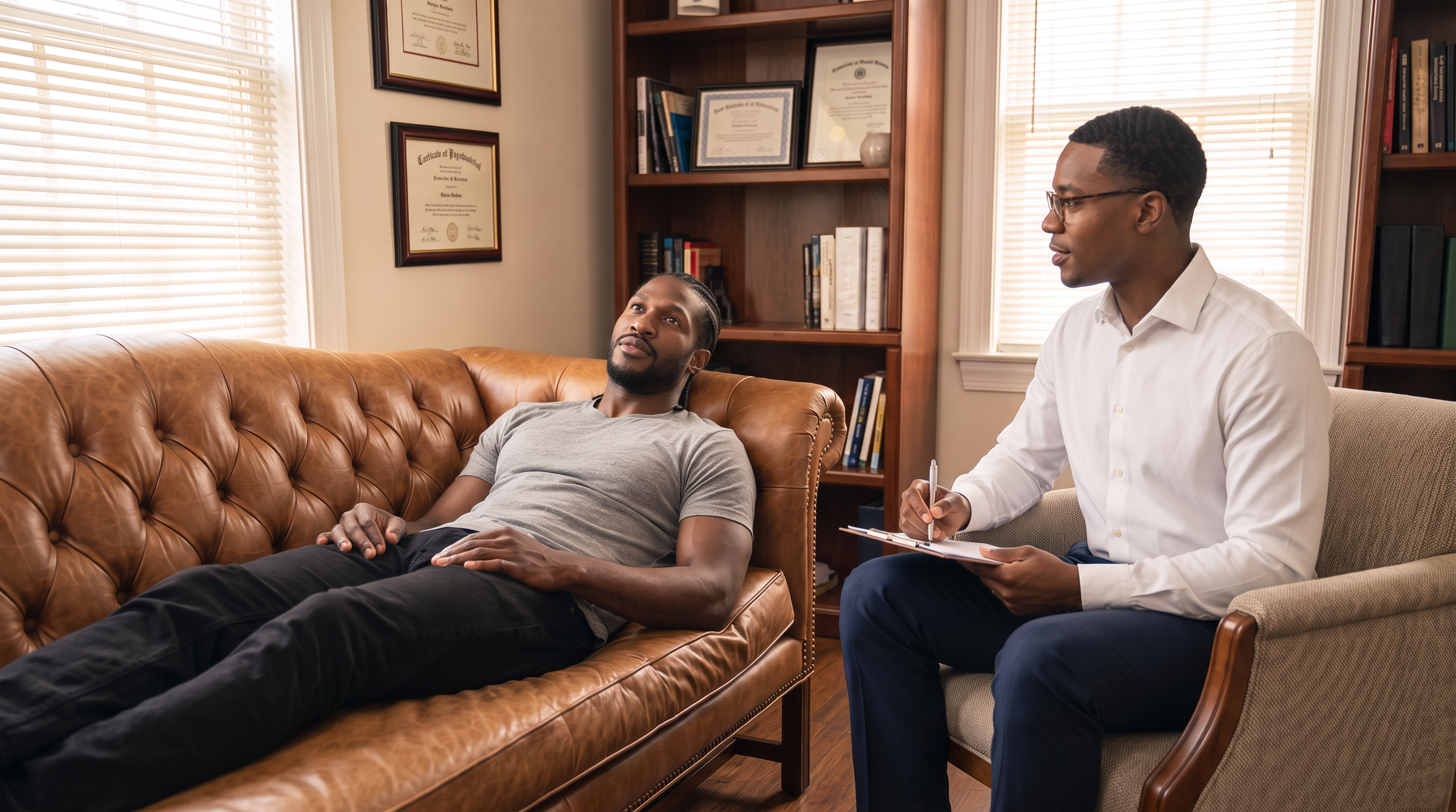
Dom of #SpiritandDom, sits across from a therapist during a session, illustrating the SlowBurnLove.com article "Conditioned Oppression: Why Won't Black Men Go to Therapy, the Cost of Always Being Strong”
Somewhere scrolling during this week’s conversations about Black love I heard a term from a video post talking about “conditioned oppression”. It is the idea that Black people often cannot see the oppression they live in because they have been in it so long it feels normal. It’s worse when the people leading our communities, the voices we trust and quote and follow, are the ones reinforcing it. It’s not always on purpose, but sometimes it’s just the water everyone is swimming in.
That concept of conditioned oppression stayed with me as I navigated this past week in this current politically heated environment.
Conditioned Oppression, Up Close
Conditioned oppression is not just about systems outside of our community. It is about the ideas we absorb from inside the Black community and repeat as truth. A political leader, a pastor, an influencer, an uncle at the cookout, can hand down a belief that keeps people small, and because it comes from someone who looks like us and speaks our language, we rarely question it. We just carry it forward. That is what makes it so hard to spot. Oppression from the outside is easy to name. Oppression that has been repackaged as tradition, as toughness, as "just how we do things," is much harder to see, let alone challenge or change.
This is why we need to start paying closer attention to who we let speak into our understanding of Black love.
I Stopped Following the Negativity
This week I made an intentional decision to unfollow the Black relationship pages that make their living off of rage bait and tearing us down. The ones that build content around every worst stereotype about Black men and Black women and dress it up as commentary. I used to tell myself I was following them to push back in the comments, to fight the narrative from the inside. But I was not fighting anything. I was feeding the algorithm the same engagement it wanted, and giving my attention to content that profits from our dysfunction.
Going forward, I am putting that energy toward pages that are actually trying to build something positive. One of my favorites is Dorian tha BeardedMan. He has the classic trope of silver fox, bearded zaddie aesthetic working for him, no doubt. This week he made a post about pushing back on normalizing micro cheating. He challenged the notion that staying in a long relationship isn’t always a flex rather than just a commitment two people chose that could also possibly be a toxic connection. His post aren’t always framed as Black issues specifically, but these patterns show up heavily in our community, and because he is a Black man saying it, his voice matters. It carries more weight where it is needed most.
Black Men and Backing Out of Therapy
A post in a Black men's health group I follow asked a simple question this week. Why aren't Black men in therapy? Their answers told a story on their own. Some said the gym is their therapy. Another stated fixing on their cars was the best way to deal with their emotions. Others said they put their families first and their own mental health second. Some said talking to a stranger felt pointless. Many said it was not worth the money. And more than one person brought up intergenerational trauma, weighing it against cognitive therapy – mentioning it as if one should know the difference between a cold and the flu.
Reading through it, I realized most of these men are not choosing badly on purpose. Nobody explained to them that intergenerational trauma and cognitive therapy are not competing ideas. Intergenerational trauma often describes where the wound came from. Therapy, including cognitive approaches, is one of the tools for treating it. If a man does not know that distinction, of course therapy can feel like it failed him. He never had the information to know what he was actually looking for.
I believe trauma lives in the body, not just the memory. It gets passed down through generations the same way features and mannerisms do. It may be part of why Black people move through rhythm and dance the way we do, releasing pinned up energy the body has been holding onto for longer than any one lifetime. It may be part of why Black sexuality is so often read as intense, as if something ancestral is being released, not just performed. I cannot prove that without a study or scientific proof. But I believe the body remembers what the mind buries, and Black bodies have been asked to bury a lot.
Whatever the full explanation is, Black people carry trauma differently than most, and it deserves real examination. It should start with Black men, our leaders of the culture, because no one has ever built them the room to fall apart safely.
Five Things a Black Man Can Do to Find the Help He Needs
Get specific about what he is dealing with then name it as anxiety, grief, anger, or trauma.
Look for a therapist who lists cultural competency or works specifically with Black clients, not just anyone with an open slot.
Try a consultation call first. Most therapists offer one, and it is the fastest way to tell if the chemistry is right.
Ask about sliding scale fees or community mental health clinics if cost is the barrier, instead of assuming therapy is out of reach entirely.
Treat the first therapist as a starting point, not a verdict. If it does not fit, that is data, not proof that therapy does not work.
Five Things a Black Woman Can Do to Help Him Get There
Bring it up without cornering him. A calm, private conversation is better than one that feels like an ambush or an ultimatum.
Share resources instead of demands. A name, a directory, a number to call removes the ability to make excuses.
Normalize it by talking about your own therapy or healing work openly, so it does not feel like something only broken people do.
Give him room to process without needing an immediate outcome. Sometimes support looks like patience, not pressure.
Hold the line on your own boundaries while you support him. Helping him heal should never require abandoning your own.
Women Need It Too, But We Tend to Move on It
None of this lets Black women off the hook. Intergenerational trauma runs through us just as deeply. But if I am honest, we tend to notice when we are struggling and actually do something about it faster than the men in our lives do. We talk to our girlfriends, we book the appointment, we read the book, we try the app. It does not mean we are not just as wounded. It means we have been given a little more permission to admit it.
That permission is something we can extend to each other across the aisle. Black women can stop expecting Black men to heal in silence and call it strength. Black men can stop treating vulnerability as something only women are allowed to have. Real Black love, the kind actually worth defending online, is going to require both of us showing up whole, or at least willing to get there. Conditioned oppression only survives in the dark. The more we talk about it, out loud and to each other, the less power it has over what we build next.
Until next time,
Melissa Pozio
Slow Burn Love
Disclaimer: The content on Slow Burn Love is for informational and educational purposes only and does not substitute for professional medical advice, diagnosis, or treatment. Always seek the advice of a physician or qualified mental health provider with any questions you may have regarding a medical or psychological condition. If you are in a crisis, please reach out to a local emergency service or a crisis hotline immediately.
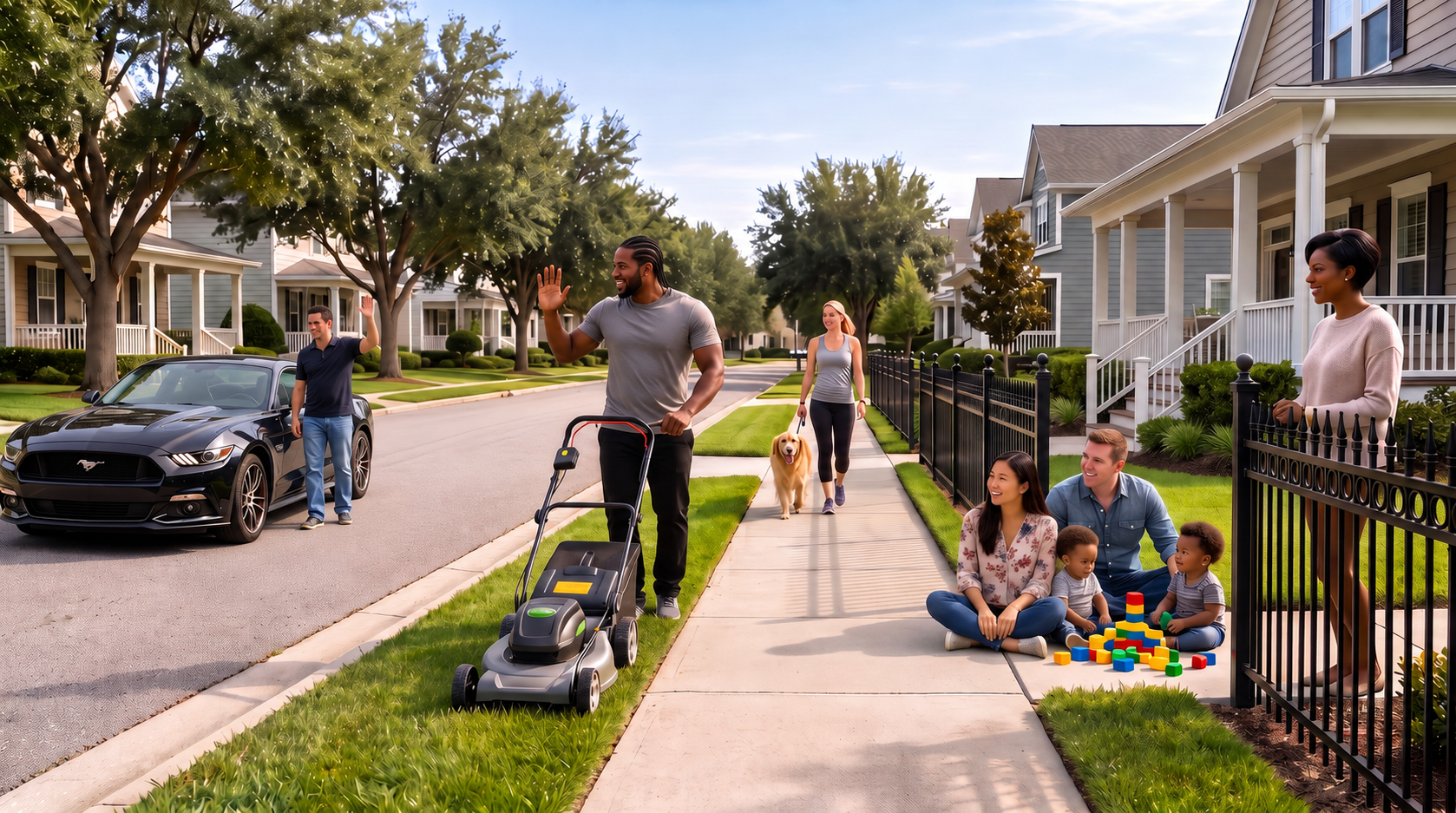
BOUNDARIES AND THE COST OF NOT LOOKING OUT FOR EACH OTHER
My neighbor's son parks in front of my house every day, even with plenty of room in his own driveway. It's a small thing until you notice the pattern, blowing the yard waste towards my house, letting their dogs get in my yard, the message underneath it all. When people who don't respect your boundaries also happen to be a white family who's never had a Black visitor through their door besides yourself, you start paying attention. This week I'm writing about privilege and targeting, why disempowered people need someone to feel superior to, and why the Black community has to look out for each other harder right now. I'm also getting into the “ghosts” who show up on your page looking for answers about an ex, why having a "type" isn't something to apologize for, and five real ways we can start loving each other better, starting with ourselves.
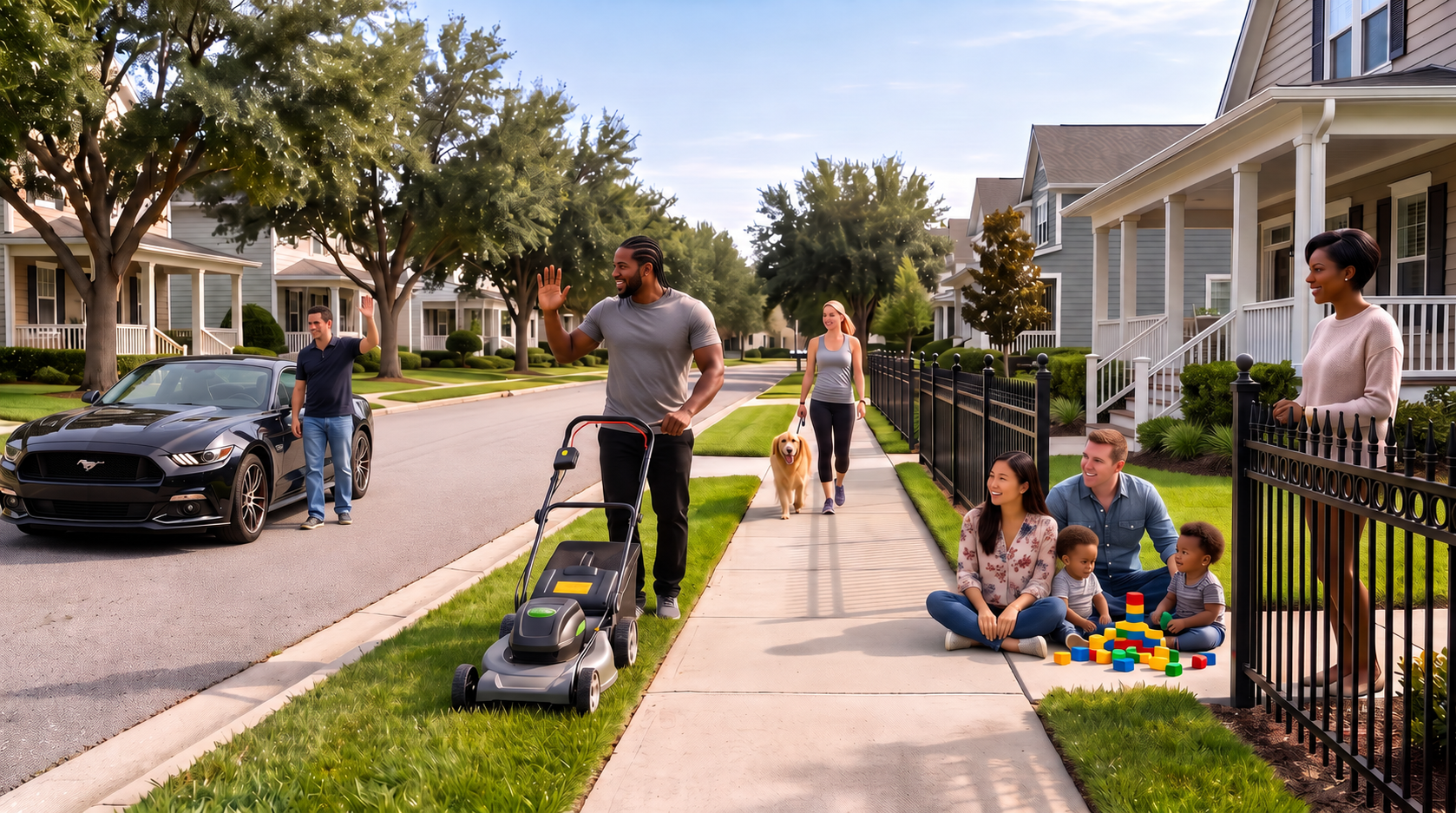
Dom mows his lawn and waves to neighbors on his suburban street. Boundaries And The Cost Of Not Looking Out For Each Other. Black community and boundaries, SlowBurnLove.com Spirit & Dom love series
This week in community
My neighbor's son parks his car in front of my house, and I think people should park wherever they want on a public street. But when there is more than enough room to park in front of your own house, in your driveway, or in your garage, you’re sending a message. You’re communicating to me you don’t give a shit about my boundaries. I’ve already caught them on camera blowing their leaves into my lawn, letting their dogs run in my yard. Now they want to make it more challenging for me to care for my home and curb strip by parking their car near it everyday.
The neighbors blocking access to my lawn are white. And the only Black people – or even people of color - I have ever seen go to their house or visit with them is myself.
What I won't be doing in response to their behavior is kicking out windows in frustration, or catching cases because someone calls me a Nigg.. with the hard R. But when people don't respect your safe spaces or boundaries, pay attention to that. They are showing you exactly who they are. That they are intentionally targeting you. And as much as Black people have been thru, they shouldn’t have to remind other folk how to be respectful of their space. And that “privileged” behavior needs to be called out. People who need to undermine others and do this kind of targeting behavior have problems feeling empowered in their own skin. They need someone they believe is beneath them, so they don’t have to face the failures that make them feel less than in whatever else they may be dealing with in life.
They feel disempowered so they attempt to disempower you. But their lack of self-esteem and fragile ego just makes them broken and parasitic.
As a Black person living in a majority white, majority Republican city, after growing up in a very Democratic part of Chicago where you could eat, sleep shit and die without ever really interacting with a white person, that lived experience never fully goes away. Every professional I knew growing up, doctors, lawyers, teachers, plumbers, electricians was Black. And living that way builds a different kind of awareness about who you are, a hypervigilance in rooms with people who don't look like you and test your personal boundaries. And living in a city that is the second most systemically racist city in the country, you notice real quick when someone who does not look like you is attempting to make you feel small, or leaning on their privilege of color. Because the first sign of trouble, when the police get called - because they feel their boundaries were impeded upon - the person who gets pegged as the problem will be the Black person, regardless of who was actually in the right.
That is privilege. And when your neighbors target your boundaries, threaten your ability to be safe, to feel safe in and around your own home - pay attention to that.
This is exactly why the Black community really needs to look out for each other more. Especially during these politically and socially harrowing times. Unless you genuinely fear for your safety or something has actually been taken from you, calling the police on each other over trivialities and something that could have worked out with the art of communication can end in something far worse than the dispute itself. That doesn't mean giving each other a pass on bad behavior just because you look alike. We should absolutely hold each other accountable. But there's a real difference between accountability and putting someone who is from your community in positions that leave them open to danger.
This week in love
You know that weird friend request from some woman you don't know. Maybe you have a few mutual friends, and you accept it because she seems connected to your community and you're out here trying to run a business and put something positive into the world. but then she starts stalking your page. She doesn't reply to any of your messages, doesn't engage, just watches. It’s weird. And then one of two things happens. She starts posting things that mirror your old complaints from a past relationship, or she starts posting like she's competing with you, testing to see if she can get a reaction out of you.
They come across as either an ex's new situation, or someone trying to date your ex who wants to see if your still in the picture, or your ex's current woman checking whether or not you’re still in contact with him. But what’s most important here is the very fact that you're on another woman’s page looking for answers for a love interest indicates you're living in that same toxic dynamic that woman already left. People can miss being held by someone, but it doesn’t mean they miss the lying, the cheating, the abuse, or the psychological unsafety that came with it. Instead of spending all that time stalking another woman’s page, spend more time with your peace. Because if you had that, it wouldn't keep leading you back to your man or love interest’s ex.
And if you think this part of the blog is about you, it probably is.
This week I also came across a post from a Black male influencer talking about paying attention to someone's "type," the pattern of people they've dated. People usually frame "having a type" as a red flag, and if that's true, I have to own it, because my type is Black men. Romantically I am not interested in white men, Indian men, Asian men, Mexicans, just Black men. But Black men have been catching a lot of criticism these days for dating outside their race, for immaturity, for the way some talk about Black women online #misogynoir. And I have had to sit with that, because a lot of single Black men, and some men already in relationships, are showing up online in exactly that toxic way. It's part of why I started SlowBurnLove.com in the first place, to help heal the dynamic that's built up between Black men and women.
I also watched a post with a very handsome white guy getting quizzed on how much he actually knew about Black culture. Flavor of Kool Aid, the meaning behind a familiar church phrase, a verse from a Biggie song. He got every answer right.
All I needed to know was how he moved his hips and I might’ve been hooked! LOL!
But it made me ask myself why I don't want to date outside my race. Because he seemed like he was a really nice guy. I've lived through hell with Black men. I’ve even broken up with an ex after finding out he'd slept with a white woman while we were together. Something he swore he was never interested in and he would never do. That ninja had me fooled.
But with everything I've experienced dating and being with Black men, the reason I stay, the reason I have a "type," comes down to legacy and ancestry, something that can never be faked or replaced. Not all Black men are toxic, and not all Black men want to date outside their race. You love who you want. And I just prefer my own people and the ancestry that goes with them.
So then how can we love each other better?
Before you write someone off as toxic or immature, ask what they've actually been through - and hold them accountable for it so it doesn’t bleed into your relationship. Pattern recognition matters, but so does context.
Give people your real reaction, not a performance. Competing with an ex online, or testing someone to provoke a response, keeps you tethered to your love interest’s old dynamics.
Protect your peace before you protect your pride. Checking someone's page for answers you already know rarely brings peace. Spend that energy on yourself instead.
Hold space for legacy, not just chemistry. What draws you to someone, culture, history, shared understanding, is worth naming out loud instead of treating as an afterthought.
Let accountability stay private where possible. Whether it's an ex, a neighbor, or a partner, direct honesty does more for healing than a public callout ever will.
But if they have already attempted to humiliate you publicly, you may need to face that publicly.
The bottom line is someone has to keep choosing to build trust, healing, and respect inside the Black community first, then with everyone else or the culture doesn't carry forward. You love who you want. And if that person isn’t the same race as you that’s ok. But I choose to keep loving Black men, and I choose to keep believing we can do right by each other in the midst of challenges that everyone else tries to do to keep us apart.
Until next time,
Melissa Pozio
Slow Burn Love
Disclaimer: The content on Slow Burn Love is for informational and educational purposes only and does not substitute for professional medical advice, diagnosis, or treatment. Always seek the advice of a physician or qualified mental health provider with any questions you may have regarding a medical or psychological condition. If you are in a crisis, please reach out to a local emergency service or a crisis hotline immediately.
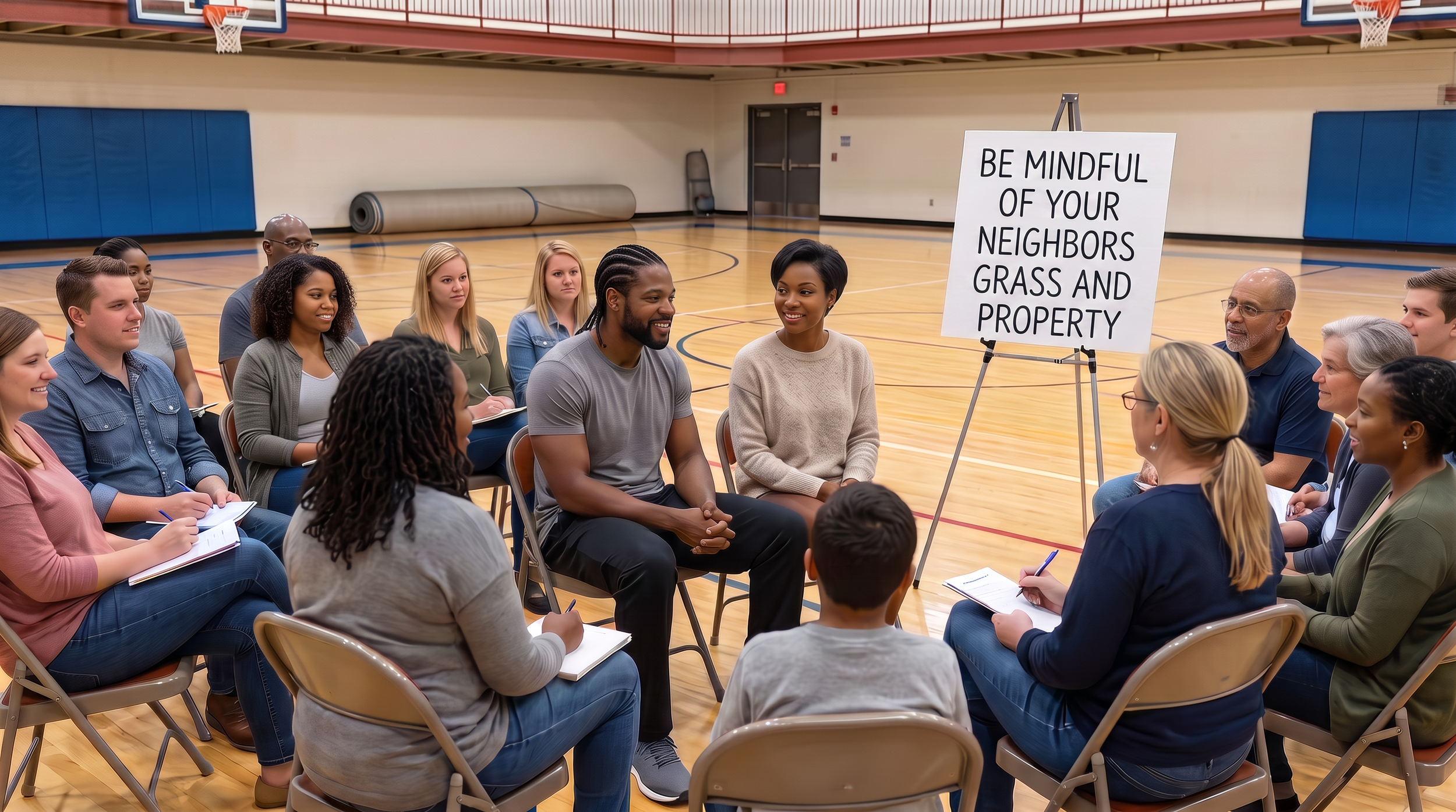
DO YOU FEEL SAFE IN YOUR ENVIRONMENT?
Spirit and Dom know that safety isn't only about locks on doors or alarm systems. It's about whether the people around you, your neighbors, your friends, even your own family, treat your peace, your property, and your history as something worth protecting the same way they protect their own. In "Do You Feel Safe In Your Environment," we sit with the small moments that so often get brushed off as nothing. The neighbor who never picks up after their dog. The friend who beams with pride over a career built inside a system that's actively erasing us. The quiet expectation that we absorb it all and stay silent, because speaking up makes us the problem. This piece asks a harder question too, one we don't always want to turn on ourselves. Are we creating that same safety within our own community, with each other, before we ever expect it from anyone outside of it?
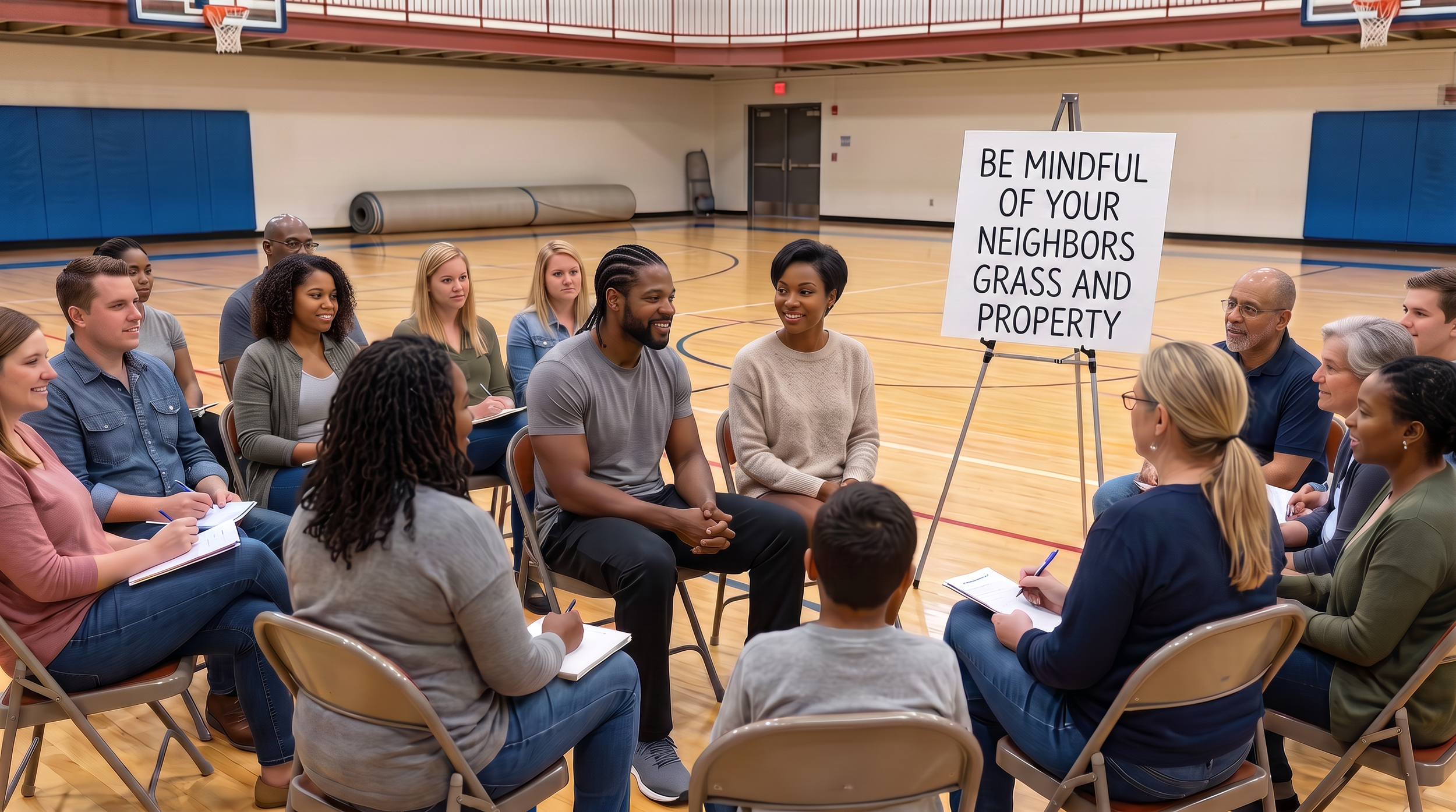
Do you feel safe where you live? Do you feel safe at work? Do you feel safe around the people you call friends?
Not "safe" in the way we usually mean it, like whether someone is going to break into your house or jump you in a parking lot. I mean the quieter kind of unsafe. The kind that doesn't leave a mark you can point to, but that you feel in your body every single day. The kind that makes you tired before you've even left the house.
The Small Things That Aren't Small
Do you feel safe when your white neighbors show very little regard for you or your property, letting their kids and their dogs run loose across your lawn like it's a shared park? Do you feel safe when their trash blows onto your yard and they don't bother to come get it, like picking up after themselves isn't something they were ever taught? Do you feel safe having to wait for them to move their car from in front of your house so you can edge your grass, even though there's always plenty of parking space in front of theirs?
This isn't about one bad neighbor having a bad week. This is about a pattern. About the quiet message that lies underneath the behavior, the one that says your space doesn't count the same way theirs does. That your property line is a suggestion. That you are expected to absorb the mess and stay quiet about it, because making noise about it makes you the problem.
The Black problem.
That's not paranoia. That's pattern recognition. Black people have had to get really good at noticing small warning signs, just to protect ourselves around people who seem nice on the surface. And no matter how that Black person responds to those microaggressions – and actual aggression - they know they will most likely be the one seen as guilty.
When Friendship Doesn't Mean What You Thought It Meant
Are you safe when your white friends, and even some Black friends and family, people who hug you and laugh with you, take pride in their children working for military and government operations under an administration that is openly and intentionally participating in genocide and erasing Black history from classrooms and public life?
Sit with that contradiction for a second, because I had to.
How do you hold someone close as a friend while they cheer on their child's career inside an administrative machine that is actively harming your community and intentionally erasing it’s history? How do you reconcile the trust you felt with them when their own children may be among the very people carrying out that erasure?
What is a friendship – or family connection - actually worth if it requires you to stay silent about your own safety, your own history, your own humanity, in order to keep it?
Why This Matters More Than It Looks Like It Does
It's never just one thing. It's the accumulation. It's the daily evidence that your comfort, your property, your peace of mind, and your history are all treated as negotiable in a way that theirs never is. And when you try to say something, you're the one who gets called sensitive, or difficult, or "playing the race card," when really you're just naming what's happening in front of you.
The Mirror We Don't Always Want to Look Into
Here's where I have to turn this same question back on us, because the same rules apply to how we treat each other. When we treat each other within the Black community with disdain, disrespect, or a lack of care, when we take each other's property, speak to one another with disrespect, we teach other communities how to disrespect us too. People watch how we treat our own before they decide how much regard to give us.
So the question has to be asked. When we are around each other, are we intentionally practicing kindness, consideration, and putting each other first? Are we intentional in choosing each other, when we need a contractor, when we're choosing a neighborhood, a school, a business to support? Safety starts at home, and home is bigger than just our own front door. It's our community too.
Self-preservation matters for a culture the same way it matters for a person. Which brings me to something I've been sitting with for a while now, the conversation about Black women creating safe spaces within a soft life.
Building the Soft Life From the Inside Out
Black women need to be intentional about creating safe spaces for themselves first, in the environments they live in, the jobs they take on, the family members they allow close, the friends they keep, and the romantic partners they choose.
So many Black women, and Black men too, had to be tough dealing with family, dealing with community, and then dealing with the white world on top of that. Being soft, being intentional about our own care whether that's physical, emotional, or spiritual, can feel foreign to those of us raised to always be competitive, always be tough, always "put your big girl panties on" when hardship hit. That conditioning doesn't disappear on its own. We have to be intentional about our boundaries, intentional about creating safe spaces, and honest about our limits, both within our community and outside of it.
If you want your romantic partner, your friends, your family, and your neighbors to understand what a soft life looks like for you, you have to be living it for yourself first. Here are five ways Black women can practice intentional safe spaces to build that soft life.
Set boundaries with family members out loud, even when it's uncomfortable, instead of assuming they'll figure it out on their own.
Choose environments, jobs, and neighborhoods that don't require you to shrink yourself or stay in constant defense mode.
Protect your rest as fiercely as you protect your responsibilities. Rest is not a reward you have to earn.
Surround yourself with people who show up for you consistently, not just when it's convenient for them.
Give yourself permission to say no without over explaining or apologizing for it.
And Black men have a role in this too. Here are five ways a Black man can help the woman in his life practice intentional safe spaces so she can actually live that soft life instead of just hearing about it.
Notice when she's carrying too much and step in without waiting to be asked every single time.
Protect her peace the same way you'd protect her physically, by shutting down disrespect from others in the room.
Make space for her rest instead of treating her softness as something you have to compete with.
Follow through on your word consistently, because safety is built through reliability, not romantic gestures.
Listen when she tells you what safety looks like to her instead of assuming you already know.
What We Owe Each Other
None of this works if we only hold white neighbors and white friends accountable while giving ourselves and each other a pass. A safe environment for Black people has to be something we build together, on purpose, inside our own community first.
That means checking in on each other without expecting something back. It means choosing Black owned businesses and Black professionals when we can, not out of obligation but because we understand what it means to invest in each other. It means correcting each other with love instead of shame when we fall short, and it means refusing to let disrespect toward one another become normal just because we're used to it.
Community accountability doesn't stop at the front door of people who look like us. But it also doesn't start with the people who don't. It starts with us, in how we speak to each other, how we show up for each other, and how intentional we are about making our own spaces feel safe before we ever step outside of them.
So I'll ask you again. Do you feel safe where you live? Do you feel safe with the people you call friends, and even the people you call family? Do you feel safe within your own community?
Do you feel safe and at peace within yourself?
If the honest answer is no, that's not something to bury. That's something to build from, together.
Until next time,
Melissa Pozio
Slow Burn Love
Disclaimer: The content on Slow Burn Love is for informational and educational purposes only and does not substitute for professional medical advice, diagnosis, or treatment. Always seek the advice of a physician or qualified mental health provider with any questions you may have regarding a medical or psychological condition. If you are in a crisis, please reach out to a local emergency service or a crisis hotline immediately.
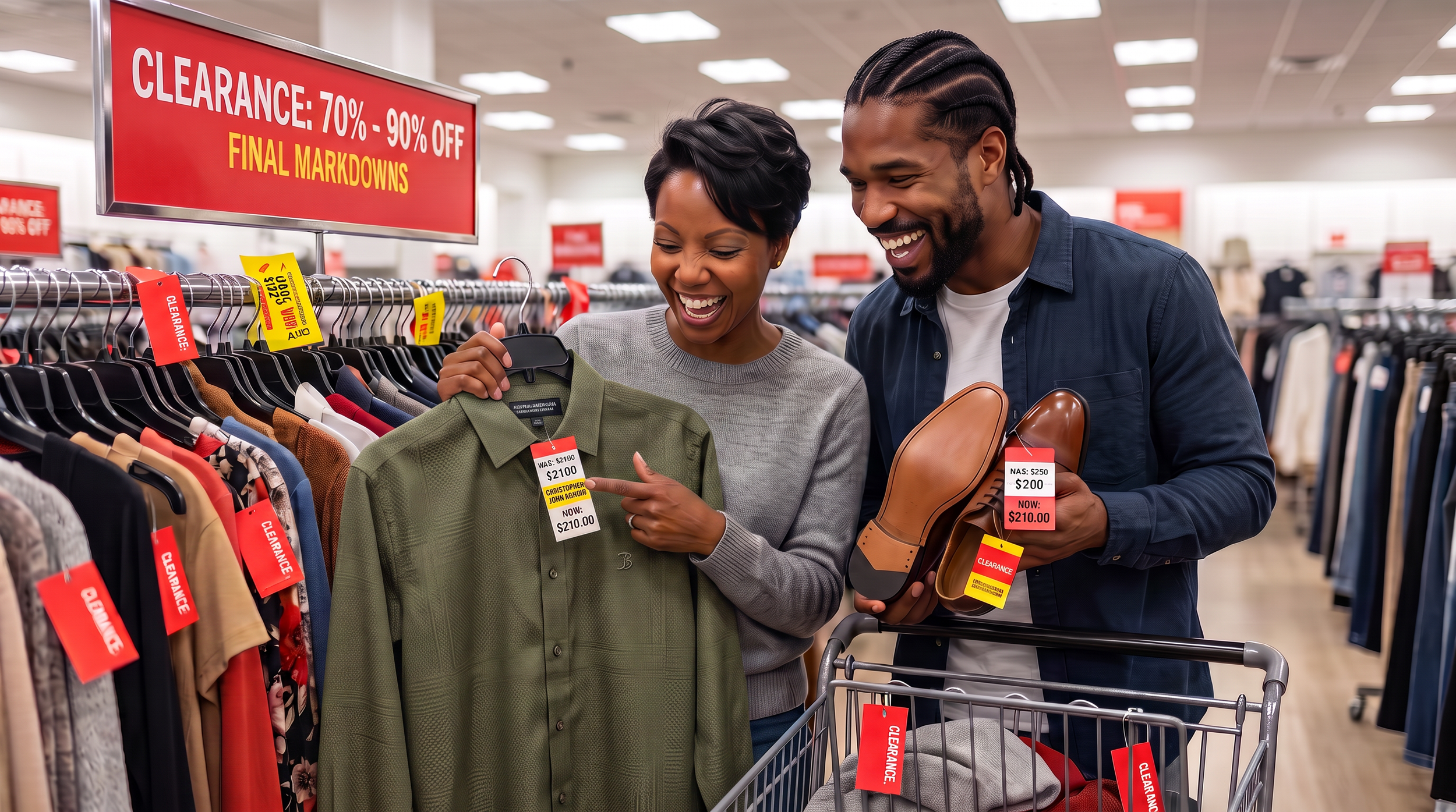
THE CLEARANCE RACK AND THE CULTURE - MARKED DOWN DOESN’T MEAN WORN OUT
Being devalued in a previous relationship doesn't mean you lack value. It just means the person you were with wasn't able to value or appreciate you. This week on SlowBurnLove.com, Spirit and Dom's story sets the backdrop for a bigger conversation running through Black love and community, from Black media ownership at NABJ26 landing in the middle of National Black Business Month, to a term researchers at Stanford call mankeeping and the emotional labor so many women carry in relationships, to a viral post comparing women coming out of bad relationships to a clearance rack. The thread running through all of it is ownership, of the narrative, of peace, of worth. The piece closes with real steps Black men and Black women can each take, and a call for the community to heal together. Marked down doesn't mean worn out. It just means someone didn’t appreciate what they had.
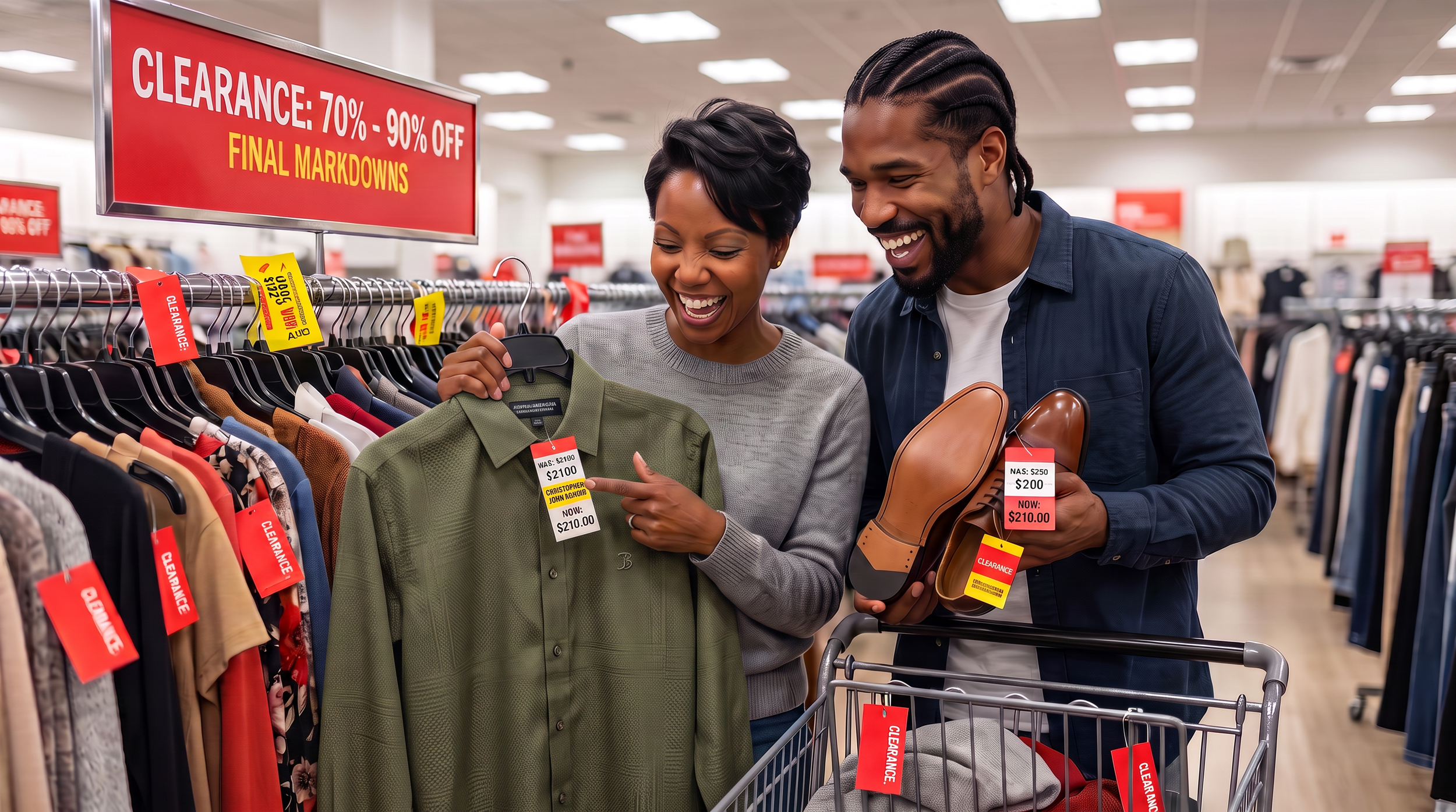
Spirit and Dom, the couple at the center of the SlowBurnLove.com book series, laugh together while shopping a clearance rack at a department store. The image accompanies the article The Clearance Rack and the Culture - Marked Down Doesn’t Mean Worn Out on SlowBurnLove.com, which explores how being discounted by someone who couldn't appreciate you is not the same as losing your value.
Being devalued in a previous relationship doesn't mean you lack value. It just means the person you were with simply wasn't able to value or appreciate you.
Before we have this conversation, let’s first do a quick review about this past week in Black love and community. Black August reminded me why we remembrance matters. NABJ26 had journalists and media professionals talking hard about Black media ownership, and with right wing nationalists steering so much of what gets put out in the media today, that conversation feels more urgent than ever. It landed right in the middle of National Black Business Month, which felt fitting. Ownership is ownership, whether it is a newsroom or a nail shop. Support Black business, and support Black owned media too, because controlling the narrative is a business, and that is especially important in today's violent political environment.
The thread of ownership followed me into my own personal life this week in a different form. Ownership of my time. Ownership of my peace. I welcome romantic relationships but I am not rushing into anything, especially anything that feels like someone has the need to compete with me or compete with my peace. I am enjoying my single season, my energy, and am not settling for proximity versus the gift of someone’s good genuine energy. Which brings me to the next conversation.
Mankeeping
An article crossed my media page this week that centered on a term researchers at Stanford have coined mankeeping. It describes the emotional labor women carry in heterosexual relationships. Not just remembering birthdays or planning the weekend, but being your partner's and the relationship’s entire support system. Managing his stress. Reading his moods. Holding space for the feelings he refuses to share.
The article ties this to what researchers call the male loneliness epidemic. As men report fewer close friendships, the women dating them get handed the job their friends used to do. She becomes his whole emotional infrastructure. The article notes that far fewer single women than single men are currently looking for a relationship, which says a lot about where women's patience is sitting.
However after reading the article, what I believe gets left out of conversations like this is the amount of work a woman has to put into simply being human - see my blog The Weight Of Being A Human Woman - then Being Black. The amount of emotional, physical, and psychological labor women have to put into themselves first before they do for anyone else will never equal the work our romantic male counterparts need to do for themselves. Then on top of that, men look to women to do the work for the support they need many women have already done to support themselves. When a man walks into a relationship complaining about his life without any real empathy for what a woman carries just existing, she often has to shrink herself to meet him where he is. That kind of relationship never lasts. Unless he evolves and learns to genuinely empathize with the human condition of a woman, that man, and that relationship, will never grow. As a result, it seems more women are choosing to opt out. The current misogynistic manosphere will continue to evolve and thrive until those toxic men do the work to meet women at their softer, more intuitive, physiological sides.
This same manospheric, problematic energy showed up in a social media post when a man compared older mature women coming out of bad relationships as being placed on a clearance rack. It said women give their best selves and their prime years to toxic men, then want a good man once they are “damaged goods”. But the very man who made this comment, and those agreeing with him, are the same toxic men who put those women on clearance in the first place. A good man would not have made that comment, and a good man would not agree with or let another man get away with saying it either.
One man's loss - because of his inability to appreciate what he had - can become another man's treasure. Being “marked down” by someone doesn't equal being worn out. Any man who believes a woman has no value after an unhealthy relationship before him is most likely the same kind of toxic, narcissistic man she had been with before. Sometimes men who experience a woman who is seasoned, evolved, and understands her worth confuse this with her being damaged, but the reality is her lived experience won’t allow her to put up with bullshit.
When we come across these toxic conversations, devaluing each other, in public, on social media, here are a few things we can do to help the community evolve and show others the love and respect we have for one another.
What Black Men Can Do
Build real friendships with other men so your partner is not your only emotional outlet
Do the inner work on your own feelings before you bring them into the relationship
Notice when you are venting instead of processing, and ask if she has capacity before you unload
Retire the clearance rack mentality and understand that a woman's lived experience is value, not damage
Call out other men who talk about women like inventory instead of laughing along
What Black Women Can Do
Protect your energy without apologizing for it, because rest is not the same as giving up on love
Get clear on what alignment actually feels like so you stop mistaking being wanted for being right for you
Let go of the idea that being discarded by someone who could not appreciate you says anything about your worth
Choose partners who show genuine empathy for what you carry, not just partners who say the right words
Keep building your own peace and community so you are whole with or without a relationship
Coming Together
None of this gets fixed by one side changing alone. Black men carrying real emotional weight and doing their own healing work, and Black women protecting their peace without shutting the door on love completely, are two halves of the same repair. The manosphere thrives on convincing us we are enemies instead of partners. Mankeeping thrives on convincing women that exhaustion is just what love costs. Both are lies.
The community heals when we stop keeping score of who was more toxic and start holding each other accountable with love. Men doing the work to show up whole. Women refusing to shrink themselves to make a halfhearted man comfortable. Both sides choosing partnership over performance. That is how we actually get free of both the “clearance rack” and the “mankeeping trap”, together, instead of one gender waiting on the other to move first.
Nobody gets to write my narrative for me, and nobody gets to write yours either. Marked down doesn't mean worn out. It just means somebody else wasn't the right fit.
Lastly, as one of my favorite male social media influencers most recently said, dating women who created their own peace “ain't for lil boys”. And neither is the woman on the clearance rack, whose grown woman experience is too big for their britches.
Until next time,
Melissa
Slow Burn Love
Disclaimer: The content on Slow Burn Love is for informational and educational purposes only and does not substitute for professional medical advice, diagnosis, or treatment. Always seek the advice of a physician or qualified mental health provider with any questions you may have regarding a medical or psychological condition. If you are in a crisis, please reach out to a local emergency service or a crisis hotline immediately.
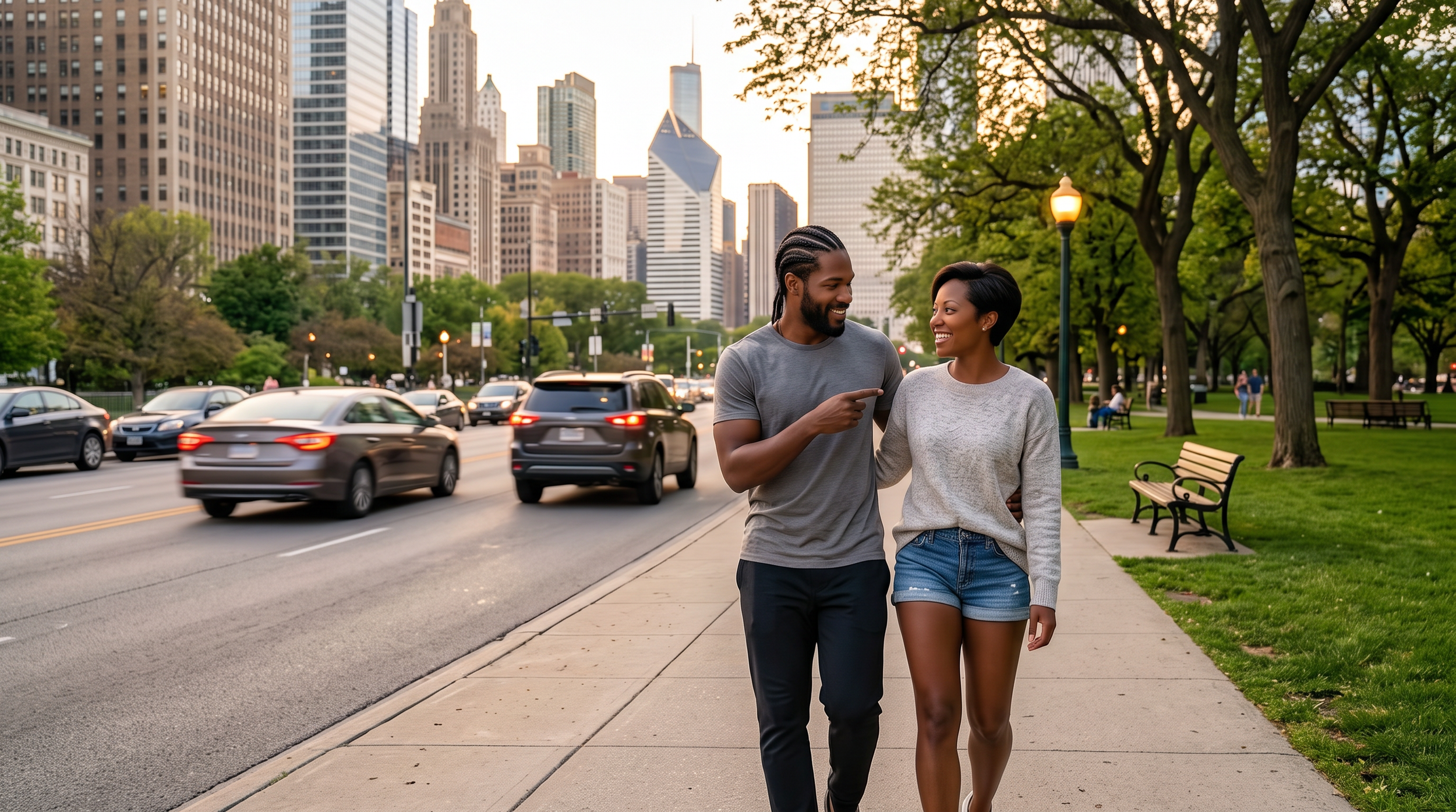
THE WEIGHT OF BEING A HUMAN WOMAN, THEN BEING BLACK
This week’s blog starts off as a personal rant - the physical reality of living in a woman's body, the pelvic floor pain that shows up out of nowhere, the monthly cycles, the birth control risks nobody warned us about, and the way hormonal care for women is still treated as an afterthought decades after it should have been standard. How Generation X men and women learned to treat each other as "homies" instead of partners, and what that cost us in the long run and more…
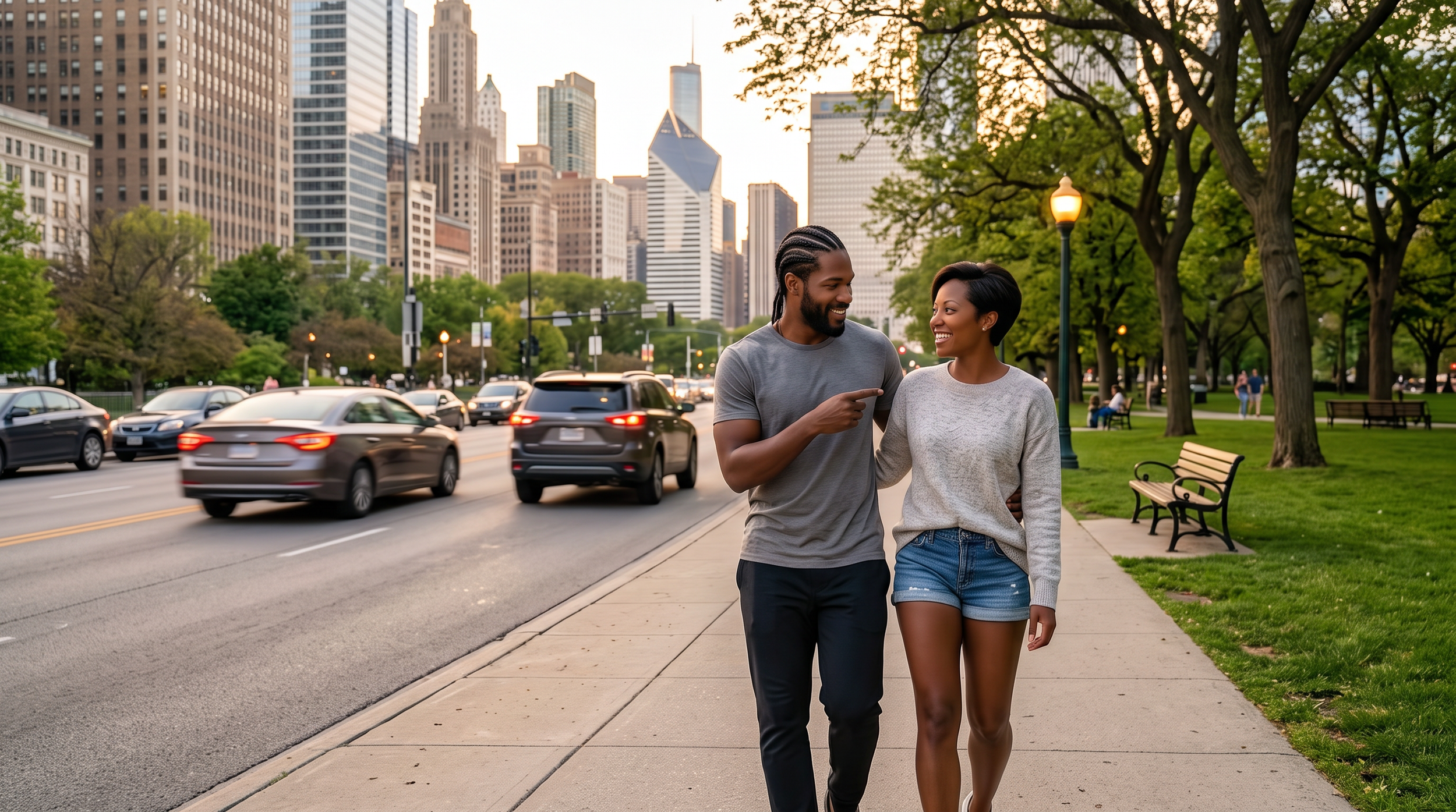
Spirit and Dom, from SlowBurnLove.com series, walk together along a tree-lined city streets, illustrating "The Weight of Being a Human Woman, Then Being Black On Top of It," a SlowBurnLove.com blog post on womanhood, Black identity, and community accountability in relationships.
Today's blog is going to read more like a rant than a social commentary. If you don't want to hear about the troubles of being a human woman, added to being Black, this one is not for you. My energy has been low most of the day. It spikes around 9:30 pm and will dip again by 10:44 pm and since this is a weekly blog and Sunday is my release day, this is what everyone is going to get.
As I sit here writing, I'm slowly recovering from severe pelvic floor pain after an hour long walk today. That pain shows up maybe four times a year. It's excruciating and so random that doctors don't know what to do about it. It usually follows a workout, and feels like labor, like a baby trying to come out of me. It only lasts five to ten minutes but puts me down for the rest of the day. As a 54-year-old women you think in your head the troubles of being a woman should be over, however you are just introduced to a new chapter of what it means existing in a female body.
I don't want this blog to only focus on my pain, but the complicated physical realities of being a human woman are real. Monthly cycles. The social difficulties that come with that, like swimming, the clothes you wear on your cycle, the products you use. Birth control, where some of the pharmaceutical products sold to us have been shown over time to be chemically unsafe, some linked to brain cancer. Breast cancer and ovarian cancer, where the government has spent the past twenty years acknowledging a lack of real investment in curing them. Pregnancy, and the struggle of the before and after, physically and psychologically. In this political era, some states won't allow abortions, and women have actually died because of that lack of care. And you don't get much of a break as you get older. Perimenopause, menopause, hormonal care, something that should have been on the table for women decades ago. The current science around it is genuinely helpful but keeping that support in place under this administration feels dark and uncertain.
When I hear men tell their daughters "you are the prize,"as an older woman, it carries a different weight now. It's about what a woman's body can do for a man, and how easily she can be used up if she isn't careful. I pray my sons and others of the younger generation understand and appreciate this. Women, by nature, don't age the same way physically, and stress can visibly age a woman faster. I've asked myself why I didn't just choose to be a man in this life. As a man it seems all you have to do is get a job, grow a beard, take Viagra if you need it, and pray you keep your hair through your fifties. Even if you don't, at least in my generation, a bald head reads as sexy. How much you attract "the prize" often comes down to what's in your pocket – especially it seems with this younger generation - and after fifty four years of living this life, I understand why. Love matters, but caring for a woman costs something. Acknowledging that a man should be able to care for a woman not just financially but physically and emotionally – understanding her needs – I don’t think translated well for my generation, Generation X. I think we treated too many of our male counterparts like our "homies", that we could do whatever they could and stopped reminding them that we are still women who need to be cared for as women and require different needs. I believe part of this current divide in GENX and what we have taught millennials is men think they are "the prize" and do very little to keep a good woman. We as women have possibly failed to teach the men that being a human woman is a lot more difficult and takes real effort and work to maintain our persons. I however have hope, as it seems some millennials and Gen Z are trying to correct that toxic pattern.
On my walk today, I intentionally reminded two young couples that passed me that the woman should walk on the inside of the street, on the protected side. Some men apparently weren't raised to think that way. But maybe some men are simply wired differently for relationships, that their care for women is superficial. Misogyny is a real thing in our environment as is misogynoir.
As women we need to safeguard ourselves of this fact and use discernment when we offer allow our male counterparts into our complicated and beautiful womanverse.
Black hair, perms, hot combs, braids, sensitive scalps, bonnets. This was supposed to be most of this week's post, honestly, the durag and bonnet discourse and how some HBCUs are trying to keep students from wearing them to class. There's also the ongoing conversation about being "the only one in the room" and how carefully you have to move through that. I read a post today about a Black woman who was having an epileptic seizure in front of her white friends, and instead of helping her, they assaulted her. It turns out she was pregnant, has since had the baby this August, and is now deciding to press charges against the women involved.
There's a broader conversation happening too, about how white friends will disappoint you, use the N word with the hard R, say harmful things, and then when you try to correct them, write off your reaction as "playing the victim."
A few years back I found myself in an uncomfortable situation where the roles were reversed. I was eating with a group of friends, mostly Black, and had invited a white friend along. She's someone with a level of prestige in the community who has told me she wants to help the Black community because she understands her privilege. But in the very beginning, instead of receiving her, she was verbally attacked by one of the Black guests. I was shocked at the level of vitriol directed at her, especially since I had invited her specifically because of how she might wanted to help the community. I felt shame in that moment and apologized on that person's behalf, and I'm sure it has strained the relationship going forward.
I'll admit I felt a kind of "payback" later, when she read one of my books and commented as though she didn't think I'd know what the word "chyron" meant, as if that word hadn't been all over the coverage of the Rodney King and OJ Simpson trials. That moment made me stop and ask myself something honest. Is this just me accepting a friend's blind spots about the Black experience, or is she quietly associating my Blackness with a lack of vocabulary? I do use AI for editing, so I gave her the benefit of the doubt on that one. But there have been other moments, with her and with other white friends, where comments crossed from careless into something closer to unsafe. Currently living through the Project 2025 era as a Black person makes you more alert to your surroundings, especially living in a majority white, conservative community. The everyday macro and microaggressions never really stop. You're always managing them.
Here are my five things I'd offer to anyone navigating microaggressions in cross-racial friendships, from either side of it.
Name it plainly and early, before resentment builds. A simple "that sounded wrong, and here's why" is more useful than silence.
Give the benefit of the doubt once, but watch for a pattern. One clumsy comment is human. A pattern is information.
Don't perform forgiveness you don't feel. Real accountability requires honesty, not a quick smoothing over for the sake of comfort.
Ask for specifics instead of generalities. "Help me understand what you meant" gets further than a blanket accusation or a blanket denial.
Protect your peace without cutting people off automatically. Distance is allowed. It doesn't always have to be permanent, but it also doesn't have to be earned back quickly.
Even though the two couples I stopped in the park today were white, that correction - protect your woman, keep her on the safe side of the street, is something worth teaching across every culture. Anything that's good for love, for relationships, for how we treat each other as humans, is worth sharing across cultural lines. We don't have to keep these lessons separate to keep them meaningful. I pray for Black love and community first, but in the end I am praying for us all.
Until next time,
Melissa
Slow Burn Love
Disclaimer: The content on Slow Burn Love is for informational and educational purposes only and does not substitute for professional medical advice, diagnosis, or treatment. Always seek the advice of a physician or qualified mental health provider with any questions you may have regarding a medical or psychological condition. If you are in a crisis, please reach out to a local emergency service or a crisis hotline immediately.
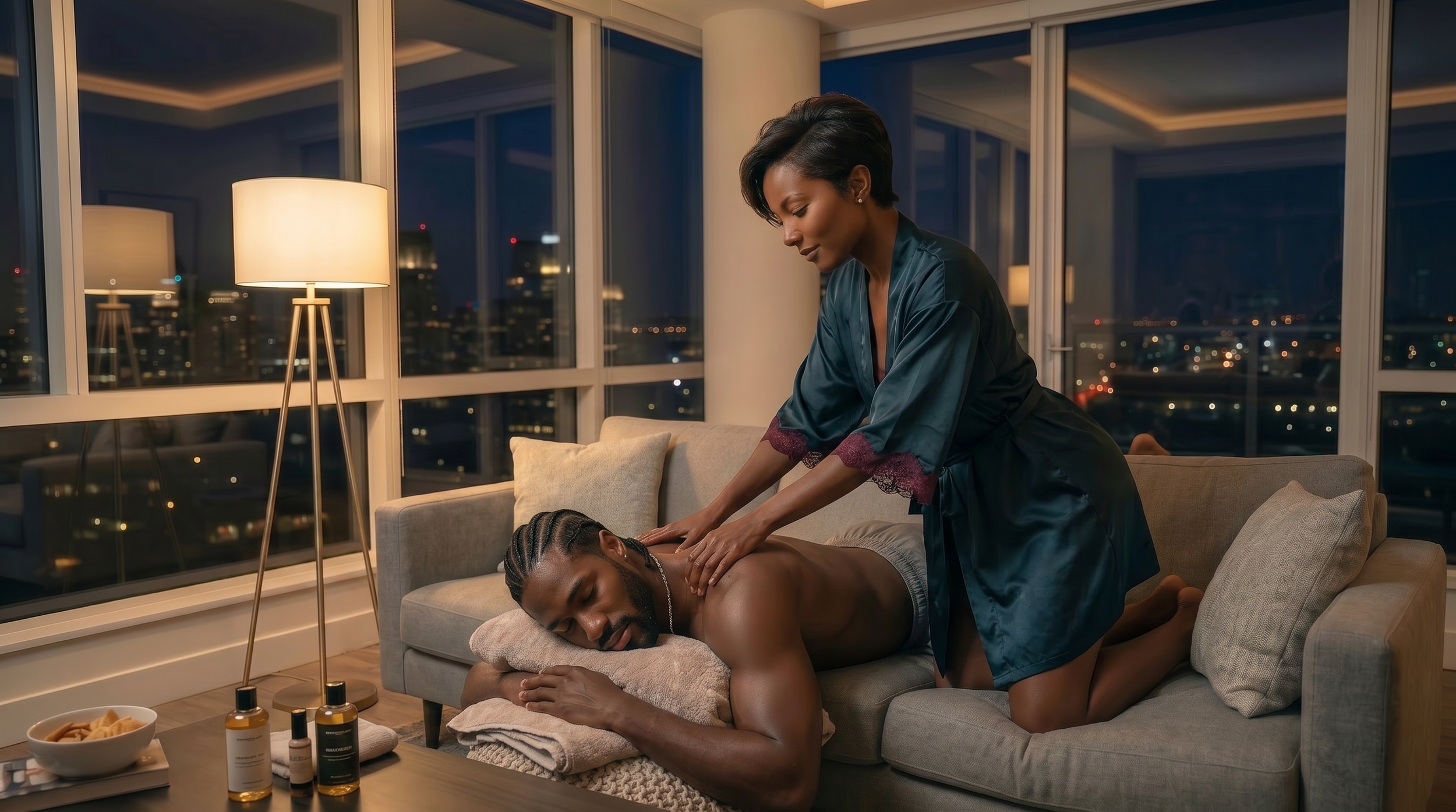
WHAT “SOFT LIFE” ACTUALLY MEANS, AND WHAT IT WAS NEVER SUPPOSED TO BE
“Soft life" became shorthand for money, someone else footing the bill, a partner buying you comfort. But that was never the real meaning. Soft life was about two people holding space for each other's peace, not one person financing it. This piece breaks down what soft life actually meant before it turned into a buzzword, why "I deserve the best" only means something when it's backed by a real standard, and how to spot when you're the only one holding a relationship together. Whether it's a man or a woman doing the least while you carry the rest, this piece gives you the red flags and what to do once you see them clearly.
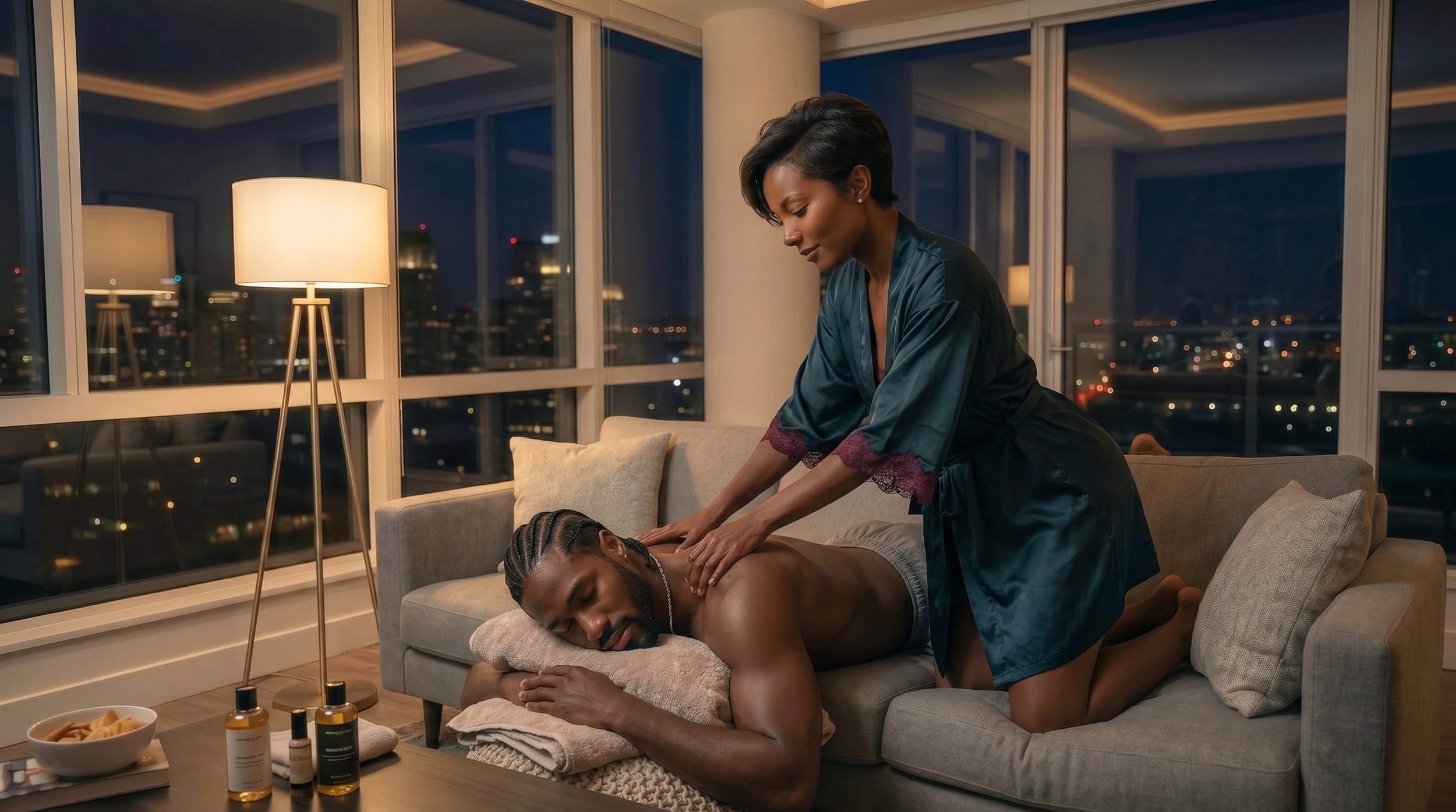
#SpiritandDom from slowburnlove.com This is what earned ease actually looks like. Not something either of them was owed on day one, but something built through the small, repeated ways they've shown up for each other, now showing up as this quiet, unhurried moment between them.
The soft life conversation has gotten messy. What started as a real correction, women refusing to shrink themselves for relationships that took more than they gave, has been stretched by some into a blanket excuse. "I deserve the best" gets used as a period at the end of a sentence instead of the beginning of one. It replaces the follow up question. Deserve the best based on what. Built with who. Sustained how.
When people first said 'soft life,' they meant something like this. You work hard to build trust with someone, you're honest, you show up for them again and again. Because you did all that work, you finally get to relax and feel safe with them. The relaxing part comes after the work.
But over time, people forgot about the work part. They kept saying 'I deserve the best,' but they stopped doing the things that actually earn the best. So now some people expect to be treated really well by someone they just met, before that person has even shown they can be trusted. They want the reward without doing what it takes to deserve it.
Soft Life Was Never About the Absence of Effort
The women who first popularized the soft life idea weren't asking to be spoiled by strangers. They were exhausted from being the only ones holding a relationship together, the only ones initiating, apologizing, planning, and absorbing the emotional weight of two people's lives. Soft life was the decision to stop doing that unpaid relationship labor. It was never a promise that love shows up fully formed with no history behind it.
Feeling relaxed and safe with someone usually doesn't happen right away. It's something you earn. It happens after two people keep showing up for each other over and over, not just saying nice things one time, but actually proving it again and again. You can't skip that part and jump straight to expecting the reward of trust.
Where "I Deserve the Best" Goes Wrong
The words 'I deserve the best' aren't the problem. The problem is how people use them. Some people use it like a finish line, like once they say it, they don't have to do anything else. But it should really work like a rule you follow, not an ending. 'I deserve the best' should mean, I'm only going to accept honesty, consistency, and real effort before I give someone my whole heart. It shouldn't be an excuse people use when they don't feel like putting in the work to build something real.
Applied honestly, soft life means you stop accepting less than consistency and honesty while something is still being built, and you stop performing gratitude for scraps. It does not mean removing the building phase entirely and demanding luxury treatment from someone who hasn't shown you who they are yet and hasn’t shown you that same luxury treatment in return.
Sleeping With the Enemy
There's a category of relationship that gets romanticized far past what it deserves. Someone who cheats. Someone who doesn't even like you. Someone who is there for your resources. Someone you've clearly outworked, where you're doing the initiating, apologizing, planning, and holding the emotional weight of the whole connection by yourself.
That's not a soft life. That's an unpaid position with unclear hours. Calling it out early protects you from years of confusing intensity for intimacy.
Five Ways to Call It Out in Men
He disappears for stretches with no real explanation and gets irritated instead of reassuring when you ask about it.
His words and his actions live in two different timelines. He says he's serious about you but his calendar, his introductions, and his effort say otherwise.
He only shows up fully when he's worried about losing you, then goes back to minimal effort once he feels secure again.
He compares you unfavorably to other women, or keeps people around who clearly want him, without shutting that door.
You're the one remembering dates, initiating plans, and checking in, while he responds instead of reaching.
Five Ways to Call It Out in Women
She keeps you in a holding pattern, warm enough that you don't leave, but never moving the relationship somewhere real.
She's inconsistent with affection in a way that keeps you anxious, warm one week, distant and critical the next, with no clear cause.
She talks about you to friends or online in ways that don't match how she treats you privately.
She uses guilt or comparison to keep you competing for basic respect instead of receiving it freely.
You're the one doing the emotional labor, tracking the relationship's health, initiating repair after conflict, while she stays passive.
What to Do About It
Protecting your peace here isn't about becoming cold or unreachable. It's about paying attention to patterns instead of potential. Potential is what someone could become if they wanted to. Pattern is what they've actually shown you.
Name what you're observing out loud, plainly, without softening it into something smaller than it is.
Watch what happens after you name it. Real accountability changes behavior. Defensiveness and blame just repeat the pattern with better excuses.
Stop supplying the effort that's missing from the other side. If you carry both people's investment, you'll never know what they were actually capable of giving.
Give yourself a real timeline for change, not an open ended hope that things will shift eventually.
Return to people and routines that reflect back to you what you actually deserve, so the imbalance becomes obvious instead of normal.
Soft life was never about doing nothing and receiving everything. It's about refusing to keep doing everything while receiving nothing. That distinction is the whole conversation.
Until next time,
Melissa
Slow Burn Love
Disclaimer: The content on Slow Burn Love is for informational and educational purposes only and does not substitute for professional medical advice, diagnosis, or treatment. Always seek the advice of a physician or qualified mental health provider with any questions you may have regarding a medical or psychological condition. If you are in a crisis, please reach out to a local emergency service or a crisis hotline immediately.
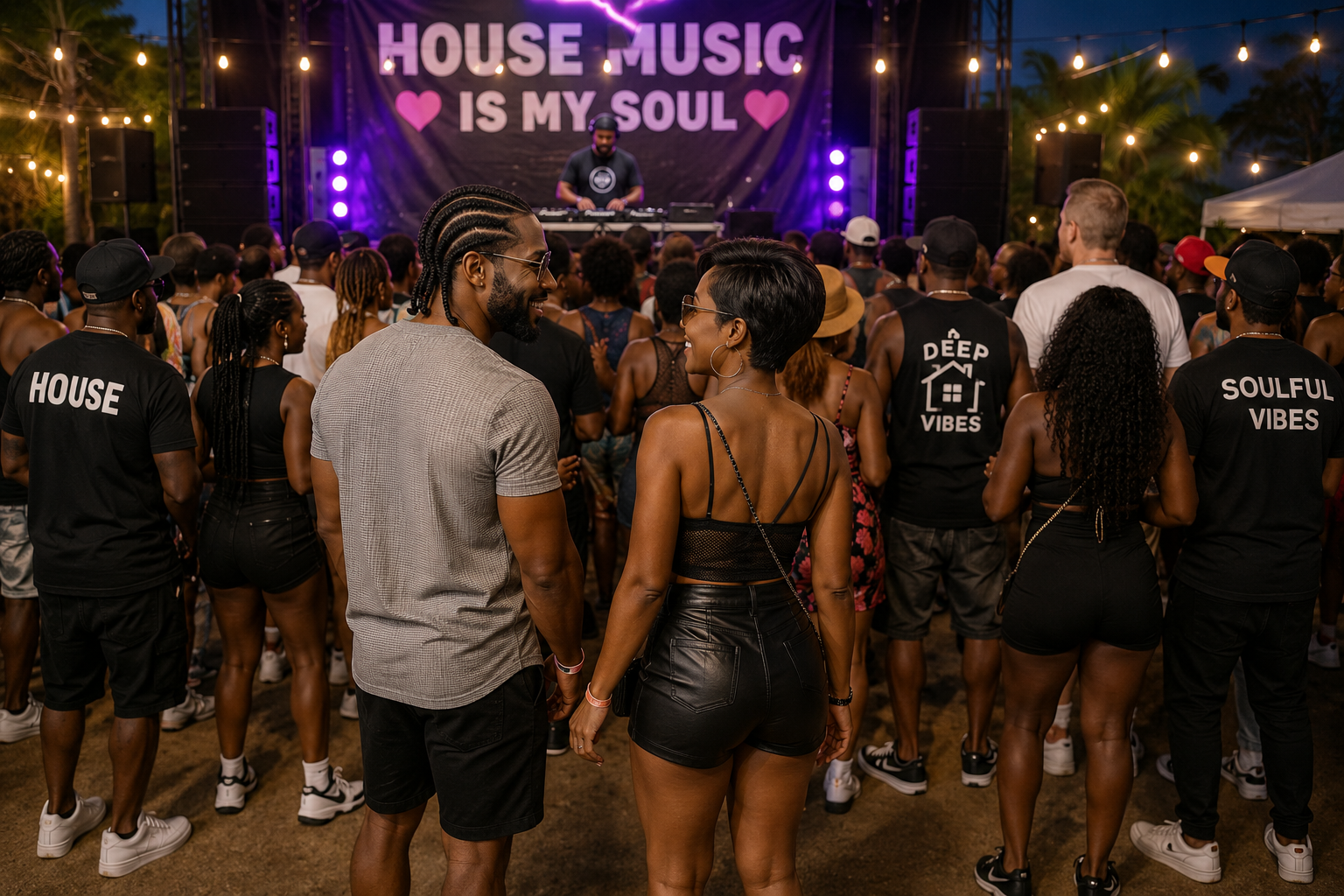
WE ALREADY KNOW HOW TO KEEP EACH OTHER SAFE
We already know how to keep each other safe. Long before anyone else thought to look out for us, we were doing it ourselves, on dance floors, at cookouts, in church basements and house music sets that stretched into the early morning. Nobody handed us that skill. We built it out of necessity and passed it down without ever writing it as a rule. This week I am talking about what that safety actually looks like when you see it in motion, the small unspoken agreements between strangers, the way a crowd of us shifts to protect its own without a single word being said. It is instinct. It is community. It is something we have always carried in us.
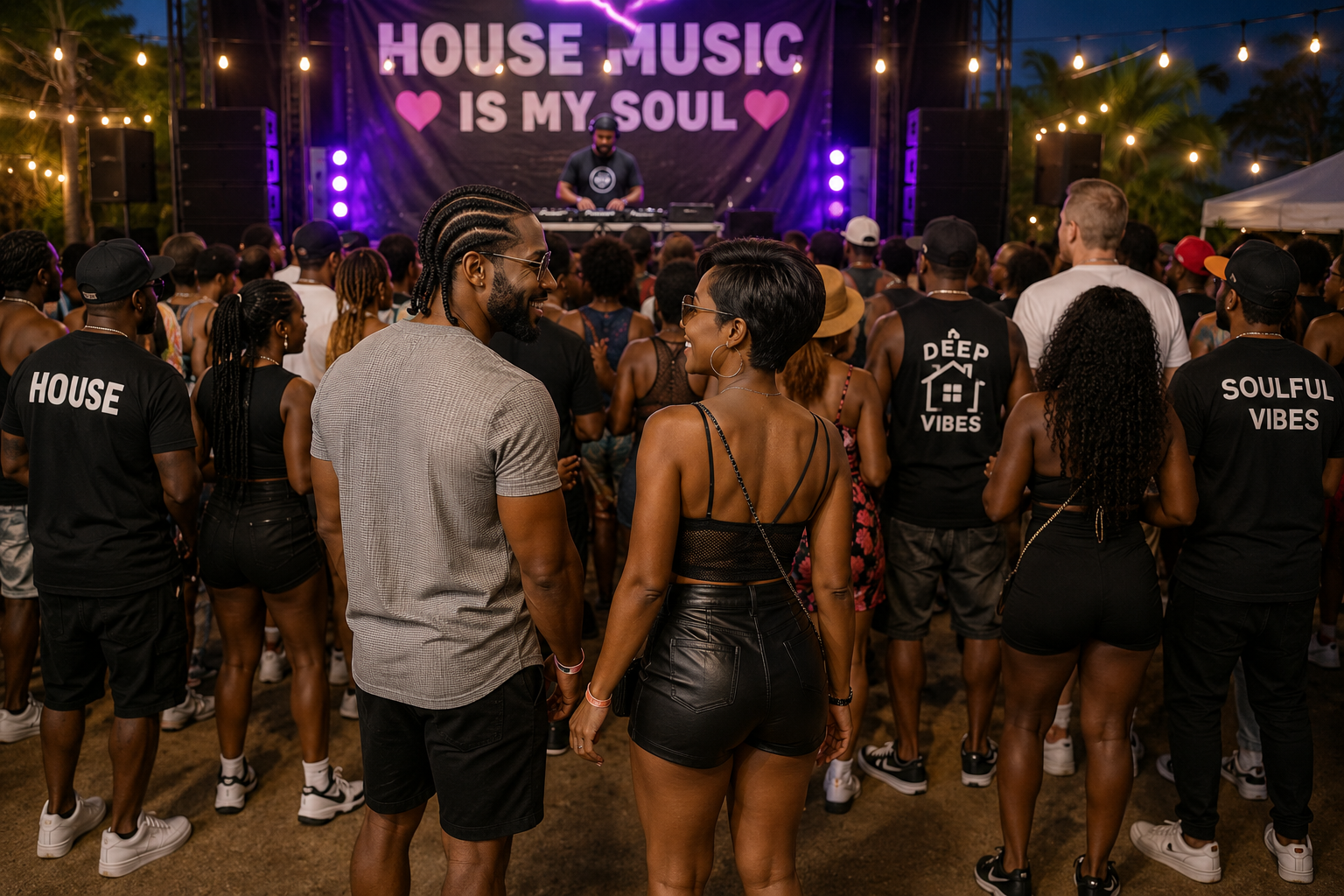
We already know how to keep each other safe. A crowd of Black people packed together at a house music set, DJ booth glowing behind them. Nobody here needed a permission slip to feel free. This is what safety looks like when we build it ourselves, one dance floor at a time. From We Already Know How To Keep Each Other Safe slowburnlove.#SpiritandDom
This weekend gave me a lot to think about. A beach party. A house music festival I heard about from a friend. A talk with a young man about Chris Brown and Usher's concerts. And Nolan Wells passing. All of it kept pointing me back to one thing. Safety. Not the kind you get from laws or police. The kind we build for each other, in the moment, with our own hands and attention.
Let me start with the beach.
This weekend I was at a house music beach party. I was in a sea of Black people, dancing, laughing, feeling free. There was one white guy there and at some point he had too much to drink and literally fell flat on his face right in front of me. I did not think twice. I went over, helped him up, and helped clean him off. The DJ stopped the music and called for medical help before I even had a chance to yell for someone myself. A whole crowd of strangers switched from having fun to taking care of a stranger in seconds. It was a hard fall. I think one or two people laughed a little - when he sat up he had a silly smile on his face, so you could tell he had too much to drink. But most of us took it seriously. Nobody filmed him to make fun of him. The Black community took care of him.
I wish Nolan Wells had the same kind of protective community care around him.
A friend of mine posted about something similar at a different house music festival this same weekend. Another white guy, another sea of Black people. He danced for four hours straight. Nobody bothered him and he was completely safe the whole time.
I keep thinking about how these two stories are the opposite of what people expect from Black spaces. We hear so much about "Black on Black crime." We hear that our neighborhoods and our parties are dangerous. We hear that anyone outside the community should be scared to walk into a room full of us. That story is tired and it is blown way out of proportion. The truth is the only reason someone who is not Black would need to worry about their safety in an all Black space is if they came that space to cause trouble. Come with respect and you will get respect back.
That is who we are. That is who we have always been. We just do not get the credit for it.
Protecting Each Other's Space
At that same beach party, I danced with someone and it turned into a small reminder about safety. Our movements found a rhythm together without either of us trying too hard. He respected my space and I respected his. There was no crowding, no pushing, no idea that dancing with each other meant either of us was owed anything more. It was protective in a way that is hard to explain unless you have felt it. Two people moving together, having fun, while still honoring each other's boundaries. We danced for quite some time. I don’t know his name, never got his contact information, never really cared to, but was left with the memory of a moment in time on the dance floor where I had fun feeling safe with a brother from my community. That is the blueprint. Not just for the dance floor, but for how we treat each other in general. Things like presence, respect, and self-control. These things cost nothing and they change everything.
The Chris Brown Conversation
That same weekend I talked with a millennial about Chris Brown selling out arenas on tour with Usher. The conversation moved, like it always does, into his history with Rihanna. He brought up her name and told me his version of what happened between them. His version put the blame on her – something that happens a lot with Black women. And I will be honest, that part of the talk stuck with me. It reminded me that even in spaces built on joy and protection, we still carry stories that need to be fixed. Rihanna has never said in public that she started that fight. What we do know for a fact is that Chris Brown pled guilty to assaulting her.
The stories young people repeat about that night matter. They shape what the next generation believes about taking responsibility, about who gets to change history, and about what real safety in a relationship looks like.
Which brings me to what I want to leave you with this week.
5 Things Black Men Can Do to Help Create Safe Spaces for the Black Women They Love
Listen to and consider her the first time she tells you something hurt her
Learn her moods and her body, so you can tell the difference between quiet and shutting down
Protect her name in rooms she is not in, the same way you would protect it in rooms she is in
Read her body language before entering her space, even if you have been together for years
Take responsibility without needing her to soften the way she brings it up
5 Things Black Men Can Do to Help Create Safe Spaces for the Community as a Whole
Step in when something is going wrong instead of pulling out your phone to record it or laughing about it
Correct your friends in private instead of laughing along with them in public
Step up to calm things down the way the DJ did at that beach party, fast, calm, no ego
Show good examples of consent and boundaries in public so younger men have something to copy
Speak up when a false story about a Black woman is being repeated, especially when no one else in the room will
None of this is complicated. I watched it happen in real time this weekend, on a beach, in a crowd, on a dance floor. We already know how to do this. We do it without thinking when the moment calls for it. The work now is making it happen every time, not just once in a while.
That is what safe spaces really look like. Not the absence of danger but people who are willing to catch each other.
Until next time,
Melissa
Slow Burn Love
Disclaimer: The content on Slow Burn Love is for informational and educational purposes only and does not substitute for professional medical advice, diagnosis, or treatment. Always seek the advice of a physician or qualified mental health provider with any questions you may have regarding a medical or psychological condition. If you are in a crisis, please reach out to a local emergency service or a crisis hotline immediately.

BLACK LOVE SHOULDN’T NEED YOUR PERMISSION TO EXIST: WHY BLACK LOVE HAS TO COME FIRST
Back in 1967, Loving v. Virginia said Black love did not need anyone's permission to exist. Almost sixty years later, we are still seeking approval we never needed, from people who were never invested in our happiness in the first place. This week I am talking about what it looks like when Black love comes first, without apology and without waiting for anyone else's blessing.

Black love does not need your permission to exist. In the produce aisle, Spirit and Dom lean in close over their carts, fully present with each other, while the world keeps moving around them. Their bond does not wait for anybody else's approval. It just is. slowburnlove.com #SpiritandDom
Tucked into the Black history calendar for this exact week, back in 1967, was the anniversary of the first Black Power Conference in Newark. Over a thousand people from more than a hundred groups stepped away from the "let's integrate with white people" plan a lot of the Civil Rights Movement was built on. Instead they said we need our own political power and our own economy first.
That anniversary is really the root of everything we talk about in Black love and community today, from soft life to whether Black singles should date "like other races." Under it all is the same question Newark was asking almost sixty years ago. Was integration actually good for us, or did it cost us something we still have not fully named. Even now, gentrification keeps pushing Black families out of cities that turn around and use Black culture to look cool.
Was Integration a Good Thing for Us
I am about to say something that might rub some people the wrong way, then explain it. Integration gave us access. It opened doors to schools, jobs, and neighborhoods locked to us by law. That access was not small. People bled for it.
But access is not the same as ownership. When we moved into white spaces, we often walked away from our own. Black owned businesses closed as we spent our money in white owned stores that finally let us in. Black schools closed and Black teachers lost jobs as our kids went to white schools instead of building up our own. Black neighborhoods lost money that used to stay inside the community, once the people with the most opportunity moved elsewhere.
So here is the honest answer. Integration was good for individual access and legal rights. It was mixed, and costly, for our shared ownership and community wealth. Both things are true at once.
This Blog Is Black On Black Love First, and I Should Not Have to Explain Why
SlowBurnLove Is built on Black on Black love FIRST. Not in a "you can only love your own race" way, but in the simple sense that if Black people had never loved other Black people, there would be no Black people. That sentence should not need explaining, but somehow these days it does.
You do not see this pressure put on other groups. Nobody questions why Native communities put Native love first, or why Asian and Latino communities protect their own love the same way. But loving Black on Black love specifically has started to sound controversial to some folks. If wanting your people to keep existing is now something you have to defend, that is a bigger cultural problem, and it needs to be named instead of tiptoed around.
Loving Who You Want and Still Protecting Black Women
People should love who they want, full stop. I am not writing this to shame anybody's partner choice. But when it comes to Black men, love does not exist by itself. It comes with responsibility to the community too.
If a Black man is with a woman who is not a person of color, the question is not whether that relationship is okay. The question is whether he is doing the work to make sure Black women in his life still feel safe, respected, and seen. Is he teaching his partner to walk into Black spaces with respect, not like she owns the place. Is he making sure she understands the difference between liking Black culture and actually standing up for the Black women in his own family.
A partner who is not a person of color can learn the slang, the music, and the mannerisms and still not know how to feel what a Black woman feels day to day. Knowing the culture is not the same as carrying its weight. That understanding has to be taught, shown, and practiced on purpose.
Here is the bigger problem though. A lot of Black men were never taught how to truly understand Black women either. So how can a man teach his partner something he has not learned himself. That is an honest gap we need to name before we can fix it.
5 Ways Black Men Can Help Their Partners Meet Black Women Where They Are
Talk openly and kindly about the pressure Black women carry every day, like being expected to always be strong or being overlooked in beauty standards
Speak up when your partner copies Black culture without understanding it, like using slang or styles as a costume instead of something she respects.
Bring your partner around real community, not just your friend group, so she learns from Black women directly
Make room for your partner to sit back and listen instead of making conversations about Black womanhood center on her
Hold yourself accountable first. Your partner will follow your lead
5 Ways Black Women Can Help Their Circle Create Safe Spaces
Set the tone early. Say out loud what respect looks like in your spaces before an interracial relationship shows up
Let your friends and family feel safe asking you questions in private, so they are not just going along in public while feeling unsure underneath
Speak up in the moment when something feels off, instead of staying quiet to keep the peace
Protect your traditions and language instead of letting them get watered down to make a new partner comfortable
Model the boundary you want honored. Your circle will follow whatever standard you set for yourself first
Bringing It Back to Black
This platform is a love and relationships space about Black people, for Black people. That is not going to change. But that does not mean our non Black readers cannot learn something from it too. In the end all of us have to find a way to get along, love each other in community, and respect each other's culture. And just like any other culture deserves to exist without being forced to assimilate or get watered down, the Black community deserves that same right to protect and preserve itself.
Until next time,
Melissa
Slow Burn Love
Disclaimer: The content on Slow Burn Love is for informational and educational purposes only and does not substitute for professional medical advice, diagnosis, or treatment. Always seek the advice of a physician or qualified mental health provider with any questions you may have regarding a medical or psychological condition. If you are in a crisis, please reach out to a local emergency service or a crisis hotline immediately.
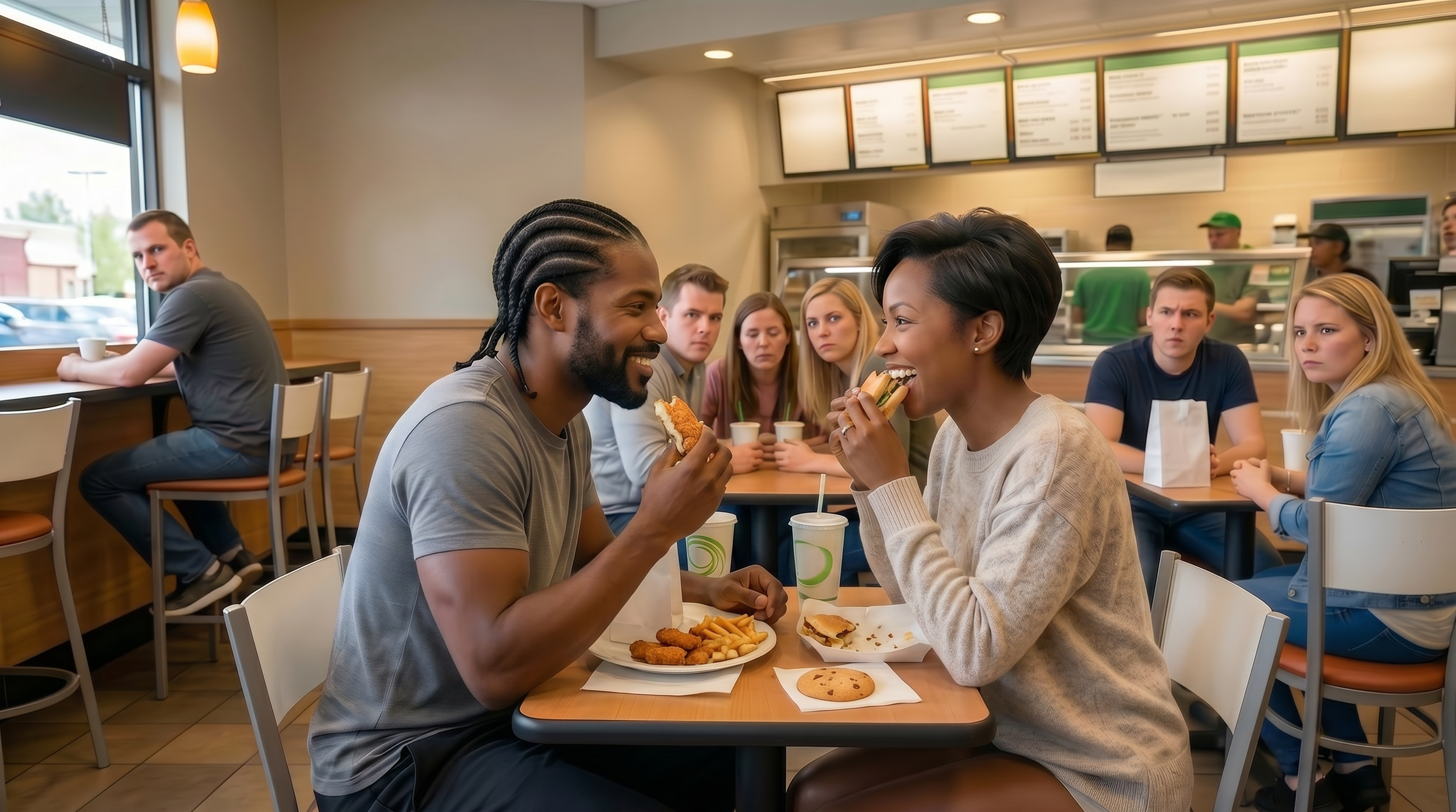
THE CODE WE DON’T TALK ABOUT (AND THE MEN WHO BREAK OUR TRUST)
A sub shop lunch with a young man from my neighborhood turned into two lessons in one afternoon. First, why he never hangs out with his all white friends unless another Black person is in the group, and what that says about the code so many of us follow without ever naming it. Second, a moment of him lying to his girlfriend that opened up a bigger question, why do some men grow up unable to be honest with the women who love them. This post connects staring strangers in a sandwich shop, a corn festival memory from the early 90s, and the mother's boy pattern that turns into gaslighting, with real talk for Black men, Black women, and the community as a whole.
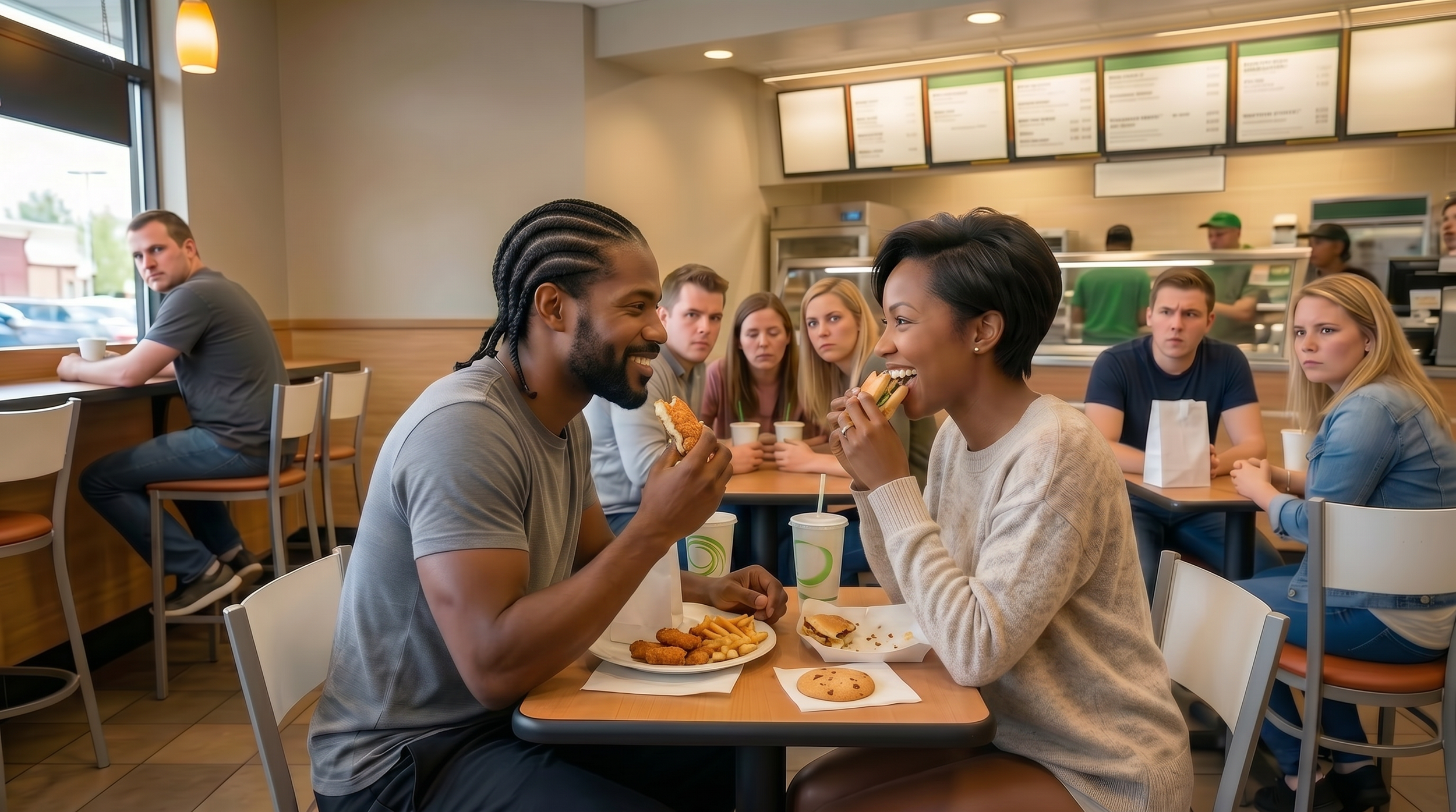
Spirit and Dom from slowburnlove.com enjoying lunch together while the room quietly takes notice. This is the fishbowl moment so many of us know, being watched while minding our business.
This weekend I picked up lunch at a local sub sandwich place with a young man who helps me with my lawn care sometimes. He's Gen Z, still figuring life out, good kid. We walked in and I didn't think twice about it until a white guy stared at me hard as we came through the door, then caught himself and looked away.
We ordered our food and sat down to wait. While we talked, many others came in, none of them Black, and a white woman waiting in line started doing the same thing, staring at the two of us -as if we were aliens, lol. Being in a small fast food place as the only Black people and nowhere to hide, it felt like we were in a fishbowl. That look of "what are they doing here," even though I've lived in this neighborhood, this same house, this community for over 27 years.
It has felt this way for more than 35 years and you never fully get used to it. I stay because it's affordable, but this city ranks in the top five most systemically racist cities in the country. The financial gap tells the story, most white residents here make $85,000 and up, most Black residents make $27,000 and under, a gap our white friends and allies rarely seem to know exists in their own city, one that affects these spaces psychologically as much as financially.
That gap sat with me while I watched the news out of Mississippi this past week. Nolan Wells, 18, went missing during a July 4th trip to Horn Island with a group of friends who were all white, and was later found dead. The investigation is still open, with no confirmed cause of death and no confirmed link to race. But what spread across social media wasn't grief alone. It was thousands of Black people, myself included, recognizing that something familiar, he appears to have been the only Black person in that friend group that day, and that detail is why his story hit so many of us so hard.
That leaves a harder question. No matter how many years you've lived somewhere or how many white friends you have, are you actually safe in all white spaces? We need to be accountable to our own intuition, not just to what's in front of our face. If reading a room as unsafe gets you called difficult, that's a small price for a truth telling you some people in your life are not actually safe spaces for you.
I asked my GenZer how he handles moments like that. He said he thinks about it before he even leaves the house. If he's hanging with his all white friends and there isn't at least one other Black person in the group, he doesn't go. A rule he's always just intuitively followed.
That stopped me. Living where I do, it's something I never had to name out loud but I do it too. It's that "who all gone be there" checking we do in the community when we want to know the socials of a gathering before we decide to attend. We check the room without realizing we're checking it, making sure at least one more of us will be there, at least those of us conscious of it. Sometimes work doesn't give us that option. But when we do have a choice, we still sometimes ignore our own instincts and walk in as the only one anyway.
I thought back to when I was pregnant with my first child in the early 90s. My coworkers, all white, took me to a local corn festival to celebrate. I grew up in inner city Chicago listening to house music and hip hop, and I stood there feeling completely out of place while they had a great time getting drunk and listening to country and rock and roll, something not typically my taste. I was in “vibrational survival mode” the entire day, lol, though I truly appreciated the gesture.
However, if someone suggested that to me today, especially while pregnant, I would say no without hesitation. Integration taught a lot of us to believe we're supposed to be able to fit anywhere, that discomfort is just something to push through to be agreeable. But comfort and safety aren't the same thing. What's interesting is I didn't get stared at during that corn festival in the 90s, but I got stared down at a sub shop in 2026. Our intuition still matters. If something doesn't feel safe, that feeling is information, not an overreaction. Honor it.
Something else happened this week that stuck with me more than the staring did. Earlier, this young man was on the phone with his girlfriend, telling her he hadn't been working more than an hour, when he'd actually been helping me for at least three. I said it out loud without thinking, that he'd been working more than an hour. He put his finger to his lips so his girlfriend on the other end of the phone line wouldn't hear me. At lunch I asked him why lie like that? White lies don't stay small. They add up, and eventually trust breaks. He didn't have a real answer.
I brought up something else from earlier too. I had shown him how to make a pie shaped cut on a tree branch, diagonal, not straight across. He did the opposite, then tried to convince me he hadn't. I told him plainly, I watched you cut it straight across, it had the horizontal cut. The tree didn't lie. He still tried to talk his way around it.
So I asked him directly, why do men gaslight women? Is that a Black men thing or just a man thing? He laughed and said it's because men hate women. He said it like a joke, but I don't think he was fully joking. That same conversation has been all over social media this week, men who say they want relationships with women but seem to also dislike or hate them.
That got me thinking about what creates a man like that. Perhaps these men grew up holding their mothers as perfect, almost untouchable, defending her every decision while holding the women they date to an impossible standard. A mother never allowed to be human, flawed, or wrong, raises a son unable to see any woman honestly, including her. That imbalance later shows up as resentment toward every woman who doesn't fit the mother fantasy he was raised on.
You can love your mother deeply and still be honest about her mistakes. The men who can't do that are the ones I pay closest attention to and run from. That inability to hold love and honesty at the same time for your mother is a real red flag, not just a personality quirk.
Here's what I think we can do about it, as individuals and as a community.
Black men can...
Talk to your sons early about respect for women in practice, not just in words
Notice when you defend your mother's flaws instead of naming them, and ask why
Call your friends in when they joke about hating women, don't let it slide
Practice telling the truth in small moments before it becomes a habit of hiding
Show younger men what it looks like to disagree with a woman without gaslighting her
Black women can...
Trust the small moments, a lie about an hour of work is still a lie
Watch how a man talks about his mother, whether he can honestly name her flaws or only defends her
Don't excuse gaslighting as a joke, even dressed up as humor, call him out
Pay attention to your intuition in rooms and relationships, both feel unsafe for the same reasons
Teach the young women around you that a red flag noticed early is a gift, not an overreaction. That red flag will follow you for years to come.
As a community, we need to stop treating honesty as optional in our relationships, and stop treating white spaces as automatically safe just because we've been welcomed into them, even if we've been there for years. Both habits come from the same place, a willingness to override our own intuition to keep the peace. Elders and mentors can help by modeling honesty as normal, and by talking openly about the code so many of us already follow without ever naming it.
I didn't set out that day to learn two lessons at once, one about protecting ourselves in rooms not built with us in mind, one about how some men are raised in a way that makes real partnership hard later. Both are worth sitting with.
We deserve rooms where we don't have to count who else looks like us before we walk in. And we deserve relationships where the truth doesn't require a finger to the lips.
Until next time,
Melissa Pozio
Slow Burn Love
Disclaimer: The content on Slow Burn Love is for informational and educational purposes only and does not substitute for professional medical advice, diagnosis, or treatment. Always seek the advice of a physician or qualified mental health provider with any questions you may have regarding a medical or psychological condition. If you are in a crisis, please reach out to a local emergency service or a crisis hotline immediately.
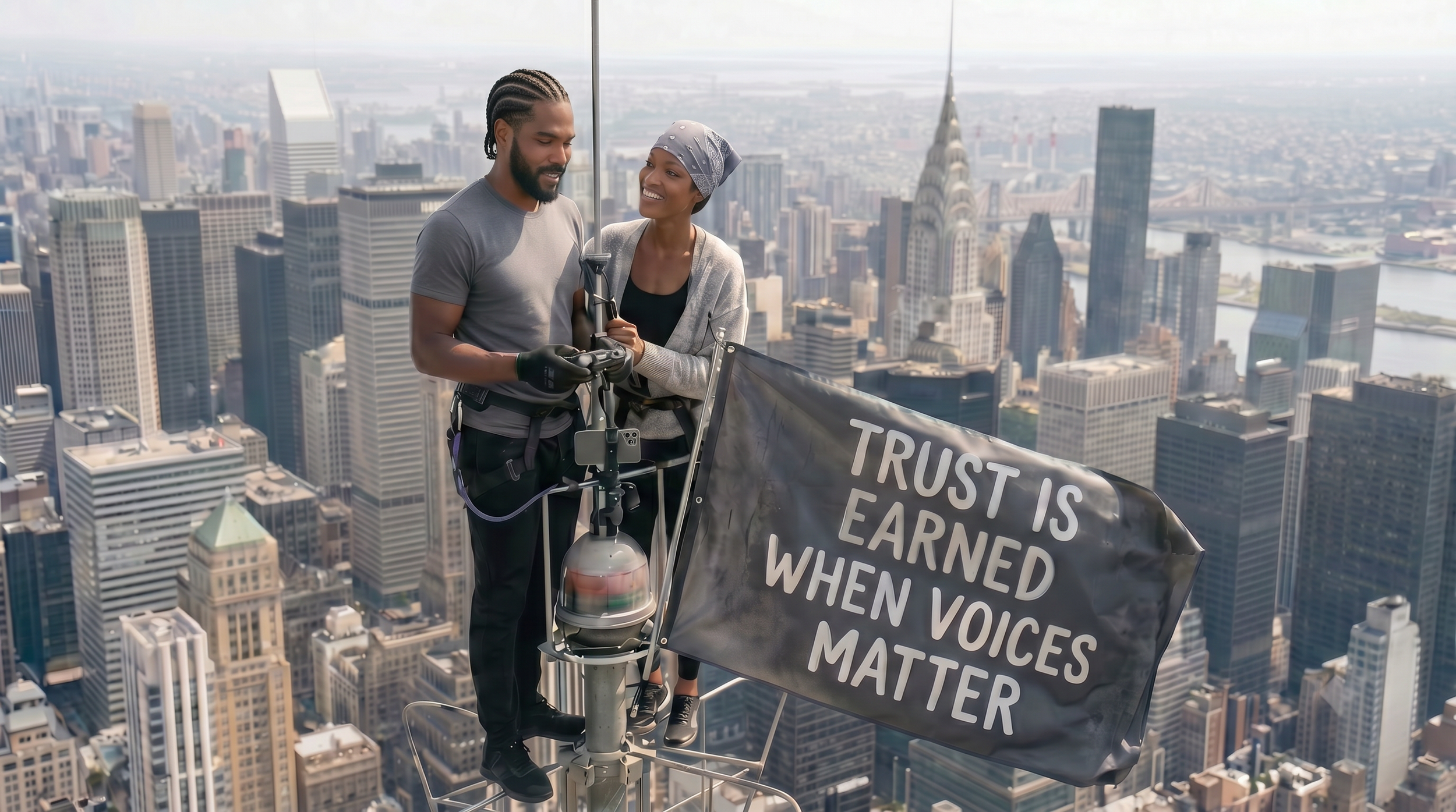
KEEPING YOUR WORD: WHAT SMALL PROMISES REVEAL
Trust is never about the big, sweeping gestures, it's about what happens in the small, quiet moments when no one else is watching. What does it really mean to keep your word in love, in the community and why the little promises we make (and keep, or break) reveal more about our character than any grand declaration ever could. Drawing from the Slow Burn Love series and the journey of Spirit and Dom in Sovereign Surrender, this piece looks at how consistency, accountability, and follow-through are the real foundation of lasting trust, both on the page and in real life.
Spirit and Dom stand high above the New York City skyline holding a banner reading 'Trust Is Earned When Voices Matter,' illustrating the theme of Keeping Your Word: What Small Promises Reveal on SlowBurnLove.com
I want to talk about a campaign slogan that showed up in my feed this week. A candidate running as a Democrat was standing arm in arm with the man who lost the Republican primary for that same office. Both of them were wearing the Democratic candidate's campaign gear. The caption underneath said "Trust Restored. Voices Heard."
Trust restored for who, exactly?
Because I have questions about why a Democratic candidate is teaming up in public with a conservative Republican who lost his own primary. I also wonder why the people running the party seem fine with it. My guess is that it comes down to the union. The losing Republican candidate seems to have more union support than our own Democratic candidate does. I could be wrong about the reason why. But I know what I saw with my own eyes.
Here is what I do know for sure. When a candidate teams up with people who have not earned this community's trust before he is even elected, persons who have not made safe spaces for community members, especially the Black community, that tells you something. It shows you how he might act once he is in charge of that office.
Small things are never really small. They are previews of what is coming.
This same week, I saw a post from Dr. Cheyenne Bryant where she stated women over 50 are choosing to date men in their 30s and 40s. Her statement was based around the presumption those men seem more mature and take responsibility for their mistakes than their older counterparts.
I do not agree with everything Dr. Bryant says and I still question her legitimacy as a doctor. But I have noticed something similar to what she is talking about. Women in their 30s and 40s who still act a little immature tend to end up with men over 50 who act the same way. But it is not really about age matching age. It is more about two people who have not grown much finding each other and calling it a good match.
I sat with that thought for a minute. It connects to something I have been thinking about in my own life. Because once you start looking for this pattern, you see it everywhere.
Recently, I was trying to build a friendship with someone. I purchased something for them that cost about ten dollars. Nothing that would hurt anybody's wallet. They told me they would pay me back that Wednesday when they got their paycheck. But Wednesday came and went. And I got nothing. No response, no apologies…
Ten dollars is not really the point.
The point is that someone looked me in the eye, made a promise with an easy deadline, and then did not keep it. This was a red flag. It is also a pattern I have seen over and over with men in my 50 and over age group.
I have given too much in relationships before and gotten back way less than I gave. I bet a lot of people reading this have felt that too. I think it is the same thing happening when we keep giving our vote, our time, and our trust to a political party that keeps breaking its promises.
We tell ourselves it is no big deal. We tell ourselves they will come through when it really matters. But if a person, or a whole political party, cannot keep a ten dollar promise or a campaign promise to the people who helped get them elected, they are showing you exactly who they are. Believe them.
This is not really a story about one candidate, or about one broken promise between two people trying to be friends. It is about a pattern. It is about integrity, or the lack of it, and how we keep making excuses for it because we call it loyalty. Loyalty to a party. Loyalty to a person.
How do we deal with this head on?
What Black Men Can Do
Say what you mean and follow through on small promises before you ever get the chance to make bigger ones. Your reputation is built in the ten dollar moments.
Show up for your community all the time, not just when there is a camera around.
Take responsibility before anyone catches you doing wrong. Fix it before someone has to call you out.
Protect the people who trusted you first, even after you have more choices. Loyalty should not run out just because you got more successful.
Choose your alliances carefully. Who you stand next to in public shows everyone what you actually care about.
What Black Women Can Do
Say what you need clearly instead of expecting people to guess and then getting upset when they get it wrong.
Notice small broken promises early and take them seriously instead of making excuses for them.
Give generously, but pay attention to whether you are getting anything back. Giving with nothing in return is a lack of reciprocity. It is running yourself dry.
Hold the people you support to the same standard you hold yourself to.
Trust what someone has actually shown you, not what you hope they might become someday.
What the Community Can Do Together
Stop giving candidates and leaders a pass just because they are charming, when their actions show they lack integrity.
Ask the hard questions before an election, not after, about who a candidate is teaming up with and why.
Build accountability in our own neighborhoods, one block and one precinct at a time, so no small group of people holds all the power.
Talk openly about these patterns in politics and in relationships. Stop treating them like two separate topics. They are the same conversation.
Choose people, at every level, who keep their word even when nobody is watching and there is nothing in it for them.
The ten dollars will get paid back, or it will not. The political slogan will get explained, or it will not. Either way, I already have my answer. Integrity shows up in the smallest moments, long before it ever gets tested by the big ones. Pay attention to those small moments. They are not small at all.
Until next time,
Melissa Pozio
Slow Burn Love
Disclaimer: The content on Slow Burn Love is for informational and educational purposes only and does not substitute for professional medical advice, diagnosis, or treatment. Always seek the advice of a physician or qualified mental health provider with any questions you may have regarding a medical or psychological condition. If you are in a crisis, please reach out to a local emergency service or a crisis hotline immediately.
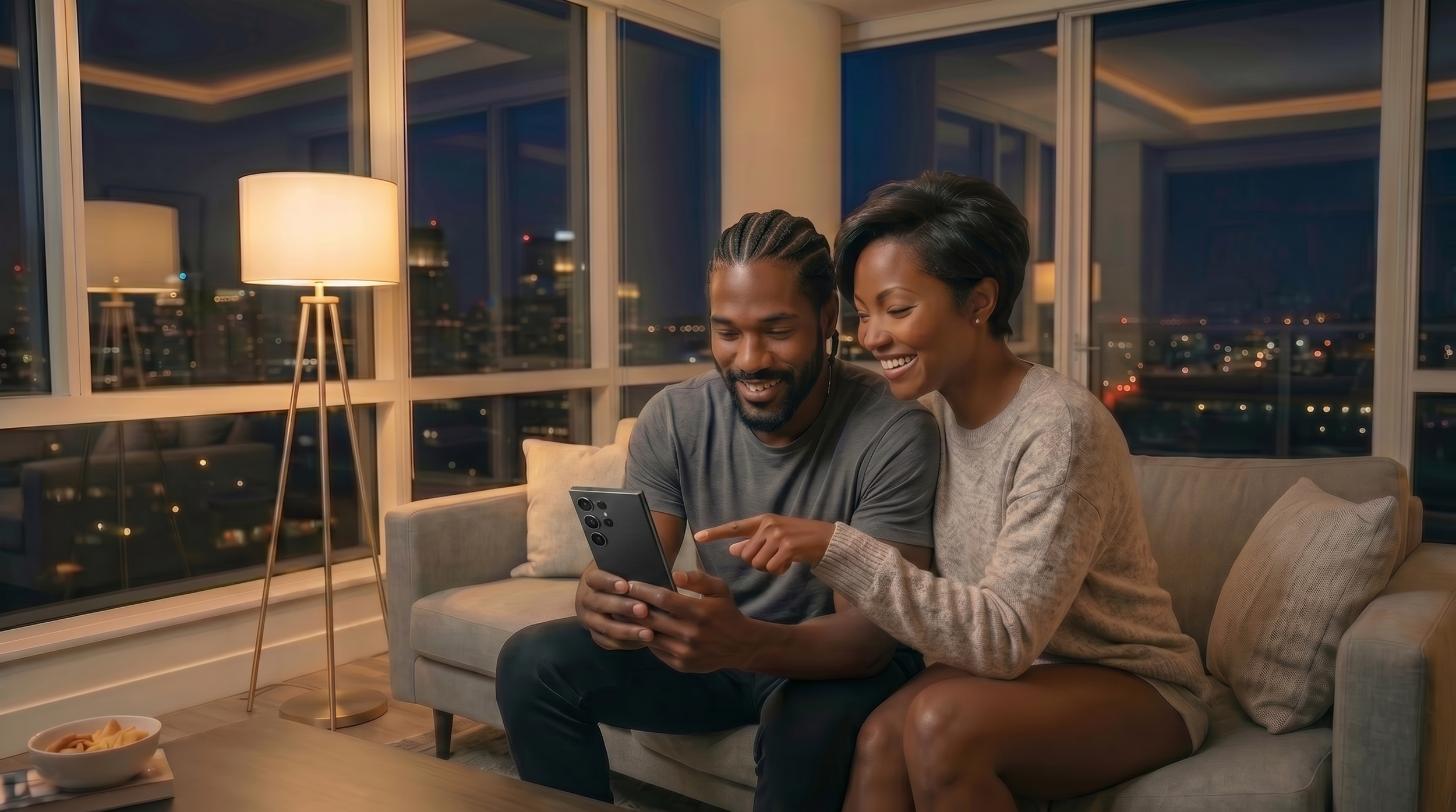
THEY’RE NOT FIGHTING WITH US, THEY’RE FIGHTING FOR OUR ATTENTION
The toxicity you see between Black men and women online is not organic. It is engineered. New investigations expose 18,000+ coordinated MAGA bot accounts targeting Black spaces to create division before the November election. Here is how we stop feeding the machine.
Unless I was missing something, this was a relatively quiet week when it came to toxicity between Black men and Black women online, and honestly? That was wonderful. Maybe we are getting the message. Maybe more of us are starting to recognize that the chaos we keep seeing in comment sections is not organic, and we are finally stepping back from it heading into what is shaping up to be one of the most consequential election cycles of our lives.
There was still plenty happening in Black culture this week. Juneteenth just passed under the shadow of America's 250th anniversary, which produced one of the most underwhelming White House celebrations in recent memory. Druski hosted the BET Awards and missed the mark entirely by never once addressing the political environment we are all actually living in. And considering conservative right CEO David Ellison recently acquired the network, the community's viewership has declined significantly.
But underneath all of it, running like a contaminated current, was something older and meaner: the manufactured war between Black men and Black women online. And this week, new investigative reporting finally started connecting the dots in a way that should change how every one of us moves on social media.
Researchers have spent months tracking what is happening in the comment sections of Black creators, cultural commentators, and influencers. A recent publication exposed a network of more than 18,000 coordinated bot accounts that specifically target Black spaces online. These accounts were not random. They showed up wherever a prominent Black figure said anything remotely polarizing, and their job was to flood those spaces with MAGA talking points dressed up as community consensus.
These are not clumsy trolls with broken grammar and obvious foreign syntax. Today's operators are running sophisticated, AI-driven networks capable of generating thousands of completely different, culturally fluent comments in seconds. They post about music, fashion, and comedy to establish credibility, and then they slide in the poison. They fan the flames of every argument between Black men and women because conflict between us is exactly the content they were built to amplify.
It is widely reported that there are now more bots on social media than there are humans. Imagine what that ratio is doing to the Black community specifically, when we know these networks have studied our language, our references, our humor, and our pain points with deliberate precision.
Every time a conversation about Black love or Black relationships gets toxic online, someone profits from that toxicity. The bots need us to react. They need us to reply, quote tweet, screenshot, and share. That engagement tells the algorithm the content matters, and the algorithm rewards it with reach. We are literally doing the labor that funds the operation.
Disinformation researchers are explicit about what the goal is. It is not persuasion. It is to flood comment sections with such hostile, hyper-polarized content that users can no longer distinguish real community sentiment from automated propaganda. They want us exhausted. They want us convinced that Black men and Black women are fundamentally at war, because a community that does not trust itself cannot organize, vote, or build anything together.
A June 2026 report from the Center for Countering Digital Hate confirmed that after Meta and X rolled back key safeguards, abusive, coordinated, and automated spam comments immediately quadrupled. This is not a glitch. This is policy.
So what do we do with this?
First, we name it. What you are witnessing in many of these comment sections is not Black men versus Black women. It is a political operation wearing our faces. The accounts pushing the most inflammatory content about Black women being unlovable or Black men being worthless are often not Black people at all. They are AI-generated personas with stolen profile pictures and culturally fluent bios, operated through click farms located across Eastern Europe, Nigeria, Thailand, and South Asia. They studied us. They learned how we talk. And they deployed that knowledge against us.
Second, we stop feeding it. The most counterintuitive truth I can offer is that your righteous reply is their win. The furious quote tweet is fuel. The screenshot that goes viral is exactly the amplification these networks were engineered to generate. Disengagement is not defeat. It is the one move they cannot monetize.
Here is what that looks like in practice:
Five things Black men can do:
When you see a post designed to make Black women look undesirable or threatening, do not share it, even to disagree. Scroll past it and report the account.
Actively amplify content that shows Black men and women building, loving, and laughing together. The algorithm needs counter-programming.
Call it out in your circles when a brother gets pulled into bot bait. Name the manipulation without shaming the person.
Follow and financially support Black creators who are doing relationship and community content with integrity.
Before you quote tweet or respond to inflammatory gender content, ask one question: who benefits if this spreads?
Five things Black women can do:
Resist the pull to platform accounts that use outrage as a business model. Engagement is endorsement to the algorithm.
Create and share content about Black love, Black joy, and partnership. The bots cannot manufacture what they have not studied.
When comment sections start feeling like a war zone, exit without explanation. Your peace is not a consolation prize.
Support Black men who are doing visible, good work in community and relationship spaces. Name them, share them, fund them.
Talk to real Black men in your real life before accepting what the internet tells you about where they stand.
Black love, Black community, and Black culture did not happen this week because of X, Facebook, Instagram. It happened because we are becoming more intentional and mindful in our reactions to each other. The real conversation is still ours, but we have to stop auditioning it in spaces that were redesigned to use us as raw material.
They are not fighting with us. They are fighting for our attention.
Stop giving it to them and give it to each other in love, kindness and respect.
Until next time,
Melissa
Slow Burn Love
Disclaimer: The content on Slow Burn Love is for informational and educational purposes only and does not substitute for professional medical advice, diagnosis, or treatment. Always seek the advice of a physician or qualified mental health provider with any questions you may have regarding a medical or psychological condition. If you are in a crisis, please reach out to a local emergency service or a crisis hotline immediately.
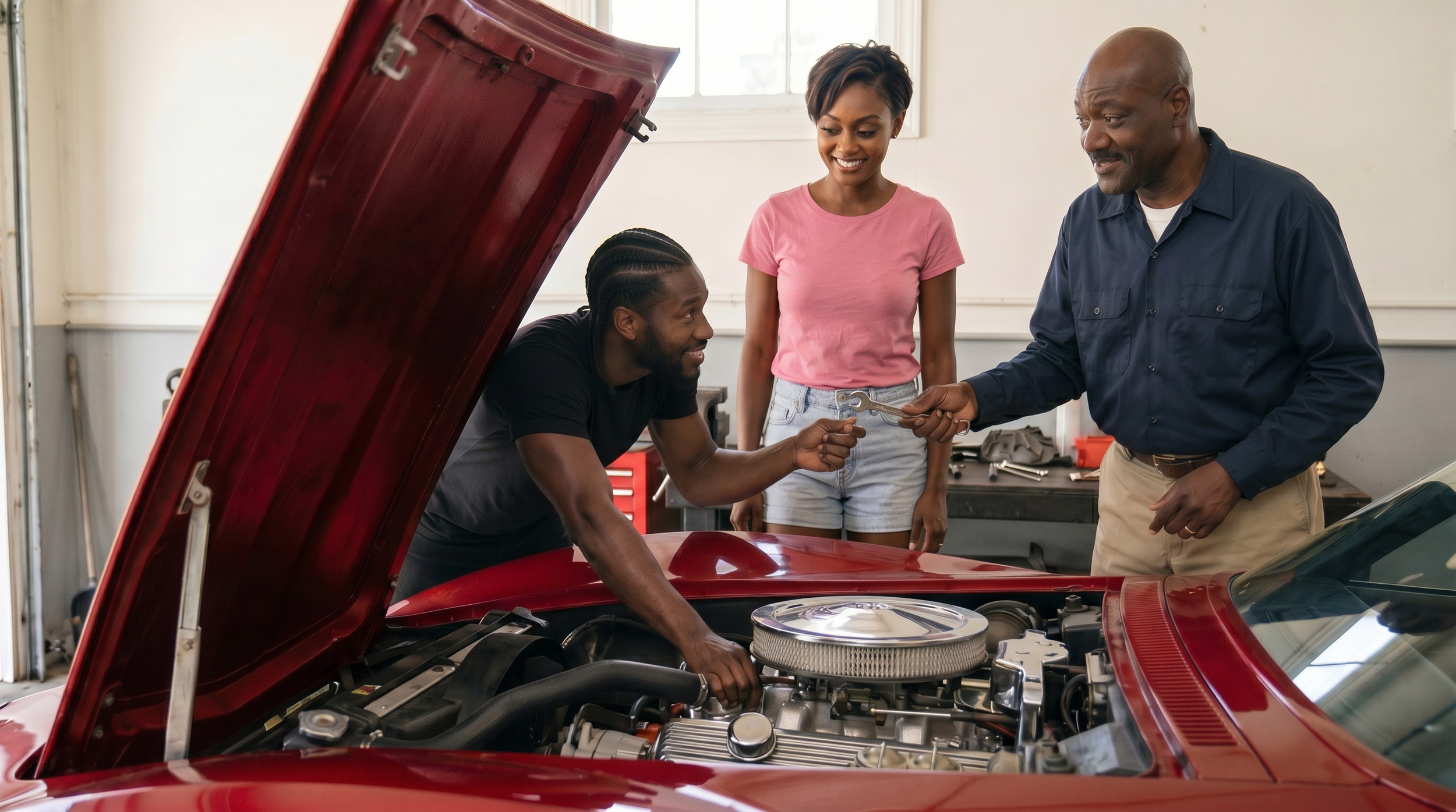
WHO CLEANS UP THE MESS? BLACK FATHERS, BROKEN SYSTEMS AND THE THINGS WORTH FIXING
Baby Kohen Wiley was killed when a police officer fired into a vehicle over diapers. Karmelo Anthony is looking at a future behind bars after a trial where not one juror was Black. Two young Black men. Two futures of Black fatherhood erased in the same week we are supposed to be celebrating fathers. This Father's Day, Slow Burn Love is honoring the Black men who show up anyway - the ones who fix the bike instead of buying a new one, who name their feelings out loud, who repair what is broken in their homes and in their communities. The mess belongs to all of us. So does the cleanup.
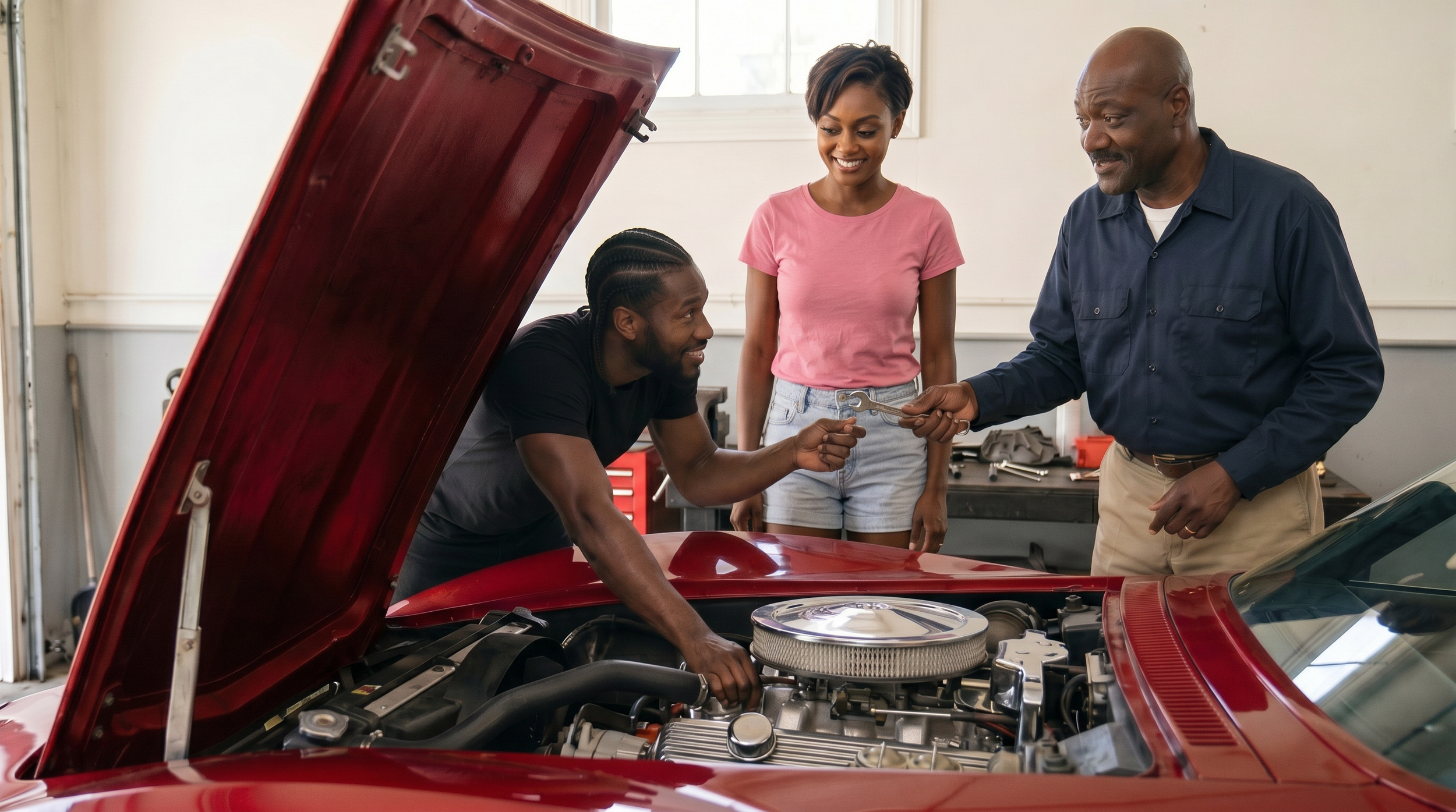
The lessons that matter most are not always spoken. Black fathers and mentors teach resilience, patience, and love through the quiet work of repair—showing the next generation that what is broken is often worth fixing. slowburnlove.com
There is a dirty diaper that has been sitting in the middle of my street for almost a week. I live in a clean, diverse neighborhood where people walk their dogs and keep their lawns trimmed, yet that diaper keeps moving from one side of the road to the other, and no one is claiming it. No one is claiming their trash, no one is picking it up, and properly putting it where it belongs. It just sits there, decaying a little more each day, while everyone drives past and looks away.
That is how it feels watching the news this week. The dirt created in the Black community by others gets tossed aside, the ones responsible ignore it, and those of us affected are left dealing with it as it gravitates toward our doorstep.
That same pattern, no one claiming the offense, no one owning the mess, shows up in the lack of attention for baby Kohen Wiley, killed when a police officer fired into the vehicle he was riding in – over diapers. The Senatobia Police Department has a long history of racism and brutality against the Black residents it serves. As a result, a local boycott has formed against Walmart where he was killed and the security guard who called police, yet the case has barely moved or given the national attention and outrage it deserves.
The reaction to the death of a Black toddler feels just like that dirty diaper somebody tossed on my block and never came back for. A child dying over a box of diapers allegedly stolen, and the outrage gets treated the same way, dumped, ignored, and is somebody else's problem.
The other story this week that stood out for me was Karmelo Anthony, a Black teenager convicted of murder in the stabbing death of Austin Metcalf, a white teenager, at a Texas track meet. Not one juror on Karmelo’s case was Black - that is not a jury of his peers. His case got hashtags and a permanent spot in the algorithm's memory from those supporting him and those against him, while Kohen Wiley's case is hardly getting movement at all.
As a Black community, we seem to always be the ones cleaning up messes other communities create against us. We constantly face a system not built with us in mind. Karmelo Anthony will potentially never father children of his own, locked away in a jail cell, while Kohen Wiley will never even grow up to become a father himself. On a week built around Father's Day, it is worth naming that both stories end the same way for two young Black men. Two futures of Black fatherhood erased in the same week.
This is the pattern. Black men and boys get cast, again and again, as the threat while the same offenses that get explained away for their white counterparts, become proof of danger the moment a Black person is involved. Basically, the story that travels fastest is the one where a Black person is the danger in the room. And when a Black child dies at the hands of the system meant to protect him, the story gets buried under the next headline instead of becoming one itself.
What We Can Do as a Community
Can a person change the algorithm? Yes. As a community, we need to do better at how we show up for each other online, since the algorithm responds to behavior, and behavior is something we control.
Say the names on purpose, more than once. Algorithms reward repetition. If Kohen Wiley's name only trends for forty eight hours, the conversation moved too fast. Bring his name back next week. Demand the bodycam footage that still has not been released.
Correct misinformation within the Black community the way you would want it corrected about you, without humiliating whoever got it wrong. A kind, factual correction shifts a narrative further than a takedown does. Holding the full truth builds more credibility for the cause than picking a side does.
Honoring Black Fathers This Father's Day
Black families carry a history of bad breaks that never got fixed, especially when it comes to fatherhood.
I read something this week about the difference between a father who responds to something broken by replacing it versus a father who responds to something broken by fixing it. A father who fixes the bike instead of buying a new one teaches his child that value is not disposable. He teaches patience, since fixing takes longer than replacing, and attention, since you cannot repair what you have not looked at closely.
He teaches that things, and by extension people, are worth maintaining rather than abandoning the moment they become inconvenient. A child who watches a father work the problem instead of tossing it absorbs a quiet lesson: things that matter are worth staying with. A boy who watches his father say "I'm frustrated, and here's how I'm working through it" learns that emotions are not something to hide from, and that he too can fix what is broken in himself with patience instead of constant replacement.
Five things Black men can do to become better fixers versus replacers:
Finish one repair this month before buying a replacement.
Narrate the process out loud to a child or younger relative, so the patience itself gets witnessed.
Name a feeling out loud at least once a week instead of pushing through silently.
Revisit one strained relationship and make a small, specific repair instead of letting distance handle it.
Mentor one boy or young man directly, since modeling only works at close range.
Five things Black women can do to encourage the men and boys in their lives toward fixing over replacing:
Notice it out loud when a man chooses to repair something instead of replace it.
Make space for him to talk through frustration without rushing to fix his feelings for him.
Involve boys in repairs happening at home, even small ones, so the habit forms early.
Avoid mocking a man's effort to fix something himself, even if it takes longer.
Praise patience and follow through as loudly as you praise results.
So much of what gets amplified about Black men is danger, absence, or violence, and so little is the quieter truth: there are Black fathers everywhere doing the work no one is acknowledging. That is the story I would like to see amplified this week, the Black men who show up, repair what is broken in the community and in their homes, and talk about their feelings instead of swallowing them.
The mature Black men who don’t allow their ego or fears to rule, but take risks at vulnerability and building trust are what we need to see more of in our community.
We may not be able to fix the verdict in Karmelo Anthony's case, or bring baby Kohen Wiley back - some things cannot be fixed, only grieved. But we can fix the behaviors within our own community, starting with how Black fathers fix what is broken in front of them and within themselves.
Until next time,
Melissa
Slow Burn Love
Disclaimer: The content on Slow Burn Love is for informational and educational purposes only and does not substitute for professional medical advice, diagnosis, or treatment. Always seek the advice of a physician or qualified mental health provider with any questions you may have regarding a medical or psychological condition. If you are in a crisis, please reach out to a local emergency service or a crisis hotline immediately.
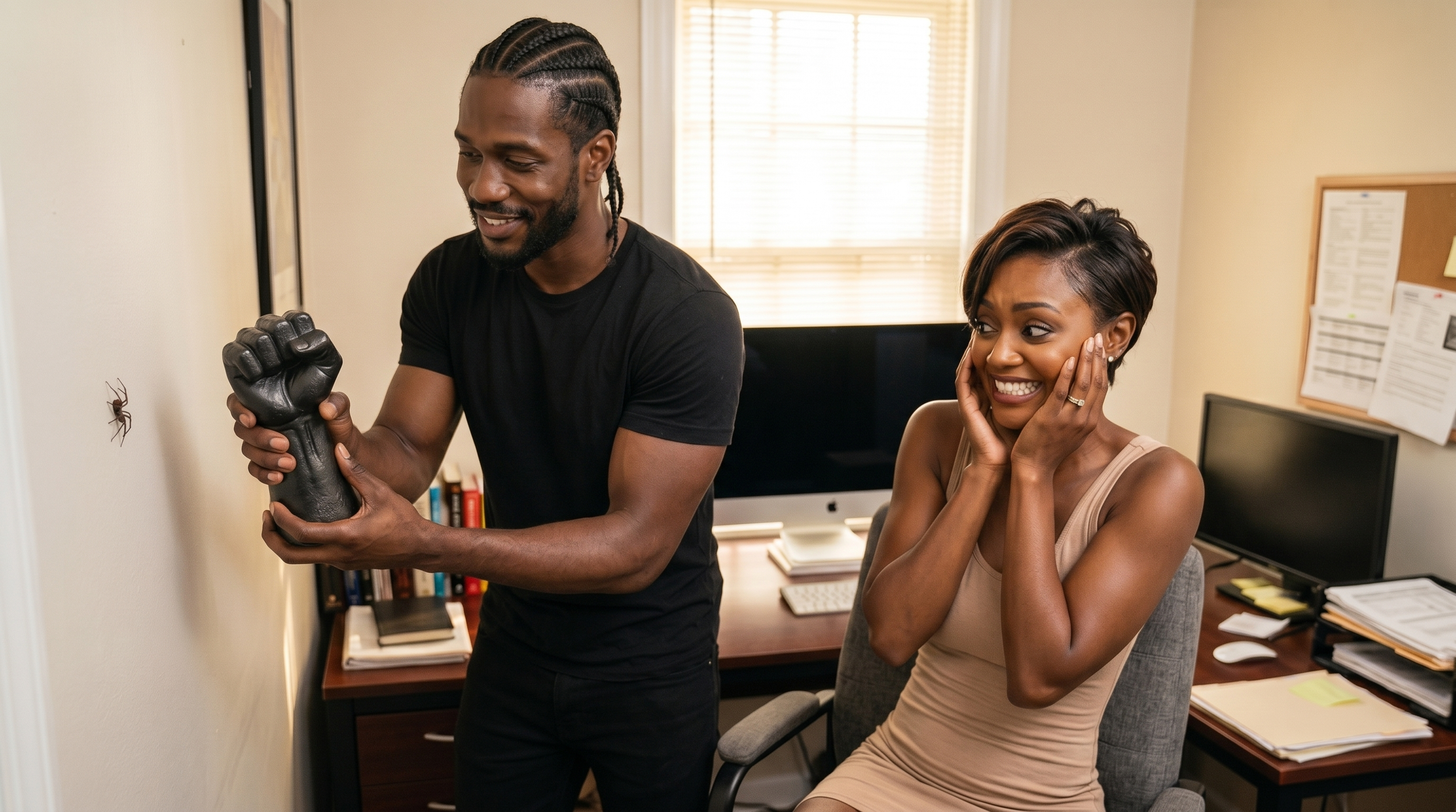
WHAT KARMELO ANTHONY, CYRUS CARMACK-BELTON, AND A BOYCOTT TEACH US ABOUT PROTECTING OUR OWN SPACE
A spider showed up at my desk while I was writing this piece. What happened next became the perfect metaphor for everything Black people have been navigating for four hundred years. From the Karmelo Anthony verdict to the boycott of Asian-owned businesses after Rick Chow walked free, we keep poisoning our own air just to survive. It is time we build something different. Together.
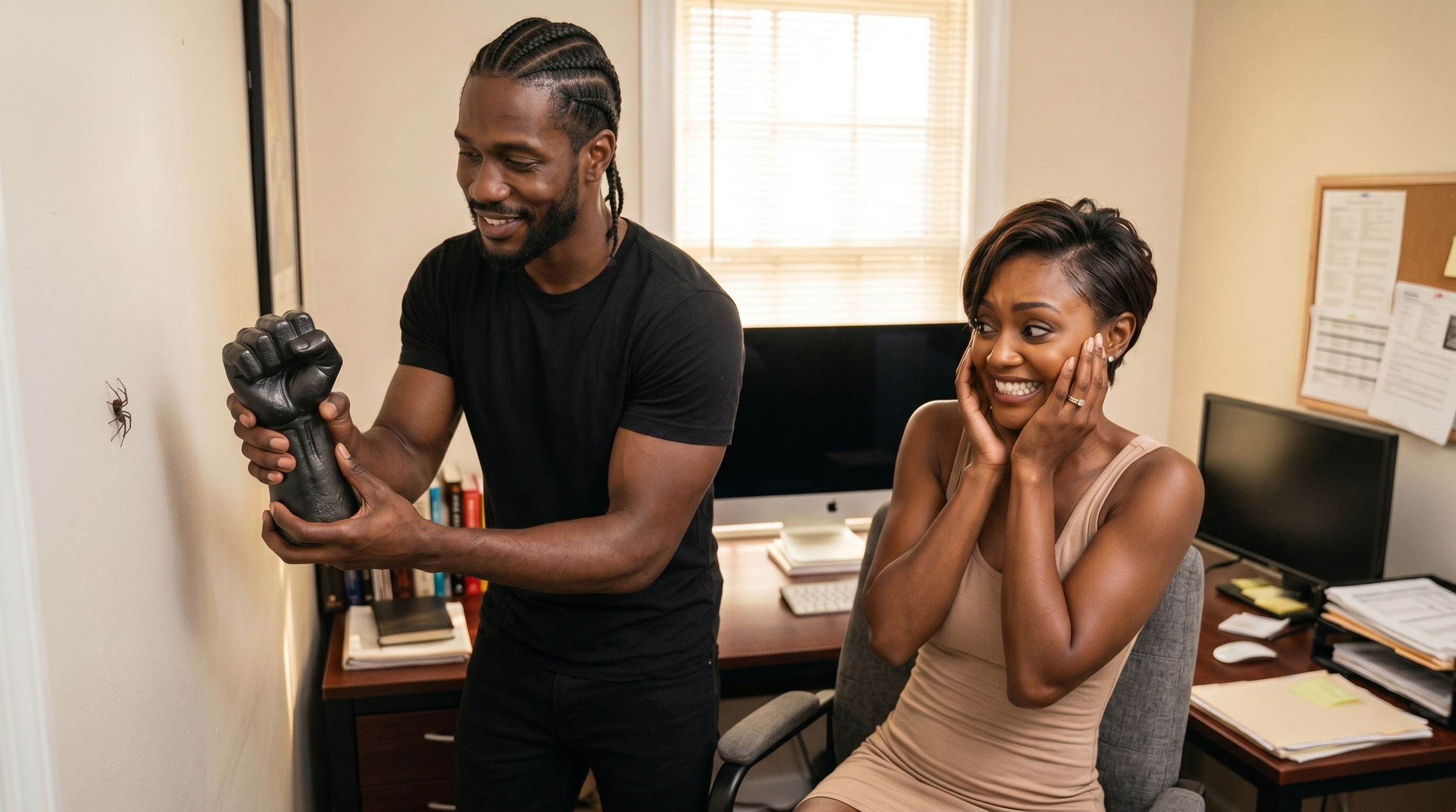
There was a huge spider at my desk as I wrote this piece. Black, fast, and bold enough to show itself in my personal space. I reached for the spray. Then I sat in the chemical fog I had just created, coughing, eyes burning, wondering why I had to make my own environment toxic in order to deal with an invader.
In that moment I realized I had not created the proper boundaries to keep intruders out in the first place, boundaries that would protect me without requiring me to harm myself in the process.
The Black community needs to do the same: create safe spaces with each other and come together, offensively and defensively, to fight the “spiders” that attack us. Because that is what we have been doing for four hundred years. Poisoning our own breath, our voices, our political and economic rights, creating just enough room to survive. We pour ourselves into a legal system never designed to protect us, beg corporations for dignity, and return to these poisonous systems even when nothing changes.
Karmelo Anthony and the Weight We Put on Black Boys
The jury that convicted Karmelo Anthony of murder and sentenced him to 35 years in a Texas prison included zero Black jurors.
We need to talk about what that does to Black boys and Black men watching. Every verdict like this is absorbed not just intellectually but, in the body, in the gut. Black men and boys learn in real time that a jury of your peers does not apply to them, that the space between fear, self-defense, and being labeled a murderer is wider for them than for anyone else. That psychology lives in how Black men move through the world.
We have to teach our sons that unless your life is genuinely in danger, you cannot reach for something that can end another person's life. Unless you fear for your life, walk away. Never put your hands on anyone, man or woman, unless you are defending your life. Just walk away. We have to hold that standard inside our own communities first, because the bar for a Black man to claim self-defense in this country is not the same bar that exists for the privileged. While we fight to change that, we have to love our sons and our men enough to tell them the truth.
Karmelo's fear lived inside a history this country has never reckoned with. And then there is the knife. Some say it was a utility tool for cutting athletic tape, trimming shoe insoles, managing equipment. So what made him feel he needed it to defend himself with a knife? He was convicted in a courtroom without a single juror who looked like him, without anyone who might have sat with that question longer. Why did he have it, and why did he feel using it was his only option? Those are the questions we owe our children.
The Boycott, the Bodega, and the Blueprint We Keep Skipping
The other conversation highlighted this week on my timeline was the South Carolina jury that found Rick Chow not guilty of murder. Chow chased 14-year-old Cyrus Carmack-Belton 130 yards and shot him dead over suspected water theft. Investigators later determined Cyrus had not stolen anything.
Water. A 14-year-old Black child. One hundred and thirty yards.
This reminds me of that spider. Coming into a space where it is not native. Building a web to capture resources without contributing anything. Setting traps among people it does not respect, treating the original occupants as threats. Non-Black businesses coming into our neighborhoods, taking our dollars daily, surveiling us like criminals in the same stores that depend on us to survive, hiring from outside the community, returning nothing, and when we speak the truth about it, we become the problem.
But Black boycotts should not be about Chinese food or nail salons. They should be about economic dignity. Black dollars built entire commercial ecosystems in our neighborhoods and we have the least power within them. Cyrus Carmack-Belton's mother said it plainly at the statehouse rally - if they are following you around, disrespecting you, mocking you, do not spend your dollar there. That is not hate. That is self-respect.
We have had this conversation before. We boycott for a week, two weeks, then go back because the alternatives are not always there and we have not built the infrastructure needed to sustain a real departure. Black Wall Street, Black-owned towns, and countless Black-owned spaces were destroyed by racism, and that work continues through gentrification. A boycott without unity and a community blueprint is just anger with an expiration date.
What Do We Do With Each Other?
The spider spray hurt me too. That is the position we keep finding ourselves in: reaching for the tools of the systems we are fighting and expecting different results. Using the same justice system ideology. Existing in spaces that profit from us but do not like us. That is self-induced poison.
Course correction needs to start with each other.
The way we treat each other in our relationships is a direct preview of how we show up in communities. If we dismiss each other in private, we abandon each other in public. If we protect each other at home and in friendship, that protection extends outward. Unity is a practice built in the smallest spaces first.
Five things Black women can do to build community and protective spaces:
Affirm the Black men in your life verbally and consistently. They are rarely told they are enough.
Create space for emotional honesty without judgment. If the only place he can exhale is with you, protect that.
Redirect your dollars intentionally and teach the children in your life why it matters.
Refuse to participate in public mockery or degradation of Black men, even when it is trending.
Build relationships with other Black women so your support system is a network, not a single thread.
Five things Black men can do to build community and protective spaces:
Teach the boys in your life that restraint is strength. Walking away is a decision, not a defeat.
Show up for Black women consistently, not just in crisis. Consistency builds the trust that builds community.
Invest in Black-owned businesses not just after a verdict but as a daily practice.
Have honest conversations about fear and hypervigilance with the men around you. Normalize processing before reacting.
Refuse to degrade Black women publicly or privately. How you speak about us is how the community and others learn to treat us.
The businesses that profit from our neighborhoods but do not respect us have always counted on one thing: that we will not hold together long enough to matter. Every time we fracture, men against women, generation against generation, class against class, we prove them right.
The spider will keep coming. But we do not have to poison ourselves to deal with it. We can build instead. Boundaries. Infrastructure. Each other.
That is the slow burn. That is the love. That is the work.
Until next time,
Melissa
Slow Burn Love
Disclaimer: The content on Slow Burn Love is for informational and educational purposes only and does not substitute for professional medical advice, diagnosis, or treatment. Always seek the advice of a physician or qualified mental health provider with any questions you may have regarding a medical or psychological condition. If you are in a crisis, please reach out to a local emergency service or a crisis hotline immediately.

THE ACCIDENTAL STRIKE: WHY BLACK WOMEN ARE QUIETLY WALKING AWAY
Black women are not leaving love. They are leaving a version of it that was never built for them. What happens when the most loyal, most educated, most emotionally invested group in the dating pool quietly decides the return on investment is not worth it anymore? This week on slowburnlove.com, we explore the accidental strike, what it means, why it is happening, and what it will take for Black love to meet Black women where they actually are.

#SpiritandDom play volleyball in a resort pool, both laughing, the energy between them effortless - playful, competitive, and equal. Neither one is chasing. Neither one is waiting. They are simply in it together, matching each other's energy in real time. That is the kind of love this conversation is really about. slowburnlove.com
There is a meme making its rounds lately. A cartoon of a very handsome, very built Black man standing in a pink evening gown. The caption reads: "I was waiting for you to text me first."
If you have never felt that meme in your bones, consider yourself lucky. Because some of us recognized that man immediately. Not from a single relationship, but from a pattern. The emotionally unavailable man who presents himself as desirable, even irresistible, but consistently puts the labor of pursuit and work in the relationship on the woman. He brags about how he does not chase - as if that is an attractive quality. And his inability to put his pride aside is a character flaw he considers admirable. This man will always be waiting for what he needs, while settling for less comes towards him in abundance. He will never initiate connection and intimacy and anything that resembles this is in reality breadcrumbs. And somehow, you are supposed to find his lack of ambition for doing better in life - his lack of doing better for you - romantically compelling.
He shows up in the dating pool wearing many different hats, outfits, and tennis shoes. If he owns more than one pair of dress shoes, he expects a round of applause.
Sometimes he is the man who gives you just enough attention to keep you interested but never enough to call it commitment. Sometimes he is the man who calls himself "old-fashioned" but for him that means the woman is doing all of the emotional work. He is the man who disappears for three weeks and then texts "wyd" at 11pm like the gap in communication was mutual. Sometimes he is the man who watches other men tear Black women apart on social media and says nothing, because clout and access matter more to him than accountability. Sometimes he is the man who is perfectly content dating a woman who will not challenge him, not because they are compatible, but because he prefers comfort over growth. He is the man who calls himself "simple" when there is nothing simple about his narcissism at all.
Black women have encountered this man across variations and zip codes and income brackets, and they are tired of his tired ass.
As a result, Black women are quietly, and in growing numbers, stepping out of the dating pool altogether. Not in a coordinated way. Not with a hashtag or an organized campaign. Just individually, one woman at a time, arriving at the same conclusion: the pool is not worth the swim.
And the protest is accidental.
It carries the same energy as the young people staging mass gatherings right now in order to be heard by a world that keeps ignoring them. Because when traditional channels fail and needs go unmet, people find other ways to register their refusal to keep tolerating indifference. Those kids are not gathering and protesting because they read a handbook. They are doing it because their frustrations with the world - a system attempting to diminish them - are outweighing their compliance. Sometimes the most powerful protest is simply withdrawal – en masse.
And Black women withdrawing from the dating pool - withdrawing from being diminished and minimized - is that kind of signal.
The Mismatch Behind the Meme
Men tend to date horizontally and downward. Women tend to date horizontally and upward. Research shows these types of pairings are consistently most likely to produce long lasting relationships. The theory is not complicated: when a man chooses a partner who does not threaten his sense of status, and a woman chooses a partner she respects and looks up to, both people tend to stay. The relationship dynamics feel legible to both parties. Nobody is quietly keeping score about who "married down."
The problem is that Black women are now the most educated demographic in the United States. Their upward preference runs into a shrinking pool. High-achieving Black men have wide options. High-achieving Black women are working with a much smaller field, and a meaningful portion of that field is still offering pink-evening-gown energy. The numbers were already uneven. The narcissistic and mysoginistic behavior makes them worse.
How do we make the dating pool work for everyone?
5 Things Black Men Can Do to Break the Pattern
Initiate. Consistently and without games. If you are interested, say so. Waiting for a woman to text first while doing nothing is not romantic strategy. It is emotional avoidance dressed up as confidence.
Defend Black women publicly. When you see Black women being dragged in comment sections, on podcasts, in group chats, say something. Silence in those spaces is not neutrality. It is a vote for the culture of misogynoir that created the problem.
Examine your preference for "easy." If you consistently choose women who do not challenge you, ask yourself why. A woman who has her own ambitions is not a threat. She is a partner.
Do the emotional work without being asked. Therapy, self-reflection, honest conversations about what you bring to a relationship. These are not signs of weakness. They are requirements for the kind of love worth having.
Stop talking about being "the man" and start being a partner. Saying you are the provider does not mean much if you lack accountability when the relationship needs something that cannot be paid for. It is not just about the check. It is about being present, reliable, and all the way in.
5 Things Black Women Can Do to Break the Pattern
Trust the tiredness. If you have pulled back from dating and feel relief rather than loss, that is information. Your nervous system is telling you something. Listen before you override it.
Examine your preferences honestly and from both directions. The preference to only date men who out-earn you was built for a world where women had no economic independence. That world is gone. But also worth asking: are you choosing men you out-earn because you want control of the purse and how things are run? The script deserves examination either way. Is the preference still serving you, or is it just running on autopilot?
Expand what "equal" looks like. A man who earns less but shows up emotionally, who champions your ambitions, who does not shrink you to feel larger, is not "less than." Equality in love can look like shared vision and genuine give and take. It does not have to look like matching W-2s.
Build community with Black women who are having this conversation honestly, not just venting. Venting has its place, but transformation requires something more. Find the rooms where the discourse is real, where women are working toward something, not just performing frustration for an audience.
Refuse to internalize the noise. You are not "too much." You are not intimidating. You are not the problem. The dating market was never set up with Black women’s needs in mind. That is a problem with the game, not Black women.
Walking Away Is Not Giving Up
The accidental protest Black women are staging en masse by stepping back from dating is not anti-love. It is pro-self. Black women are not walking away from Black love. They are walking away from a version of it that costs more than it gives.
That is not pessimism. That is discernment. And discernment, practiced collectively, can reshape a culture.
If the man in the pink evening gown is still waiting for you to text first, you do not have to respond.
Your peace of mind deserves better.
Until next time,
Melissa Pozio
Slow Burn Love
Disclaimer: The content on Slow Burn Love is for informational and educational purposes only and does not substitute for professional medical advice, diagnosis, or treatment. Always seek the advice of a physician or qualified mental health provider with any questions you may have regarding a medical or psychological condition. If you are in a crisis, please reach out to a local emergency service or a crisis hotline immediately.
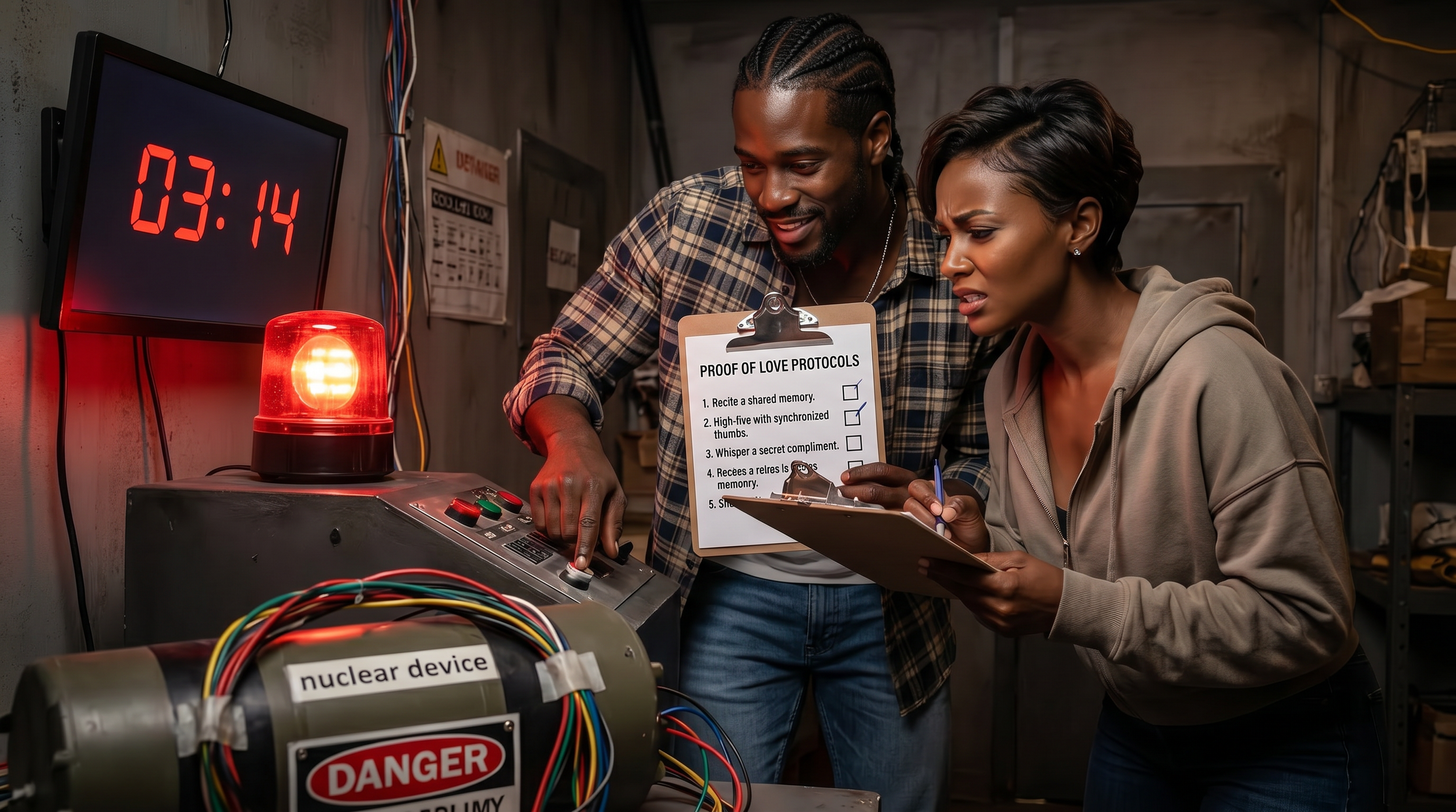
PREQUALIFYING ISN’T PICKY, IT’S PROTECTION (BUT ARE WE PROTECTING THE RIGHT THINGS?)
Nearly half of Black singles are now listing their non-negotiables before the first date: faith, finances, family goals. But what happens to those of us who don't fit neatly into any checklist? This week, we're getting personal about peace, integrity, and why the real prequalifying questions have nothing to do with what you have and everything to do with who you are when nothing is going right. Black love deserves a deeper standard. Let's talk about it.
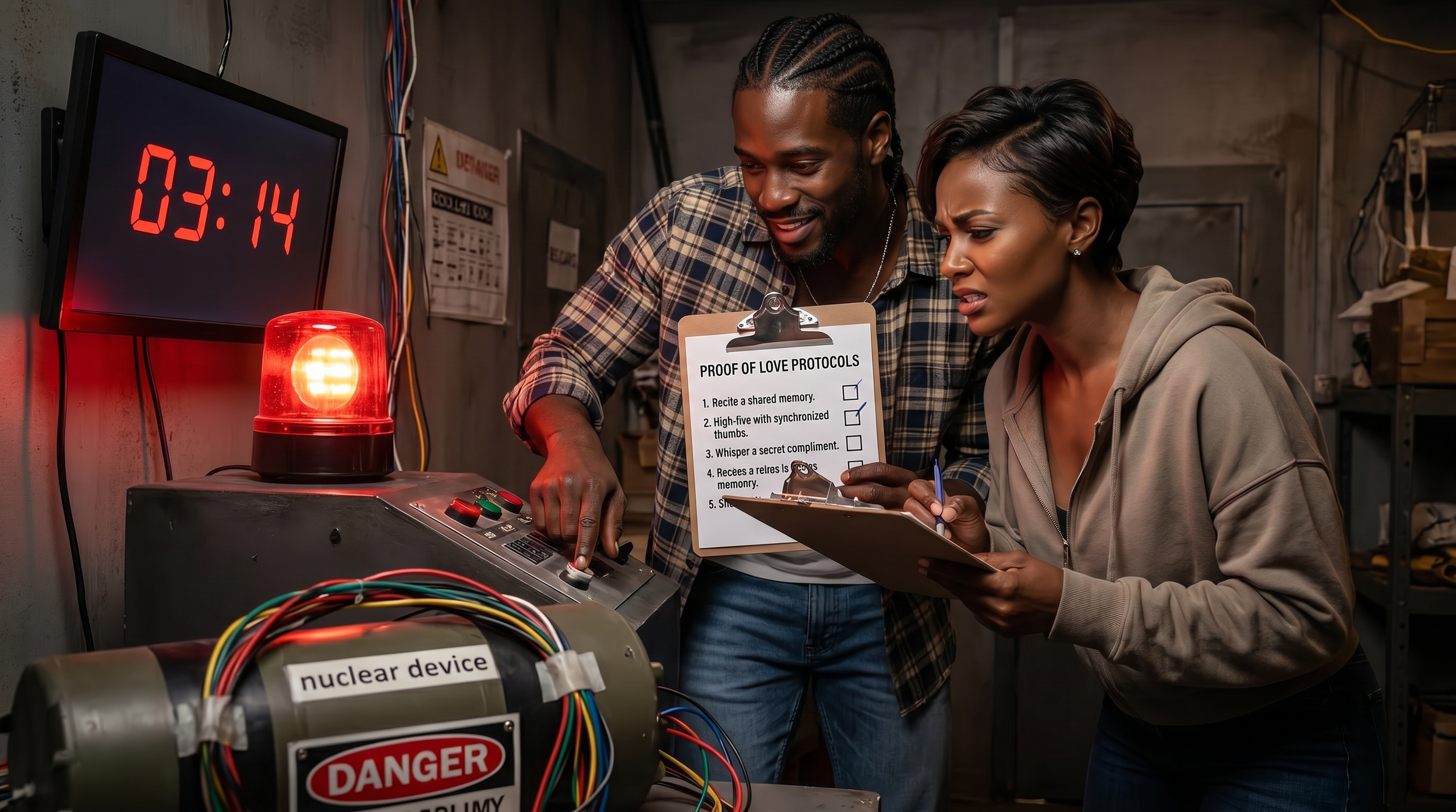
Spirit and Dom from slowburnlove.com work together under pressure inside an escape room, reviewing a clipboard titled "Proof of Love Protocols" as a red alarm light flashes and a countdown timer reads 03:14. This powerful visual represents the real test of Black love and relationship compatibility - not bank accounts or job titles - but how two people show up, communicate, and problem-solve when the clock is ticking. Because real prequalifying isn't about what you have. It's about who you are when it counts.
Nearly half of Black singles, 47.7%, according to a 2026 BLK dating survey, are now raising their non-negotiables early. Faith. Finances. Family goals. Political values. On the first few dates, sometimes in the first few messages. The internet, predictably, has erupted. Some call it evolution. Some call it gatekeeping dressed up in self-help language. And some of us, sitting quietly on the outside of every neat little checklist, are wondering if there's even a seat at the table for people like us.
I'm one of those people. And I think it's time we had an honest conversation.
I Don't Fit the List, And I've Made Peace With That
Let me be transparent with you, because I’m all about truth before performance.
I worked 24 years in corporate America. I took early retirement in 2019, stepping away from a 401(k)-based structure with the intention of finding work that offered a pension, something more stable, more sustainable for the long game. That transition hasn't gone the way I planned. Stable work has been hard to find. Financially, I am not where I want to be. By the metrics most dating profiles and prequalifying conversations use, I would be filtered out before the first conversation ever started.
And faith? I believe in God , but it is not the version of Christianity that dominates so many of our communities right now. I've watched too many leaders fall. I've seen too many people told their worth before God is tied to their W-2. The theology that says you are blessed because you are “the haves” - a good job, a nice car, and a full savings account - and therefore favored, while those struggling – “the have-nots” - are somehow spiritually lacking? That is not faith. That is capitalism wearing a cross. We see it playing out now, Christianity being wielded like a weapon while the people doing the most damage hide behind the pulpit. And I cannot pretend otherwise just to be datable.
So by the dominant prequalifying standards circulating in Black dating spaces, I'm out. No impressive job title. No traditional church home. Not checking the boxes.
And yet, I own my home. My car is paid off. I am at peace. A genuine, hard-won, protective peace that I did not come by easily and will not surrender cheaply.
Peace Is the Standard Nobody's Listing
Here is what I know to be true: I do not care how much money you make. I do not care what car you drive or what church you attend or how impressive your LinkedIn looks. If you cannot meet me at my peace, if your presence disrupts the stillness I've built, then nothing else you bring to the table will be enough.
Protecting my peace is the highest standard there is.
Because at the end of this life, when I ascend from the body, I will be accountable to my soul. And I will not allow anyone into my space, regardless of their résumé, their reputation, their real estate, how good they look cost me the one thing I've actually built: my peace.
What the prequalifying conversation keeps missing is this: integrity is rare, and good character is rarer than a six-figure salary. Emotional consistency, trust, and genuine conversation that feeds the soul are harder to find than a homeowner. And understanding that relationships will always require real work, not performance, is a quality worth far more than any material asset.
5 Things Black Men Should Value That Aren't Material
We talk often about what Black women deserve, and rightfully so. But Black men also deserve to be measured by something deeper than their bank account and their blessing count.
Emotional availability. The ability to be present, to communicate without shutting down, and to sit with someone else's pain without making it about yourself. This is not weakness. This is the foundation of every lasting relationship.
Accountability without shame. A man who can say "I was wrong" and mean it, who doesn't require you to beg for an apology or accept blame for his mistakes, is worth more than any car in the driveway.
Consistency. Not grand gestures. Not the romantic vacation or the flowers after an argument. The daily, unsexy, unglamorous act of showing up the same way every single day. Trust is built in the ordinary.
The willingness to grow. Not perfection, growth. A man who reads, reflects, questions, and evolves is a man who will not become a stranger to you in ten years.
Respect for your peace. If a man cannot honor the space you've built for yourself, if his presence always costs you something emotionally, that is a red flag no amount of ambition can cancel out.
5 Things Black Women Should Value That Aren't Material
And in the same spirit of honesty, because love requires it from all of us:
Integrity. Does she do what she says she will do? Is her word her bond? In a world full of performance, integrity is the rarest currency.
Emotional maturity. The ability to regulate feelings, to not weaponize vulnerability, and to navigate conflict without cruelty. This cannot be faked for long. And it cannot be compensated for with beauty or success.
Reciprocity. Love that flows both ways. Support that doesn't require you to perform in order to receive it. A woman who sees your effort and matches it, not perfectly, but genuinely.
Self-awareness. She knows her wounds – everyone has them, perfection is an illusion. She's working on them. She is not asking you to fix her, but she is not hiding from herself either. That kind of self-knowledge protects you both.
Peace-giving presence. When you leave her, do you feel lighter or heavier? Peace is not passivity, it is a choice, daily, to bring calm rather than chaos into shared space.
What the Community Might Want to Rethink
The prequalifying trend is not wrong at its root. Knowing what you need before you invest deeply is wise. But what we qualify for says everything about what we actually value.
When we prequalify exclusively for income, job titles, church attendance, and material markers, we are selecting for the appearance of stability, not stability itself. We are choosing a résumé over a soul. At my age, in my early 50s, what blesses my soul and gives me peace matters far more than what fills a checklist.
Some of the most financially secure people in our community are deeply broken. Some of the most spiritually performative people have no integrity whatsoever. And some of the most overlooked, the ones quietly rebuilding below the algorithm's radar, carry more peace, more character, and more capacity for real love than anyone's checklist would ever surface.
The real prequalifying question is not what do you have? The real questions are: Who are you when nothing is going right? What do you do with your pain? Can you be still? Can you be honest when its hard? Do you protect someone else's peace while tending to your own?
I find a lot of these questions can be answered in an Xscape room date. LOL.
Those questions don't fit in a dating app profile. They take time to answer. They require slow burn.
And that, that patience, that depth, that willingness to look past the surface, is exactly the kind of love worth building. Because if you are a true believer, you know it is God who is the provider, and not your partner’s pocketbook.
Until next time,
Melissa Pozio
Slow Burn Love
Disclaimer: The content on Slow Burn Love is for informational and educational purposes only and does not substitute for professional medical advice, diagnosis, or treatment. Always seek the advice of a physician or qualified mental health provider with any questions you may have regarding a medical or psychological condition. If you are in a crisis, please reach out to a local emergency service or a crisis hotline immediately.

Slow Burn Love Letters is a blog created as sanctuary dedicated to the intentional, profound, and transformative power of Black-on-Black love. Choosing to love one another is a revolutionary act that deliberately dismantles centuries of systemic efforts to fragment the Black family, serving as a profound defiance against a culture that has historically profited from our division and continues to undervalue the sanctity of Black intimacy. This blog acts as a collection of "love letters" addressed directly to the Black family and community, moving away from the superficial narratives to focus on the unbreakable bonds that build Black Love and community through shared history, healing, and deep mutual respect. This space is thoughtfully crafted to elevate what matters most: our connection to one another, celebrating the softness, strength, and resilience found within our relationships.