DO YOU FEEL SAFE IN YOUR ENVIRONMENT?
Do you feel safe where you live? Do you feel safe at work? Do you feel safe around the people you call friends?
Not "safe" in the way we usually mean it, like whether someone is going to break into your house or jump you in a parking lot. I mean the quieter kind of unsafe. The kind that doesn't leave a mark you can point to, but that you feel in your body every single day. The kind that makes you tired before you've even left the house.
The Small Things That Aren't Small
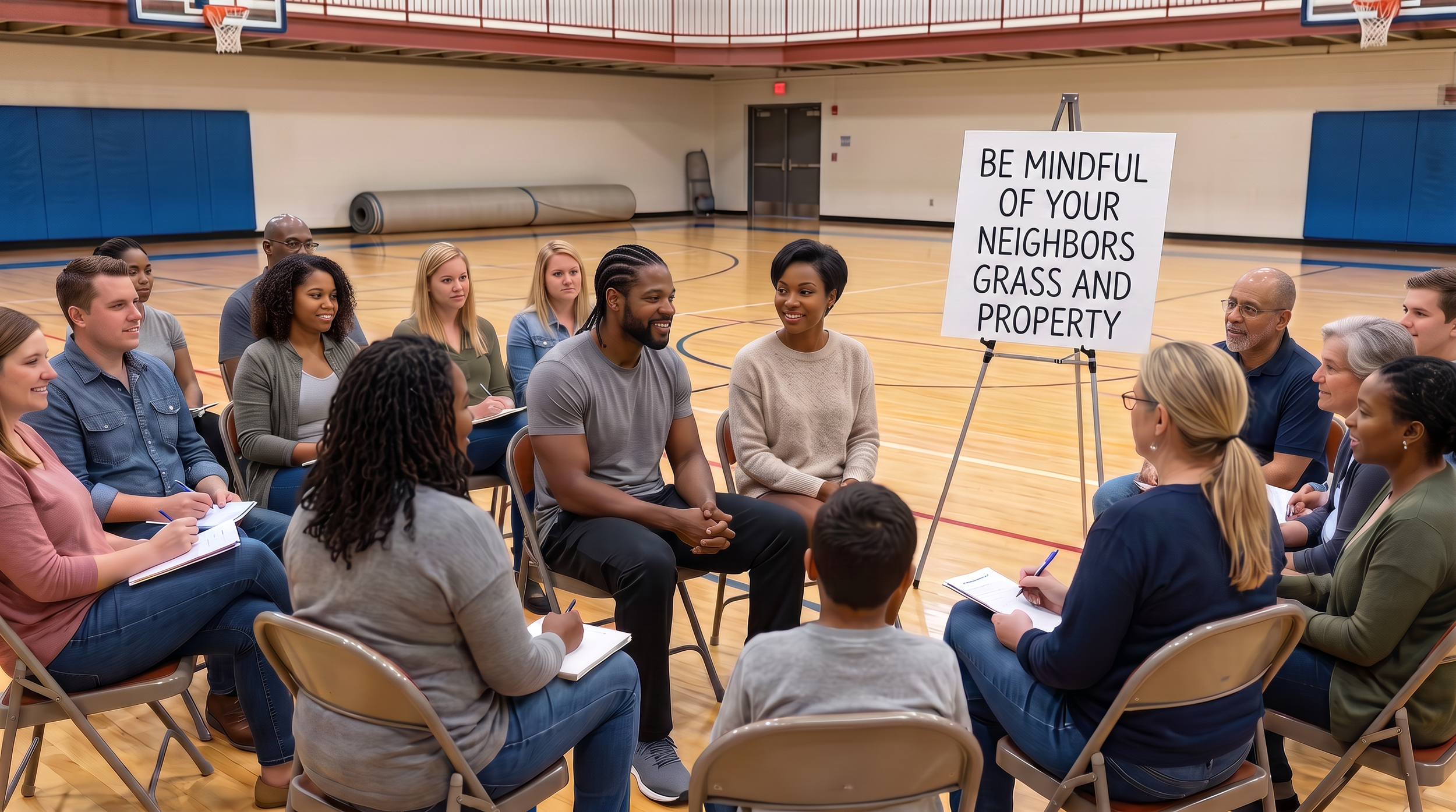
Do you feel safe when your white neighbors show very little regard for you or your property, letting their kids and their dogs run loose across your lawn like it's a shared park? Do you feel safe when their trash blows onto your yard and they don't bother to come get it, like picking up after themselves isn't something they were ever taught? Do you feel safe having to wait for them to move their car from in front of your house so you can edge your grass, even though there's always plenty of parking space in front of theirs?
This isn't about one bad neighbor having a bad week. This is about a pattern. About the quiet message that lies underneath the behavior, the one that says your space doesn't count the same way theirs does. That your property line is a suggestion. That you are expected to absorb the mess and stay quiet about it, because making noise about it makes you the problem.
The Black problem.
That's not paranoia. That's pattern recognition. Black people have had to get really good at noticing small warning signs, just to protect ourselves around people who seem nice on the surface. And no matter how that Black person responds to those microaggressions – and actual aggression - they know they will most likely be the one seen as guilty.
When Friendship Doesn't Mean What You Thought It Meant
Are you safe when your white friends, and even some Black friends and family, people who hug you and laugh with you, take pride in their children working for military and government operations under an administration that is openly and intentionally participating in genocide and erasing Black history from classrooms and public life?
Sit with that contradiction for a second, because I had to.
How do you hold someone close as a friend while they cheer on their child's career inside an administrative machine that is actively harming your community and intentionally erasing it’s history? How do you reconcile the trust you felt with them when their own children may be among the very people carrying out that erasure?
What is a friendship – or family connection - actually worth if it requires you to stay silent about your own safety, your own history, your own humanity, in order to keep it?
Why This Matters More Than It Looks Like It Does
It's never just one thing. It's the accumulation. It's the daily evidence that your comfort, your property, your peace of mind, and your history are all treated as negotiable in a way that theirs never is. And when you try to say something, you're the one who gets called sensitive, or difficult, or "playing the race card," when really you're just naming what's happening in front of you.
The Mirror We Don't Always Want to Look Into
Here's where I have to turn this same question back on us, because the same rules apply to how we treat each other. When we treat each other within the Black community with disdain, disrespect, or a lack of care, when we take each other's property, speak to one another with disrespect, we teach other communities how to disrespect us too. People watch how we treat our own before they decide how much regard to give us.
So the question has to be asked. When we are around each other, are we intentionally practicing kindness, consideration, and putting each other first? Are we intentional in choosing each other, when we need a contractor, when we're choosing a neighborhood, a school, a business to support? Safety starts at home, and home is bigger than just our own front door. It's our community too.
Self-preservation matters for a culture the same way it matters for a person. Which brings me to something I've been sitting with for a while now, the conversation about Black women creating safe spaces within a soft life.
Building the Soft Life From the Inside Out
Black women need to be intentional about creating safe spaces for themselves first, in the environments they live in, the jobs they take on, the family members they allow close, the friends they keep, and the romantic partners they choose.
So many Black women, and Black men too, had to be tough dealing with family, dealing with community, and then dealing with the white world on top of that. Being soft, being intentional about our own care whether that's physical, emotional, or spiritual, can feel foreign to those of us raised to always be competitive, always be tough, always "put your big girl panties on" when hardship hit. That conditioning doesn't disappear on its own. We have to be intentional about our boundaries, intentional about creating safe spaces, and honest about our limits, both within our community and outside of it.
If you want your romantic partner, your friends, your family, and your neighbors to understand what a soft life looks like for you, you have to be living it for yourself first. Here are five ways Black women can practice intentional safe spaces to build that soft life.
Set boundaries with family members out loud, even when it's uncomfortable, instead of assuming they'll figure it out on their own.
Choose environments, jobs, and neighborhoods that don't require you to shrink yourself or stay in constant defense mode.
Protect your rest as fiercely as you protect your responsibilities. Rest is not a reward you have to earn.
Surround yourself with people who show up for you consistently, not just when it's convenient for them.
Give yourself permission to say no without over explaining or apologizing for it.
And Black men have a role in this too. Here are five ways a Black man can help the woman in his life practice intentional safe spaces so she can actually live that soft life instead of just hearing about it.
Notice when she's carrying too much and step in without waiting to be asked every single time.
Protect her peace the same way you'd protect her physically, by shutting down disrespect from others in the room.
Make space for her rest instead of treating her softness as something you have to compete with.
Follow through on your word consistently, because safety is built through reliability, not romantic gestures.
Listen when she tells you what safety looks like to her instead of assuming you already know.
What We Owe Each Other
None of this works if we only hold white neighbors and white friends accountable while giving ourselves and each other a pass. A safe environment for Black people has to be something we build together, on purpose, inside our own community first.
That means checking in on each other without expecting something back. It means choosing Black owned businesses and Black professionals when we can, not out of obligation but because we understand what it means to invest in each other. It means correcting each other with love instead of shame when we fall short, and it means refusing to let disrespect toward one another become normal just because we're used to it.
Community accountability doesn't stop at the front door of people who look like us. But it also doesn't start with the people who don't. It starts with us, in how we speak to each other, how we show up for each other, and how intentional we are about making our own spaces feel safe before we ever step outside of them.
So I'll ask you again. Do you feel safe where you live? Do you feel safe with the people you call friends, and even the people you call family? Do you feel safe within your own community?
Do you feel safe and at peace within yourself?
If the honest answer is no, that's not something to bury. That's something to build from, together.
Until next time,
Melissa Pozio
Slow Burn Love
Disclaimer: The content on Slow Burn Love is for informational and educational purposes only and does not substitute for professional medical advice, diagnosis, or treatment. Always seek the advice of a physician or qualified mental health provider with any questions you may have regarding a medical or psychological condition. If you are in a crisis, please reach out to a local emergency service or a crisis hotline immediately.