
TO THE BLACK MEN WHO SHOW UP: WE SEE YOU. WE NEED YOU.
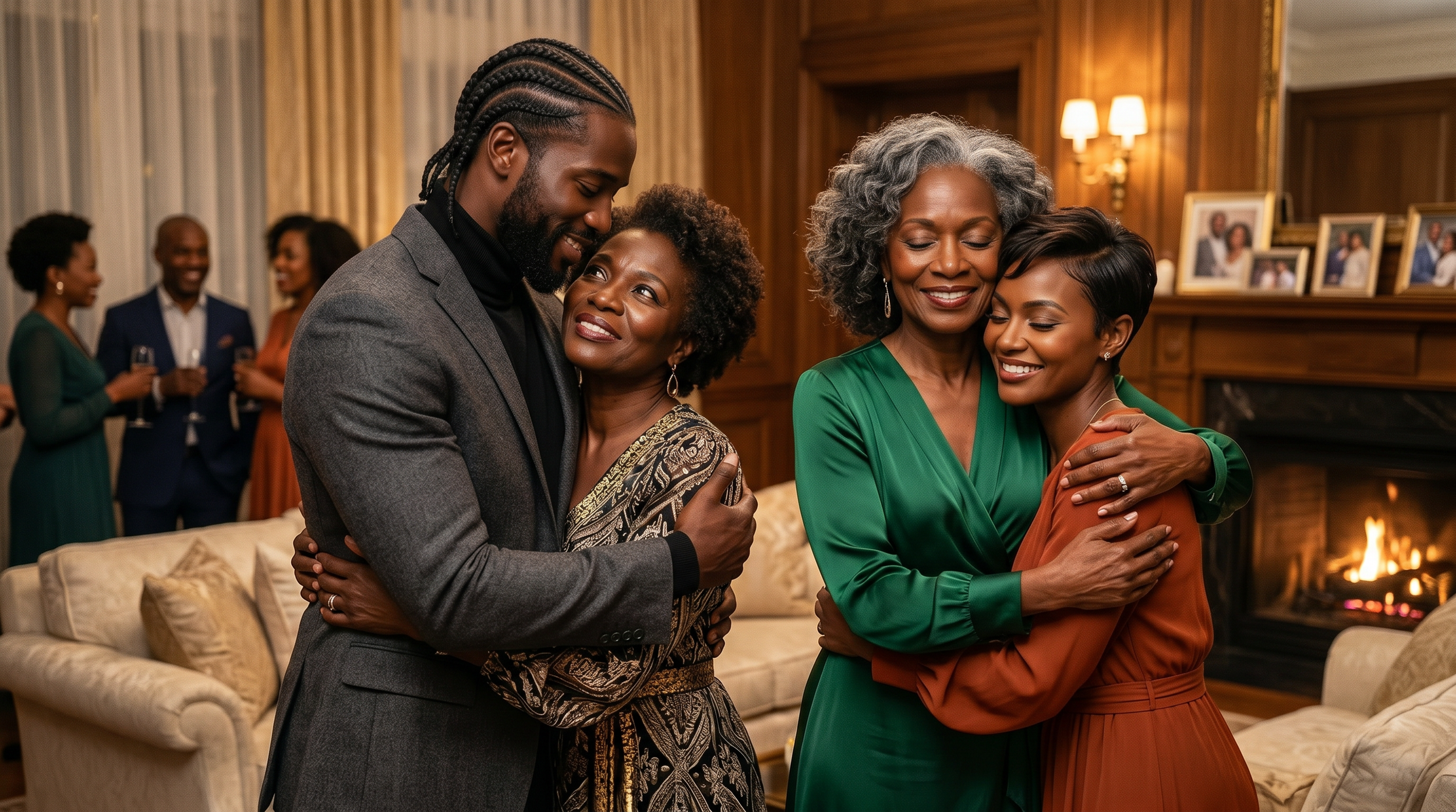
From slowburnlove.com TO THE BLACK MEN WHO SHOW UP: WE SEE YOU. WE NEED YOU. This Mother's Day, we are celebrating the women who held us together. We are also acknowledging the Black men who stand beside them, raised us with intention, and choose to show up every single day for the Black women they love.
A Mother’s Day Love Letter and a Call to Action
Mother's Day has always been a celebration wrapped in flowers and phone calls, in Sunday dinners and long embraces. But this year, let's make it a moment of reckoning, of clarity, and of deep, abiding love between Black men and Black women, because what is happening in this country right now demands nothing less.
The Numbers Tell a Story
After the 2024 presidential election, a gender gap emerged that was impossible to ignore. Black women showed up at 91% to 92% for Kamala Harris. They organized, canvassed, made phone calls, and believed collectively that their vote was a shield for their families and their futures. However, Black men showed up at a different rate, somewhere between 74% and 82%. As many as one in four Black men voted for Donald Trump, roughly double the number who did so in 2020. Many cited economic frustration and inflation as their reasons.
Nobody is here to shame any individual vote. Economic pain is real. But we need a bigger conversation about what it means to think with the community in mind when we step into the voting booth.
Even Your Opponents Know Who Is Holding It Down
The Heritage Foundation, the conservative think tank behind Project 2025, has itself published commentary acknowledging that the Black community operates in a matriarchal structure, with Black women functioning as the anchors of Black family and community life. They see it. They know it. And yet the policies they champion are aimed directly at the lives Black women work so hard to sustain, gutting healthcare access, education equity, civil rights protections, and now voting rights themselves.
This is what makes the voting gap so painful. When Black men cast votes for a ticket backed by that racist agenda, they lent their power to forces that see Black women as a something to manage rather than a people to protect. Knowingly or not, that vote worked against the very infrastructure Black women depend on to hold communities together, which includes keeping Black men “together”.
And here is the part we have to say clearly: looking like us does not mean being for us. Clarence Thomas looks like us. He has spent decades dismantling affirmative action, voting rights protections, and civil rights frameworks that Black Americans built and bled for. But Black men are not the only one. Some Black women present themselves as representative of the community while actively championing policies that cut social safety nets, oppose voting access expansions, and align directly with the Project 2025 agenda that threatens Black communities.
They speak the language of Black pride while supporting legislation that makes Black lives harder.
But this is not about politics. It is about discernment. Community thinking means asking not just who is speaking, but what they are quietly supporting when the cameras are off and the votes are cast. Some of the most dangerous opposition wears a familiar face.
Misogynoir Is a Community Problem
We also have to talk about what is happening on our screens every day. The misogynoir, the specific hatred directed at Black women that sits at the intersection of racism and sexism, does not only live in mainstream media or white spaces. It circulates freely in Black social media, in comment sections, in memes, in podcasts, and in viral videos that get thousands of shares from Black men and women alike.
When content that demeans, ridicules, or dehumanizes Black women spreads through our feeds and we say nothing, share it anyway, or laugh along, we are participating in the same culture of erasure that our political opponents use against us.
The social media ecosystem that profits from Black pain does not care about our community. But we have to.
Black men who genuinely love Black women have to be willing to name misogynoir when they see it, to refuse to platform it, and to push back in the spaces where it lives. That is not policing culture. That is protecting community – your mother, wife, sister, daughter.
It is the same protection Black women extend every day when they show up to vote for policies that keep Black men alive and free.
The Voting Rights Act Is Gone. This Is Not the Time for a Gap.
On April 29, 2026, the Supreme Court's 6-3 ruling in Louisiana v. Callais effectively gutted Section 2 of the Voting Rights Act, the provision that had protected minority communities from racially discriminatory electoral maps for six decades. The Court stripped away the ability to challenge voting maps based on their discriminatory effects, demanding instead that voters prove intentional racism, a nearly impossible standard.
Politicians can now gerrymander Black communities into political silence and call it partisanship.
This is not the moment for a gender gap. This is the moment for a coalition built in the home, in the community, and at every ballot box we still have access to.
5 Ways Black Men Can Show Up for Black Women Every Day
Vote with the community in mind. Before casting a ballot, ask what this candidate has done for Black women, Black children, and Black families. When Black women vote at 92%, they are voting for Black men too. Match that energy and bring that same intention.
Protect Black women publicly. When someone demeans a Black woman in a group chat, on social media, or at a family gathering, say something. Do not scroll past misogynoir. Do not share it. Call it what it is, and mean it.
Show up in the spaces that shape the future. Attend school board meetings. Join the neighborhood association. Show up to local elections. The policies most directly affecting Black communities are often decided locally, where Black male presence and voice are most needed.
Do the emotional labor. Ask how she is and stay for the real answer. Recognize that Black women are often managing the logistics of survival for entire families while carrying collective grief. Be a soft place to land, not just someone who needs to be landed on.
Invest in Black women's leadership. Support Black women running for office, building organizations, and doing community work. Share their content. Show up to their events. When Black women lead, entire communities rise.
5 Ways Black Women Can Help Black Men Show Up
Speak the stakes plainly, without shame. Have honest conversations about what is being lost politically and why it matters for everyone. Many Black men shifted their votes because they felt economically invisible. Create space for that pain without abandoning the conversation about collective consequences.
Invite Black men into the work. Civic and community spaces that are often female-dominated can feel unwelcoming to Black men finding their footing. Extend the invitation explicitly, warmly, and consistently.
Celebrate Black men who show up. Recognize and affirm the men in your life doing the work at home, in the community, and at the polls. Affirmation is fuel. When people feel seen in their efforts, they keep going.
Make political conversations part of everyday life. Talk about redistricting at dinner. Explain what losing the Voting Rights Act means for your neighborhood. Civic engagement should feel like a normal part of Black family life, not a lecture dropped at election season.
Choose solidarity over perfection. This partnership does not require agreement on everything. It requires commitment to each other's survival. Lead with love and stay in the conversation even when it is hard.