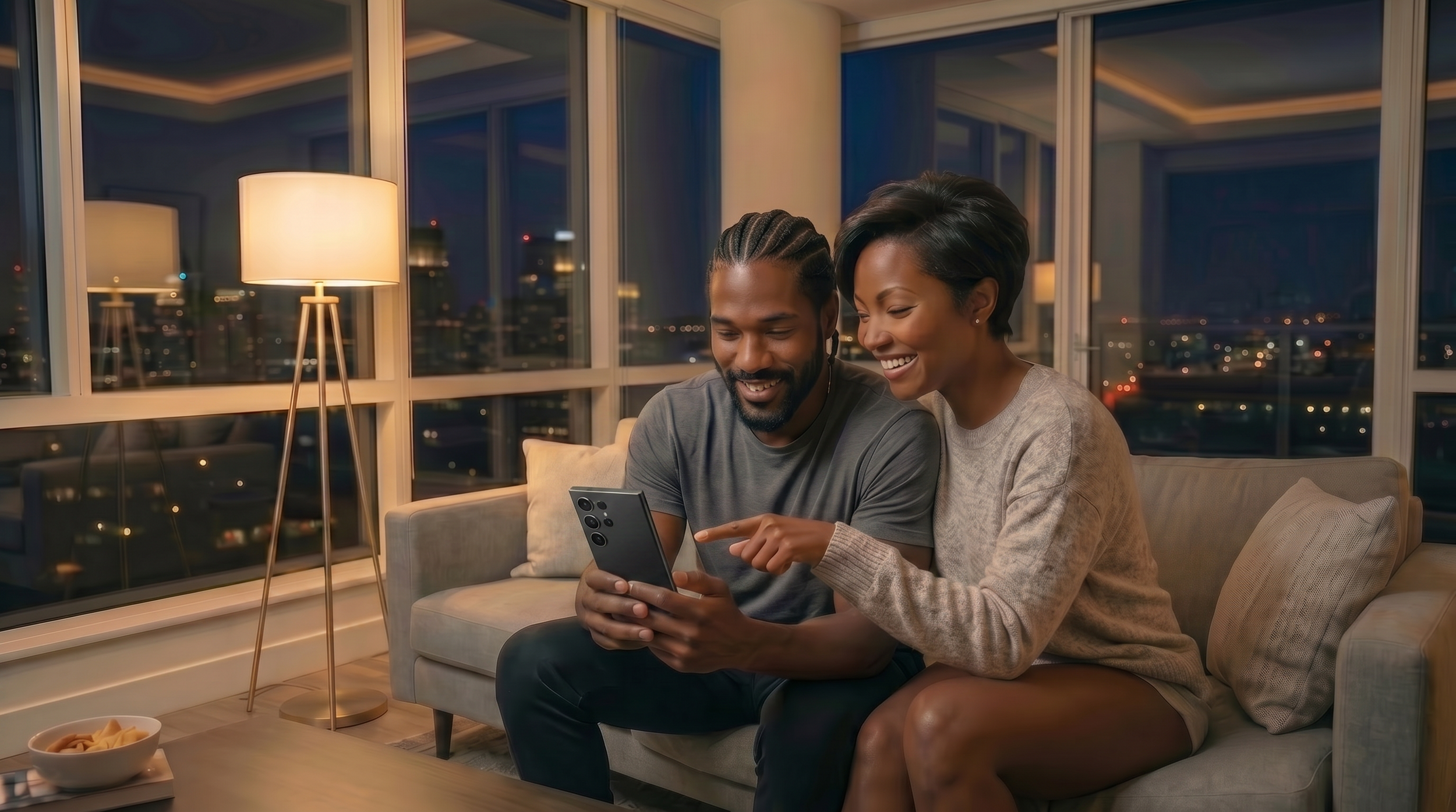
THEY’RE NOT FIGHTING WITH US, THEY’RE FIGHTING FOR OUR ATTENTION
Unless I was missing something, this was a relatively quiet week when it came to toxicity between Black men and Black women online, and honestly? That was wonderful. Maybe we are getting the message. Maybe more of us are starting to recognize that the chaos we keep seeing in comment sections is not organic, and we are finally stepping back from it heading into what is shaping up to be one of the most consequential election cycles of our lives.
There was still plenty happening in Black culture this week. Juneteenth just passed under the shadow of America's 250th anniversary, which produced one of the most underwhelming White House celebrations in recent memory. Druski hosted the BET Awards and missed the mark entirely by never once addressing the political environment we are all actually living in. And considering conservative right CEO David Ellison recently acquired the network, the community's viewership has declined significantly.
But underneath all of it, running like a contaminated current, was something older and meaner: the manufactured war between Black men and Black women online. And this week, new investigative reporting finally started connecting the dots in a way that should change how every one of us moves on social media.
Researchers have spent months tracking what is happening in the comment sections of Black creators, cultural commentators, and influencers. A recent publication exposed a network of more than 18,000 coordinated bot accounts that specifically target Black spaces online. These accounts were not random. They showed up wherever a prominent Black figure said anything remotely polarizing, and their job was to flood those spaces with MAGA talking points dressed up as community consensus.
These are not clumsy trolls with broken grammar and obvious foreign syntax. Today's operators are running sophisticated, AI-driven networks capable of generating thousands of completely different, culturally fluent comments in seconds. They post about music, fashion, and comedy to establish credibility, and then they slide in the poison. They fan the flames of every argument between Black men and women because conflict between us is exactly the content they were built to amplify.
It is widely reported that there are now more bots on social media than there are humans. Imagine what that ratio is doing to the Black community specifically, when we know these networks have studied our language, our references, our humor, and our pain points with deliberate precision.
Every time a conversation about Black love or Black relationships gets toxic online, someone profits from that toxicity. The bots need us to react. They need us to reply, quote tweet, screenshot, and share. That engagement tells the algorithm the content matters, and the algorithm rewards it with reach. We are literally doing the labor that funds the operation.
Disinformation researchers are explicit about what the goal is. It is not persuasion. It is to flood comment sections with such hostile, hyper-polarized content that users can no longer distinguish real community sentiment from automated propaganda. They want us exhausted. They want us convinced that Black men and Black women are fundamentally at war, because a community that does not trust itself cannot organize, vote, or build anything together.
A June 2026 report from the Center for Countering Digital Hate confirmed that after Meta and X rolled back key safeguards, abusive, coordinated, and automated spam comments immediately quadrupled. This is not a glitch. This is policy.
So what do we do with this?
First, we name it. What you are witnessing in many of these comment sections is not Black men versus Black women. It is a political operation wearing our faces. The accounts pushing the most inflammatory content about Black women being unlovable or Black men being worthless are often not Black people at all. They are AI-generated personas with stolen profile pictures and culturally fluent bios, operated through click farms located across Eastern Europe, Nigeria, Thailand, and South Asia. They studied us. They learned how we talk. And they deployed that knowledge against us.
Second, we stop feeding it. The most counterintuitive truth I can offer is that your righteous reply is their win. The furious quote tweet is fuel. The screenshot that goes viral is exactly the amplification these networks were engineered to generate. Disengagement is not defeat. It is the one move they cannot monetize.
Here is what that looks like in practice:
Five things Black men can do:
When you see a post designed to make Black women look undesirable or threatening, do not share it, even to disagree. Scroll past it and report the account.
Actively amplify content that shows Black men and women building, loving, and laughing together. The algorithm needs counter-programming.
Call it out in your circles when a brother gets pulled into bot bait. Name the manipulation without shaming the person.
Follow and financially support Black creators who are doing relationship and community content with integrity.
Before you quote tweet or respond to inflammatory gender content, ask one question: who benefits if this spreads?
Five things Black women can do:
Resist the pull to platform accounts that use outrage as a business model. Engagement is endorsement to the algorithm.
Create and share content about Black love, Black joy, and partnership. The bots cannot manufacture what they have not studied.
When comment sections start feeling like a war zone, exit without explanation. Your peace is not a consolation prize.
Support Black men who are doing visible, good work in community and relationship spaces. Name them, share them, fund them.
Talk to real Black men in your real life before accepting what the internet tells you about where they stand.
Black love, Black community, and Black culture did not happen this week because of X, Facebook, Instagram. It happened because we are becoming more intentional and mindful in our reactions to each other. The real conversation is still ours, but we have to stop auditioning it in spaces that were redesigned to use us as raw material.
They are not fighting with us. They are fighting for our attention.
Stop giving it to them and give it to each other in love, kindness and respect.
Until next time,
Melissa
Slow Burn Love
Disclaimer: The content on Slow Burn Love is for informational and educational purposes only and does not substitute for professional medical advice, diagnosis, or treatment. Always seek the advice of a physician or qualified mental health provider with any questions you may have regarding a medical or psychological condition. If you are in a crisis, please reach out to a local emergency service or a crisis hotline immediately.