
WHO CLEANS UP THE MESS? BLACK FATHERS, BROKEN SYSTEMS AND THE THINGS WORTH FIXING
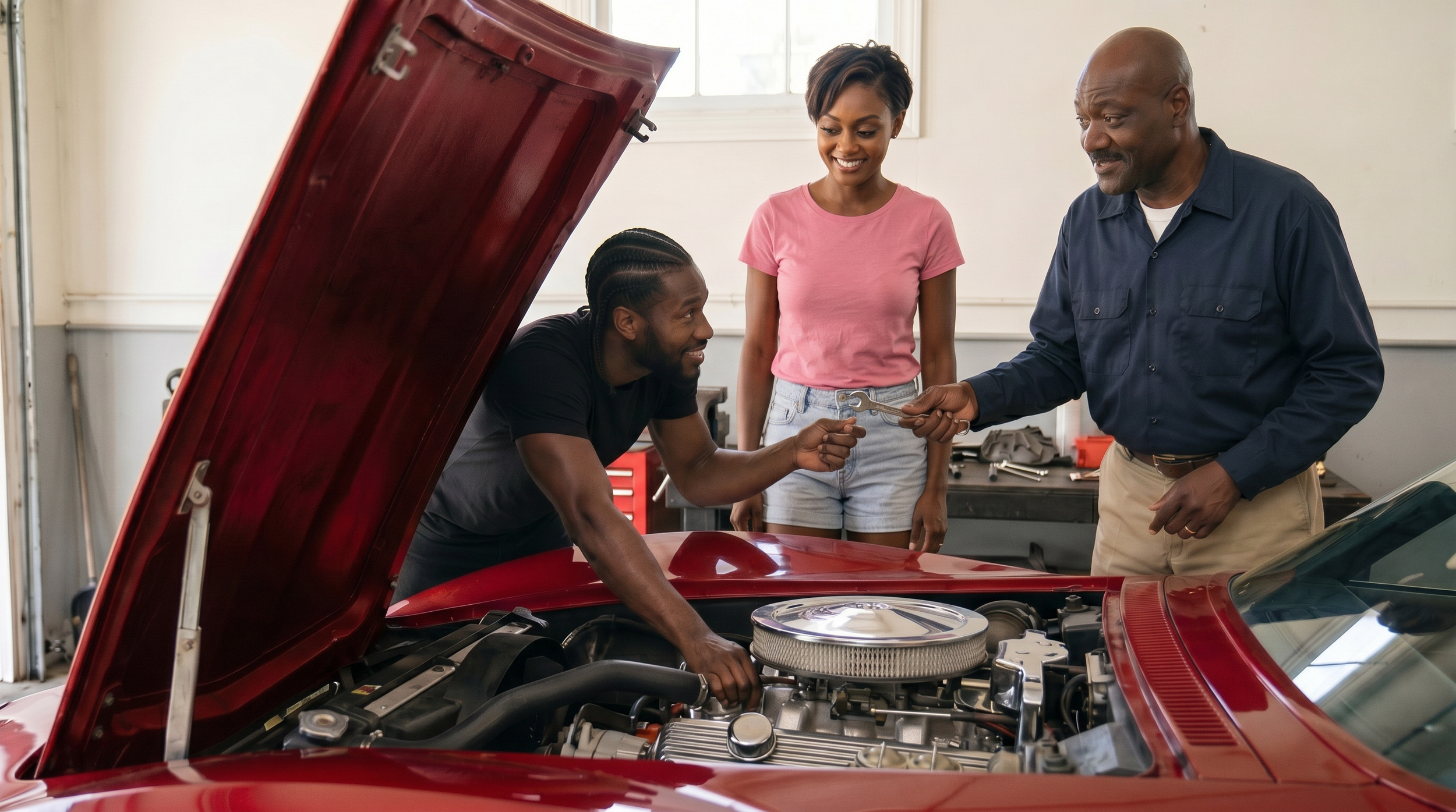
The lessons that matter most are not always spoken. Black fathers and mentors teach resilience, patience, and love through the quiet work of repair—showing the next generation that what is broken is often worth fixing. slowburnlove.com
There is a dirty diaper that has been sitting in the middle of my street for almost a week. I live in a clean, diverse neighborhood where people walk their dogs and keep their lawns trimmed, yet that diaper keeps moving from one side of the road to the other, and no one is claiming it. No one is claiming their trash, no one is picking it up, and properly putting it where it belongs. It just sits there, decaying a little more each day, while everyone drives past and looks away.
That is how it feels watching the news this week. The dirt created in the Black community by others gets tossed aside, the ones responsible ignore it, and those of us affected are left dealing with it as it gravitates toward our doorstep.
That same pattern, no one claiming the offense, no one owning the mess, shows up in the lack of attention for baby Kohen Wiley, killed when a police officer fired into the vehicle he was riding in – over diapers. The Senatobia Police Department has a long history of racism and brutality against the Black residents it serves. As a result, a local boycott has formed against Walmart where he was killed and the security guard who called police, yet the case has barely moved or given the national attention and outrage it deserves.
The reaction to the death of a Black toddler feels just like that dirty diaper somebody tossed on my block and never came back for. A child dying over a box of diapers allegedly stolen, and the outrage gets treated the same way, dumped, ignored, and is somebody else's problem.
The other story this week that stood out for me was Karmelo Anthony, a Black teenager convicted of murder in the stabbing death of Austin Metcalf, a white teenager, at a Texas track meet. Not one juror on Karmelo’s case was Black - that is not a jury of his peers. His case got hashtags and a permanent spot in the algorithm's memory from those supporting him and those against him, while Kohen Wiley's case is hardly getting movement at all.
As a Black community, we seem to always be the ones cleaning up messes other communities create against us. We constantly face a system not built with us in mind. Karmelo Anthony will potentially never father children of his own, locked away in a jail cell, while Kohen Wiley will never even grow up to become a father himself. On a week built around Father's Day, it is worth naming that both stories end the same way for two young Black men. Two futures of Black fatherhood erased in the same week.
This is the pattern. Black men and boys get cast, again and again, as the threat while the same offenses that get explained away for their white counterparts, become proof of danger the moment a Black person is involved. Basically, the story that travels fastest is the one where a Black person is the danger in the room. And when a Black child dies at the hands of the system meant to protect him, the story gets buried under the next headline instead of becoming one itself.
What We Can Do as a Community
Can a person change the algorithm? Yes. As a community, we need to do better at how we show up for each other online, since the algorithm responds to behavior, and behavior is something we control.
Say the names on purpose, more than once. Algorithms reward repetition. If Kohen Wiley's name only trends for forty eight hours, the conversation moved too fast. Bring his name back next week. Demand the bodycam footage that still has not been released.
Correct misinformation within the Black community the way you would want it corrected about you, without humiliating whoever got it wrong. A kind, factual correction shifts a narrative further than a takedown does. Holding the full truth builds more credibility for the cause than picking a side does.
Honoring Black Fathers This Father's Day
Black families carry a history of bad breaks that never got fixed, especially when it comes to fatherhood.
I read something this week about the difference between a father who responds to something broken by replacing it versus a father who responds to something broken by fixing it. A father who fixes the bike instead of buying a new one teaches his child that value is not disposable. He teaches patience, since fixing takes longer than replacing, and attention, since you cannot repair what you have not looked at closely.
He teaches that things, and by extension people, are worth maintaining rather than abandoning the moment they become inconvenient. A child who watches a father work the problem instead of tossing it absorbs a quiet lesson: things that matter are worth staying with. A boy who watches his father say "I'm frustrated, and here's how I'm working through it" learns that emotions are not something to hide from, and that he too can fix what is broken in himself with patience instead of constant replacement.
Five things Black men can do to become better fixers versus replacers:
Finish one repair this month before buying a replacement.
Narrate the process out loud to a child or younger relative, so the patience itself gets witnessed.
Name a feeling out loud at least once a week instead of pushing through silently.
Revisit one strained relationship and make a small, specific repair instead of letting distance handle it.
Mentor one boy or young man directly, since modeling only works at close range.
Five things Black women can do to encourage the men and boys in their lives toward fixing over replacing:
Notice it out loud when a man chooses to repair something instead of replace it.
Make space for him to talk through frustration without rushing to fix his feelings for him.
Involve boys in repairs happening at home, even small ones, so the habit forms early.
Avoid mocking a man's effort to fix something himself, even if it takes longer.
Praise patience and follow through as loudly as you praise results.