WHAT KARMELO ANTHONY, CYRUS CARMACK-BELTON, AND A BOYCOTT TEACH US ABOUT PROTECTING OUR OWN SPACE
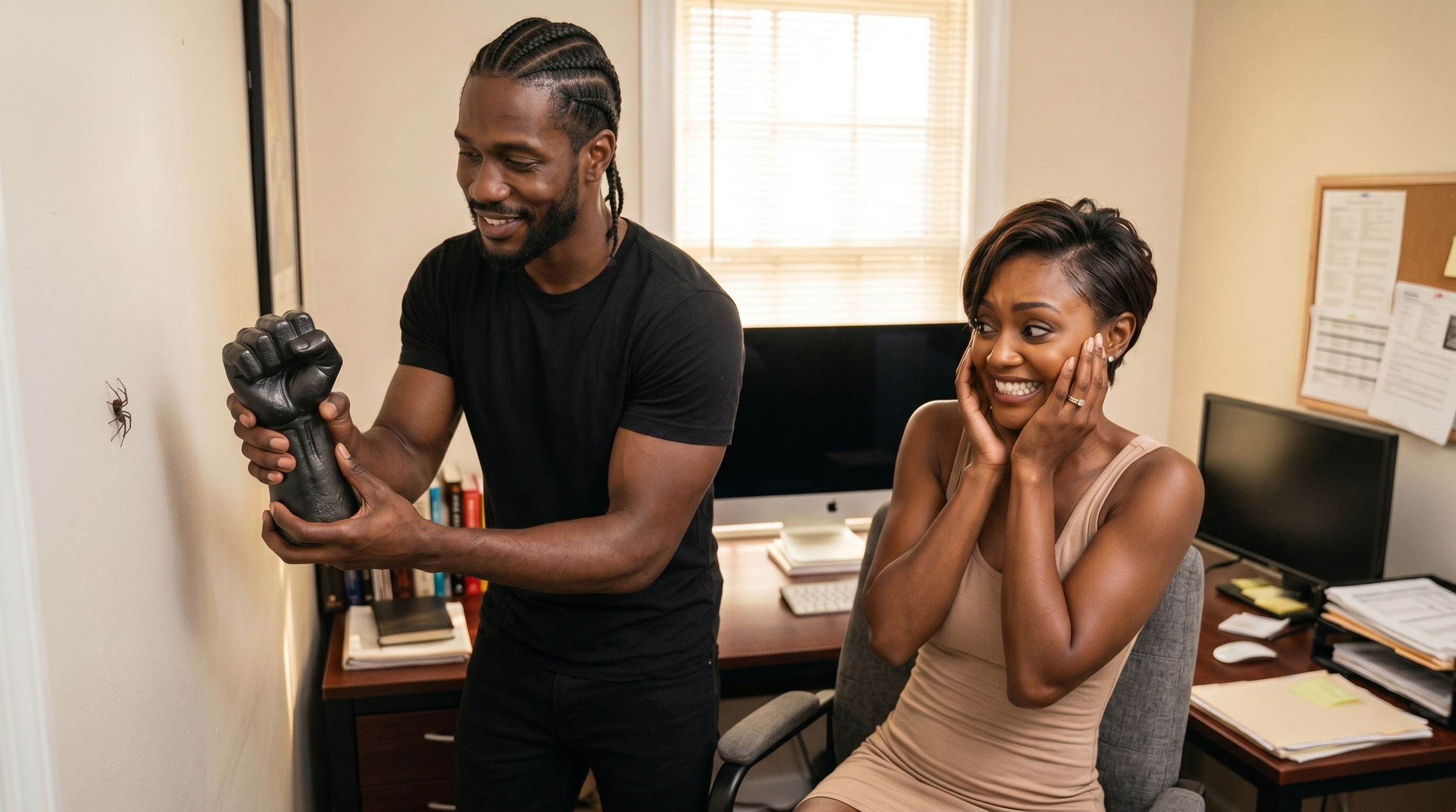
There was a huge spider at my desk as I wrote this piece. Black, fast, and bold enough to show itself in my personal space. I reached for the spray. Then I sat in the chemical fog I had just created, coughing, eyes burning, wondering why I had to make my own environment toxic in order to deal with an invader.
In that moment I realized I had not created the proper boundaries to keep intruders out in the first place, boundaries that would protect me without requiring me to harm myself in the process.
The Black community needs to do the same: create safe spaces with each other and come together, offensively and defensively, to fight the “spiders” that attack us. Because that is what we have been doing for four hundred years. Poisoning our own breath, our voices, our political and economic rights, creating just enough room to survive. We pour ourselves into a legal system never designed to protect us, beg corporations for dignity, and return to these poisonous systems even when nothing changes.
Karmelo Anthony and the Weight We Put on Black Boys
The jury that convicted Karmelo Anthony of murder and sentenced him to 35 years in a Texas prison included zero Black jurors.
We need to talk about what that does to Black boys and Black men watching. Every verdict like this is absorbed not just intellectually but, in the body, in the gut. Black men and boys learn in real time that a jury of your peers does not apply to them, that the space between fear, self-defense, and being labeled a murderer is wider for them than for anyone else. That psychology lives in how Black men move through the world.
We have to teach our sons that unless your life is genuinely in danger, you cannot reach for something that can end another person's life. Unless you fear for your life, walk away. Never put your hands on anyone, man or woman, unless you are defending your life. Just walk away. We have to hold that standard inside our own communities first, because the bar for a Black man to claim self-defense in this country is not the same bar that exists for the privileged. While we fight to change that, we have to love our sons and our men enough to tell them the truth.
Karmelo's fear lived inside a history this country has never reckoned with. And then there is the knife. Some say it was a utility tool for cutting athletic tape, trimming shoe insoles, managing equipment. So what made him feel he needed it to defend himself with a knife? He was convicted in a courtroom without a single juror who looked like him, without anyone who might have sat with that question longer. Why did he have it, and why did he feel using it was his only option? Those are the questions we owe our children.
The Boycott, the Bodega, and the Blueprint We Keep Skipping
The other conversation highlighted this week on my timeline was the South Carolina jury that found Rick Chow not guilty of murder. Chow chased 14-year-old Cyrus Carmack-Belton 130 yards and shot him dead over suspected water theft. Investigators later determined Cyrus had not stolen anything.
Water. A 14-year-old Black child. One hundred and thirty yards.
This reminds me of that spider. Coming into a space where it is not native. Building a web to capture resources without contributing anything. Setting traps among people it does not respect, treating the original occupants as threats. Non-Black businesses coming into our neighborhoods, taking our dollars daily, surveiling us like criminals in the same stores that depend on us to survive, hiring from outside the community, returning nothing, and when we speak the truth about it, we become the problem.
But Black boycotts should not be about Chinese food or nail salons. They should be about economic dignity. Black dollars built entire commercial ecosystems in our neighborhoods and we have the least power within them. Cyrus Carmack-Belton's mother said it plainly at the statehouse rally - if they are following you around, disrespecting you, mocking you, do not spend your dollar there. That is not hate. That is self-respect.
We have had this conversation before. We boycott for a week, two weeks, then go back because the alternatives are not always there and we have not built the infrastructure needed to sustain a real departure. Black Wall Street, Black-owned towns, and countless Black-owned spaces were destroyed by racism, and that work continues through gentrification. A boycott without unity and a community blueprint is just anger with an expiration date.
What Do We Do With Each Other?
The spider spray hurt me too. That is the position we keep finding ourselves in: reaching for the tools of the systems we are fighting and expecting different results. Using the same justice system ideology. Existing in spaces that profit from us but do not like us. That is self-induced poison.
Course correction needs to start with each other.
The way we treat each other in our relationships is a direct preview of how we show up in communities. If we dismiss each other in private, we abandon each other in public. If we protect each other at home and in friendship, that protection extends outward. Unity is a practice built in the smallest spaces first.
Five things Black women can do to build community and protective spaces:
Affirm the Black men in your life verbally and consistently. They are rarely told they are enough.
Create space for emotional honesty without judgment. If the only place he can exhale is with you, protect that.
Redirect your dollars intentionally and teach the children in your life why it matters.
Refuse to participate in public mockery or degradation of Black men, even when it is trending.
Build relationships with other Black women so your support system is a network, not a single thread.
Five things Black men can do to build community and protective spaces:
Teach the boys in your life that restraint is strength. Walking away is a decision, not a defeat.
Show up for Black women consistently, not just in crisis. Consistency builds the trust that builds community.
Invest in Black-owned businesses not just after a verdict but as a daily practice.
Have honest conversations about fear and hypervigilance with the men around you. Normalize processing before reacting.
Refuse to degrade Black women publicly or privately. How you speak about us is how the community and others learn to treat us.
The businesses that profit from our neighborhoods but do not respect us have always counted on one thing: that we will not hold together long enough to matter. Every time we fracture, men against women, generation against generation, class against class, we prove them right.
The spider will keep coming. But we do not have to poison ourselves to deal with it. We can build instead. Boundaries. Infrastructure. Each other.
That is the slow burn. That is the love. That is the work.
Until next time,
Melissa
Slow Burn Love
Disclaimer: The content on Slow Burn Love is for informational and educational purposes only and does not substitute for professional medical advice, diagnosis, or treatment. Always seek the advice of a physician or qualified mental health provider with any questions you may have regarding a medical or psychological condition. If you are in a crisis, please reach out to a local emergency service or a crisis hotline immediately.