
THE WEIGHT OF BEING A HUMAN WOMAN, THEN BEING BLACK
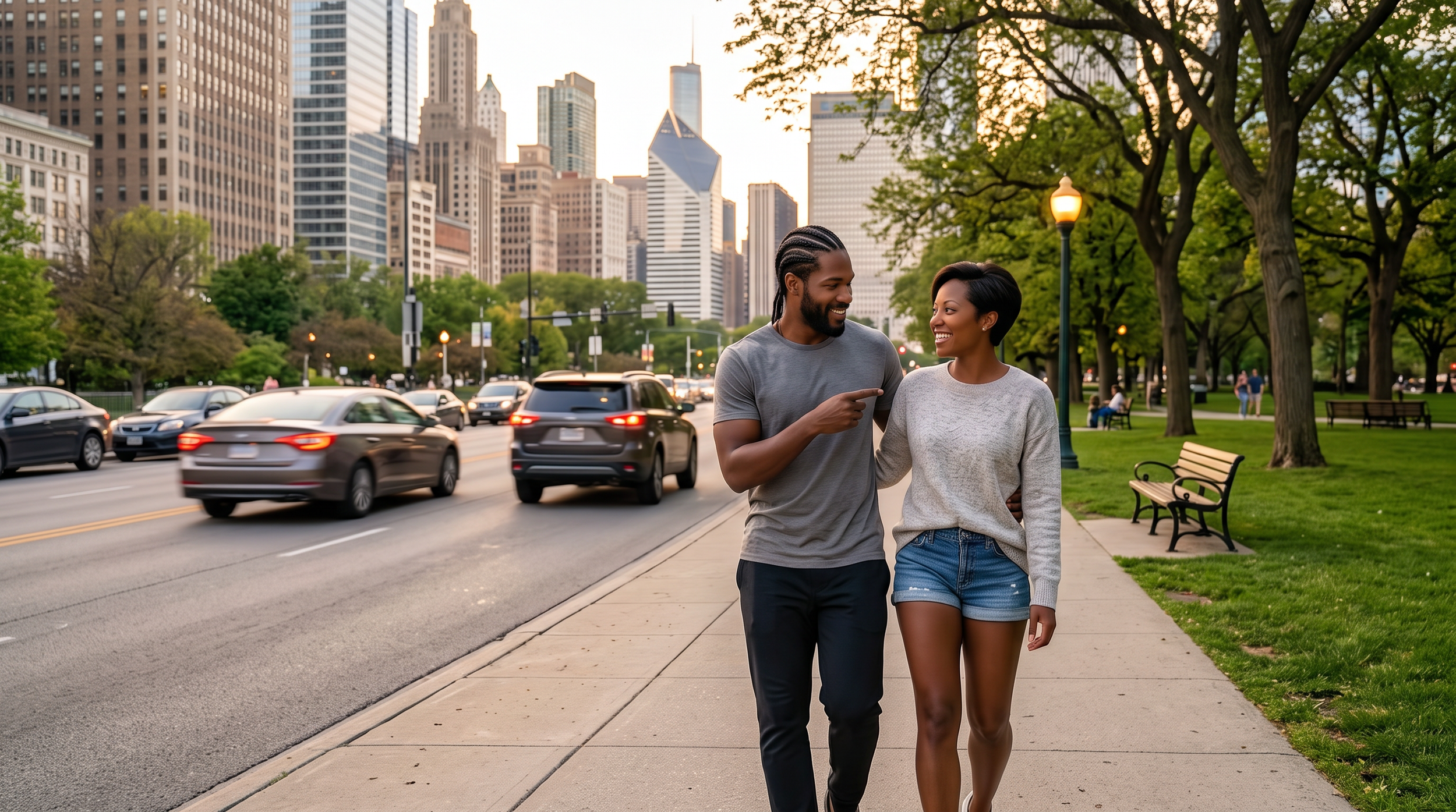
Spirit and Dom, from SlowBurnLove.com series, walk together along a tree-lined city streets, illustrating "The Weight of Being a Human Woman, Then Being Black On Top of It," a SlowBurnLove.com blog post on womanhood, Black identity, and community accountability in relationships.
Today's blog is going to read more like a rant than a social commentary. If you don't want to hear about the troubles of being a human woman, added to being Black, this one is not for you. My energy has been low most of the day. It spikes around 9:30 pm and will dip again by 10:44 pm and since this is a weekly blog and Sunday is my release day, this is what everyone is going to get.
As I sit here writing, I'm slowly recovering from severe pelvic floor pain after an hour long walk today. That pain shows up maybe four times a year. It's excruciating and so random that doctors don't know what to do about it. It usually follows a workout, and feels like labor, like a baby trying to come out of me. It only lasts five to ten minutes but puts me down for the rest of the day. As a 54-year-old women you think in your head the troubles of being a woman should be over, however you are just introduced to a new chapter of what it means existing in a female body.
I don't want this blog to only focus on my pain, but the complicated physical realities of being a human woman are real. Monthly cycles. The social difficulties that come with that, like swimming, the clothes you wear on your cycle, the products you use. Birth control, where some of the pharmaceutical products sold to us have been shown over time to be chemically unsafe, some linked to brain cancer. Breast cancer and ovarian cancer, where the government has spent the past twenty years acknowledging a lack of real investment in curing them. Pregnancy, and the struggle of the before and after, physically and psychologically. In this political era, some states won't allow abortions, and women have actually died because of that lack of care. And you don't get much of a break as you get older. Perimenopause, menopause, hormonal care, something that should have been on the table for women decades ago. The current science around it is genuinely helpful but keeping that support in place under this administration feels dark and uncertain.
When I hear men tell their daughters "you are the prize,"as an older woman, it carries a different weight now. It's about what a woman's body can do for a man, and how easily she can be used up if she isn't careful. I pray my sons and others of the younger generation understand and appreciate this. Women, by nature, don't age the same way physically, and stress can visibly age a woman faster. I've asked myself why I didn't just choose to be a man in this life. As a man it seems all you have to do is get a job, grow a beard, take Viagra if you need it, and pray you keep your hair through your fifties. Even if you don't, at least in my generation, a bald head reads as sexy. How much you attract "the prize" often comes down to what's in your pocket – especially it seems with this younger generation - and after fifty four years of living this life, I understand why. Love matters, but caring for a woman costs something. Acknowledging that a man should be able to care for a woman not just financially but physically and emotionally – understanding her needs – I don’t think translated well for my generation, Generation X. I think we treated too many of our male counterparts like our "homies", that we could do whatever they could and stopped reminding them that we are still women who need to be cared for as women and require different needs. I believe part of this current divide in GENX and what we have taught millennials is men think they are "the prize" and do very little to keep a good woman. We as women have possibly failed to teach the men that being a human woman is a lot more difficult and takes real effort and work to maintain our persons. I however have hope, as it seems some millennials and Gen Z are trying to correct that toxic pattern.
On my walk today, I intentionally reminded two young couples that passed me that the woman should walk on the inside of the street, on the protected side. Some men apparently weren't raised to think that way. But maybe some men are simply wired differently for relationships, that their care for women is superficial. Misogyny is a real thing in our environment as is misogynoir.
As women we need to safeguard ourselves of this fact and use discernment when we offer allow our male counterparts into our complicated and beautiful womanverse.
Black hair, perms, hot combs, braids, sensitive scalps, bonnets. This was supposed to be most of this week's post, honestly, the durag and bonnet discourse and how some HBCUs are trying to keep students from wearing them to class. There's also the ongoing conversation about being "the only one in the room" and how carefully you have to move through that. I read a post today about a Black woman who was having an epileptic seizure in front of her white friends, and instead of helping her, they assaulted her. It turns out she was pregnant, has since had the baby this August, and is now deciding to press charges against the women involved.
There's a broader conversation happening too, about how white friends will disappoint you, use the N word with the hard R, say harmful things, and then when you try to correct them, write off your reaction as "playing the victim."
A few years back I found myself in an uncomfortable situation where the roles were reversed. I was eating with a group of friends, mostly Black, and had invited a white friend along. She's someone with a level of prestige in the community who has told me she wants to help the Black community because she understands her privilege. But in the very beginning, instead of receiving her, she was verbally attacked by one of the Black guests. I was shocked at the level of vitriol directed at her, especially since I had invited her specifically because of how she might wanted to help the community. I felt shame in that moment and apologized on that person's behalf, and I'm sure it has strained the relationship going forward.
I'll admit I felt a kind of "payback" later, when she read one of my books and commented as though she didn't think I'd know what the word "chyron" meant, as if that word hadn't been all over the coverage of the Rodney King and OJ Simpson trials. That moment made me stop and ask myself something honest. Is this just me accepting a friend's blind spots about the Black experience, or is she quietly associating my Blackness with a lack of vocabulary? I do use AI for editing, so I gave her the benefit of the doubt on that one. But there have been other moments, with her and with other white friends, where comments crossed from careless into something closer to unsafe. Currently living through the Project 2025 era as a Black person makes you more alert to your surroundings, especially living in a majority white, conservative community. The everyday macro and microaggressions never really stop. You're always managing them.
Here are my five things I'd offer to anyone navigating microaggressions in cross-racial friendships, from either side of it.
Name it plainly and early, before resentment builds. A simple "that sounded wrong, and here's why" is more useful than silence.
Give the benefit of the doubt once, but watch for a pattern. One clumsy comment is human. A pattern is information.
Don't perform forgiveness you don't feel. Real accountability requires honesty, not a quick smoothing over for the sake of comfort.
Ask for specifics instead of generalities. "Help me understand what you meant" gets further than a blanket accusation or a blanket denial.
Protect your peace without cutting people off automatically. Distance is allowed. It doesn't always have to be permanent, but it also doesn't have to be earned back quickly.