On November 16, NewsOne published a piece by Dr. Stacey Patton with a title that says it all, it is not a flex to keep saying Black women are saving democracy. About 93 percent of Black women backed Democrats this year but a lot of us are tired, and we are tired of the same things. Being thanked for our labor is not the same as holding power, and the rest of the week proved it.
Incrementalism, Jeffries, and Performance
Last Thursday, Congresswoman Ayanna Pressley told the House that "incrementalism is a recipe for failure" and that Democrats cannot let money and special interests dictate their fight. A petition to draft her for speaker took off. Then on Wednesday, House Democrats overwhelmingly nominated Hakeem Jeffries for speaker, putting him on track to be the first Black speaker in history. Pressley said she does not want the job and plans to work with him on a reparative justice agenda.
And that was disappointing.
Black women should not be on call for every leadership fight, and if incrementalism is a recipe for failure, then lining up behind a House leader detrimental to the cause is hard to explain. Jeffries does what AIPAC wants and his support for Israel coming before the needs of the people who put him in power is highly problematic and his allyship going forward I think will only be performative.
Performing liberal and left-leaning politics online is easy. Saying the right words and posting the right graphics, while backing corporate interests over the individual people those words are supposed to protect - we need to call that out. Some of the loudest cheerleaders are Black too, and every time we applaud a performance, we teach leaders that talk is enough.
Applause is not policy, and it does not provide the results needed that change people's lives.
None of this is new, and it connects directly to what Pressley called out. Incrementalism and performance have always asked Black women to wait. Susan B. Anthony's fight for women's rights did not extend equally to women of color, and she opposed the Fifteenth Amendment because it gave Black men the vote while leaving women out. In 1913, suffrage organizers asked Black women to march at the back of the Washington parade, and even after the Nineteenth Amendment passed in 1920, many Black women in the South could not vote until 1965.
The pattern continued for decades. The white feminist movement ignored racism, and leaders of the civil rights and Black liberation movements often pushed women to the side. In the 1970s, Black women formed groups like the Combahee River Collective because they had nowhere to turn. Then in 2008, Gloria Steinem wrote that gender is probably the most restricting force in American life, a line many Black women heard as putting race second. The performance was sisterhood, and the policy was wait your turn. Progress came in stages, with Black women placed last.
Where Are the Men Who Show Up?
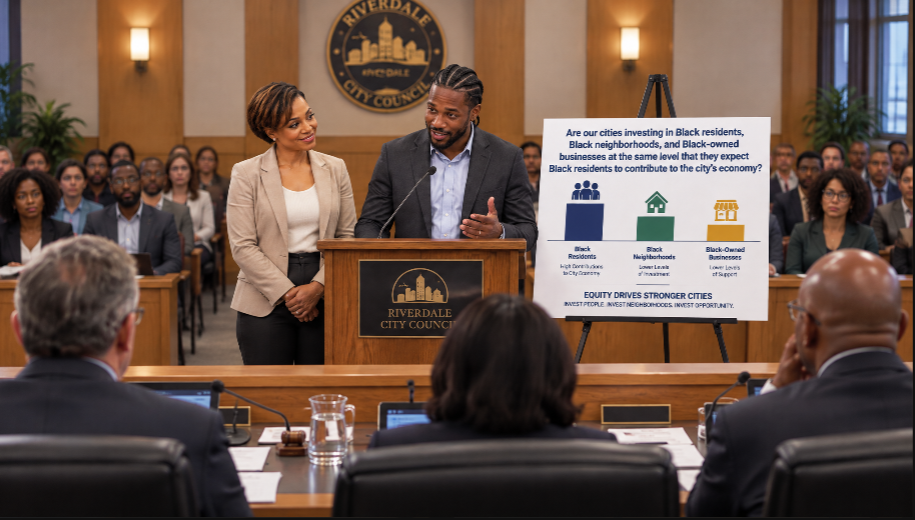
An online content creator posted this week that he is tired of watching Black men complain about everything wrong in our communities while refusing to show up where decisions get made, at city council meetings, county commission hearings, and town halls. He asked where the Black men with a backbone and a voice are. And I understand the frustration, because everywhere I look I see Black women organizing and speaking up and not enough of our men participating alongside them.
Shonique Williams an online presence and Democratic candidate who ran for California's 41st Congressional District in 2026 delivers blunt presentations in city hall is what showing up for community looks like. To be fair, not every Black man is on the couch -at all - and I know many who are in the room. But complaining while doing nothing moves nothing but your mouth.
We need more of you to show up.
Six Ways We Can Strengthen Our Community
• Show up where decisions get made. Put city council, county commission, and school board meetings on your calendar. Sign up to speak. Decision makers notice who keeps coming back.
• Use your platform for real information. If people follow you, share meeting dates, bill numbers, and how to take action. Educating and mobilizing followers is the bare minimum, and it works.
• Hold leaders accountable no matter their race or party. A Black face or a blue label is not a policy. Ask what they will fund, vote for, and protect, and keep asking long after election night.
• Pour into local organizations. Give your time and money to groups working in your own neighborhood, from tenant associations to youth programs, and not only to national names that fundraise every cycle.
• Mentor the next generation. Teach young people how a budget meeting works, how to read a ballot, and how to ask a hard question of someone in power.
• Share the load so nobody burns out. Black women cannot keep carrying the movement alone. Men, elders, and younger organizers all need to pick up part of the weight.
What I Saw About Black Love
That same online content creator who posted that he is tired of watching Black men complain about everything online also posted that he was offended when a white woman asked why he only dates Black women. I also came across a post from a Black man saying Black women do not hate Black men, they hate the lies and the behavior.
I think the two posts are connected, because the Black men woman laud and how they praise them, the ones we excuse, and those we hold accountable in love shapes our community as much as anything we do at city hall.
And some of those women - white women in particular - pedestalize Black men. They praise the image and excuse bad and egoistical behavior and in romantic and community relationships, that can enable a whole community of Black men with a lack of accountability. Admiration is not the same as support. A partner who supports you tells you the truth. A partner who idolizes your image applauds you, and our community pays the bill. This is about behavior, not about who anyone is allowed to love. The goal is for Black men - no matter who they love - and Black women to build something better with each other within the community, and for everyone who loves us to help instead of enable.
Five Ways Black Men Can Tell Support From Idolization
• Invite correction. Tell your partner you want to be held accountable, and pay attention to whether she is able to do it. A person who only ever says you are amazing is not helping you grow.
• Name the pedestal. When praise replaces honesty, say "I need a partner, not a fan." Saying it out loud gives her a chance to change and shows you what she does with it.
• Stop using her approval as a shield. Her praise is not proof you are a good man, and it is not an answer to Black women who hold you accountable. Listen to the people who knew you before the applause.
• Be the same man in every room. Show up at home and at city hall, apologize when you are wrong, and follow through. Accountability that only appears when people are watching is performance.
• Answer questions about your dating choices calmly. Explain who you love without putting down Black women to do it. You can defend your choices without tearing down a community that raised you.
Five Ways Black Women Can Call This Out Without Becoming the Enemy
• Call out the behavior, not the person. Say "pedestalizing" and "lack of accountability" instead of attacking individuals. People can change behavior, but they will fight you over their identity.
• Speak from your experience. Use "I" statements and specific examples so nobody can say you are lumping everyone together.
• Bring context. Link the post, name the pattern, and share a little history so people can see it is not personal and it did not start today.
• Invite everyone in. Ask Black men and the women who love them what accountability looks like, and let them answer. A question opens the door that a lecture closes.
• Say what you are for. Celebrate the Black men and couples who model honest, accountable love, so you are known for building and not only for critiquing.
We Are Each Other's Best Chance
This week reminded me that the same thing is needed in Congress, at city hall, and at home. Accountability. Whether it is a leader who talks left and votes with donors or a partner who is adored and never challenged, applause without accountability leaves the community worse off. Love, like politics, needs people who will tell the truth and stay in the room.
We are not each other's enemies. We are each other's best chance. If Black men show up with backbone and Black women are allowed to rest, if we correct each other with care and celebrate each other with joy, we will build both a stronger community and a deeper love.
So here is my question for you this week. Where are you applauding when you should be asking for accountability?
With love, honesty, and a whole lot of slow burn,
Until next time,
Melissa
Slow Burn Love
Disclaimer: The content on Slow Burn Love is for informational and educational purposes only and does not substitute for professional medical advice, diagnosis, or treatment. Always seek the advice of a physician or qualified mental health provider with any questions you may have regarding a medical or psychological condition. If you are in a crisis, please reach out to a local emergency service or a crisis hotline immediately.