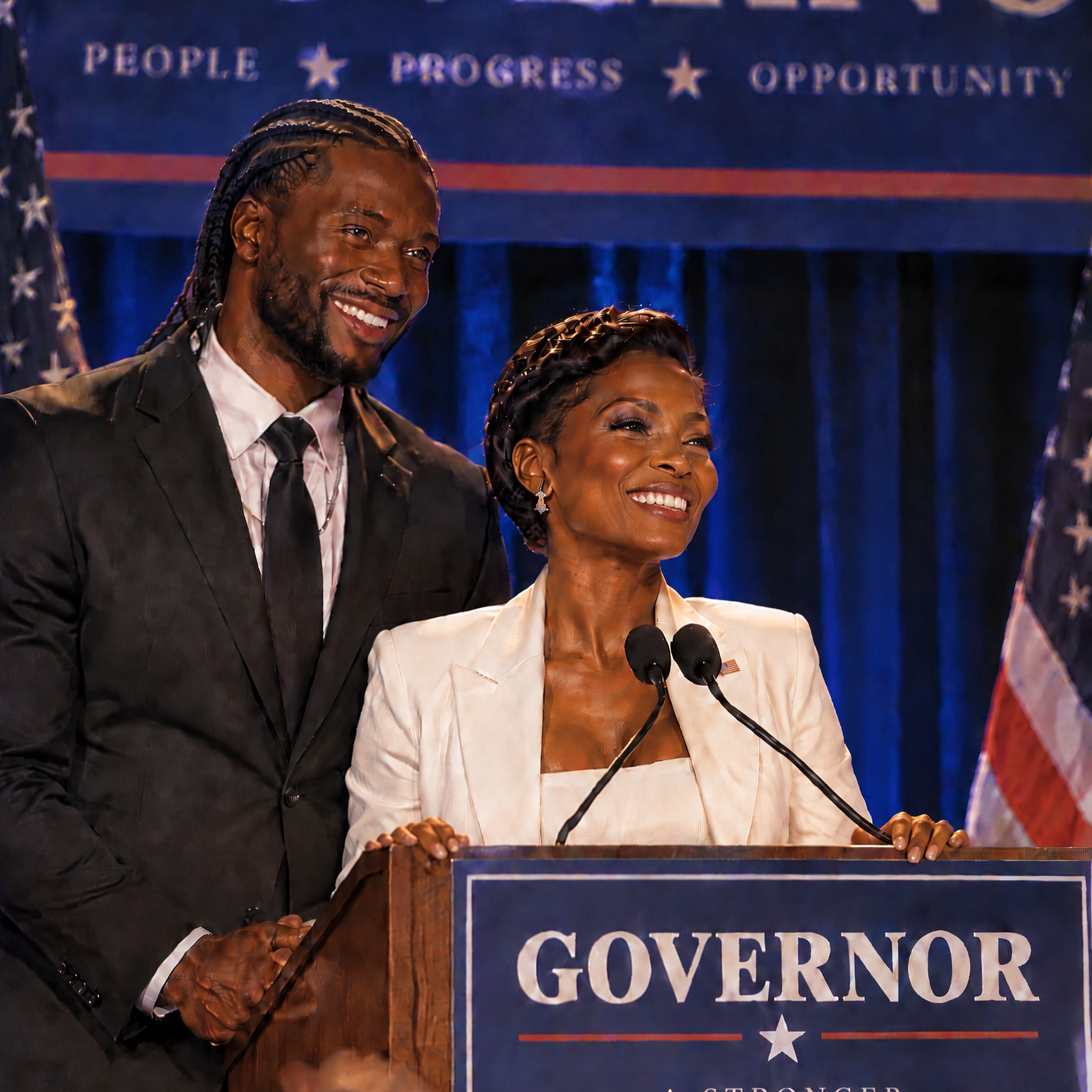
Last week I wrote about the Blue Wave and the exhale. This week, the exhale met reality. The celebration settled, and the real conversations started in our group chats, barbershops, churches, and kitchens. Black women carried Democrats to a historic night, and by midweek a lot of us were asking a hard question. Who carried us?
Who Showed Up for Whom
Preliminary exit polls show about 93 percent of Black women voted for Democrats, and Georgia elected the first Black woman governor in this country's history.
In Florida, state Representative Angie Nixon ran for the US Senate and lost to Republican Ashley Moody by roughly three points, a far tighter race than the last two Democratic Senate runs there. Moody outraised her by about 3.2 million dollars. And this week Nixon told Don Lemon, "I think people want our labor. They don't want our leadership."
The Democratic committee did not donate to her campaign, and before the election the Congressional Black Caucus leaders pressed House Democrats about how few Black candidates made the party's Red to Blue target list. Black women keep hearing thank you, but we want to hear yes, here is the microphone, and then the funds to cover it.
We hold space in our families, churches, workplaces, parties, and relationships, and we do it so well that people forget it takes effort. When we pour unlimited labor into people or institutions that do not pour back, we are not being loyal. We are teaching them our work is free.
What Pew Told Us About Black Love
On November 12, Pew Research Center released a report on the dating attitudes of single Black adults. About 42 percent of Black adults are single. Among single Black adults who are looking to date, women were much more likely to say they want only a committed relationship, 45 percent compared with 24 percent of men. Men were more likely to say they are open to either a committed relationship or casual dating, 49 percent compared with 37 percent of women. Women were also more likely to rule out someone who earns much less, 42 percent to 18 percent, while men were more likely to say they are single because they are not financially stable enough, 30 percent to 19 percent. What I found most interesting however, forty-two percent of women would not consider a partner who does not vote, compared with 26 percent of men.
I see many Black women asking for commitment and investment, and many Black men carrying real financial pressure and wondering if they are enough. Neither side is heard because neither side is saying it plainly. Here is where each of us can start, with ourselves.
Five Ways Black Men Can Practice Authenticity
1. Get honest about money. Financial stress is real, and Pew found men name it as a reason they are single more often than women do. Learn your numbers, make a plan, and tell your partner the truth instead of hiding behind pride.
2. Say what you want. If you want commitment, say it. If you want to keep things casual, say that too, and say it early. Clarity is respect, and vague intentions cost people time.
3. Learn to name your feelings. Talk to a counselor, a trusted brother, or a mentor. A man who can say "I am hurt" or "I am scared" gives love room to breathe.
4. Do the work nobody applauds. Handle the mental load, show up on time, and follow through. Consistency is what builds trust.
5. Treat your health as part of your love. Sleep, move, and see the doctor. You cannot hold space for anyone while running on empty.
Five Ways Black Women Can Practice Authenticity
1. Practice asking, not just giving. Say what you need before you are exhausted. Asking is vulnerability, and it gives your partner a chance to show up.
2. Set boundaries and keep them. Decide what you will not carry alone, and let your actions match your words. A boundary you never enforce is just a wish.
3. Let yourself be supported. Many of us are fluent in giving and clumsy at receiving. Let someone help you, and do not audit how they do it.
4. Heal what you are carrying. Past hurt, family patterns, and years of being the strong one follow us into love. Therapy, prayer, journaling, or honest friendships can help you separate old pain from the person in front of you.
5. Choose by investment, not potential. Watch what a person does over time. Look for effort that matches your own, in love and in leaders.
The Slow Burn Is Still the Point
This week reminded me that celebrating a win and demanding better can happen in the same breath. We can be proud of Keisha Lance Bottoms and ask why more Black women were not given the resources to win. We can honor Black women's turnout and ask for leadership, not just labor. We can love our partners and still ask them to match our effort.
Holding space is not about holding everything. It is about building places, in politics and at home, where each person is seen, supported, and allowed to put the cape down because someone else is carrying part of the weight. Brothers, grow in honesty and consistency. Sisters, grow in asking and in rest. Together, that is how love lasts.
So here is my question for you this week. Where are you being asked for your labor but not your leadership, and what is one thing you can say out loud, or one boundary you can set, to change that?
Until next time,
Melissa
Slow Burn Love
Disclaimer: The content on Slow Burn Love is for informational and educational purposes only and does not substitute for professional medical advice, diagnosis, or treatment. Always seek the advice of a physician or qualified mental health provider with any questions you may have regarding a medical or psychological condition. If you are in a crisis, please reach out to a local emergency service or a crisis hotline immediately.