
THE GENDER WARS: WTH IS GOING ON BETWEEN BLACK MEN AND BLACK WOMEN
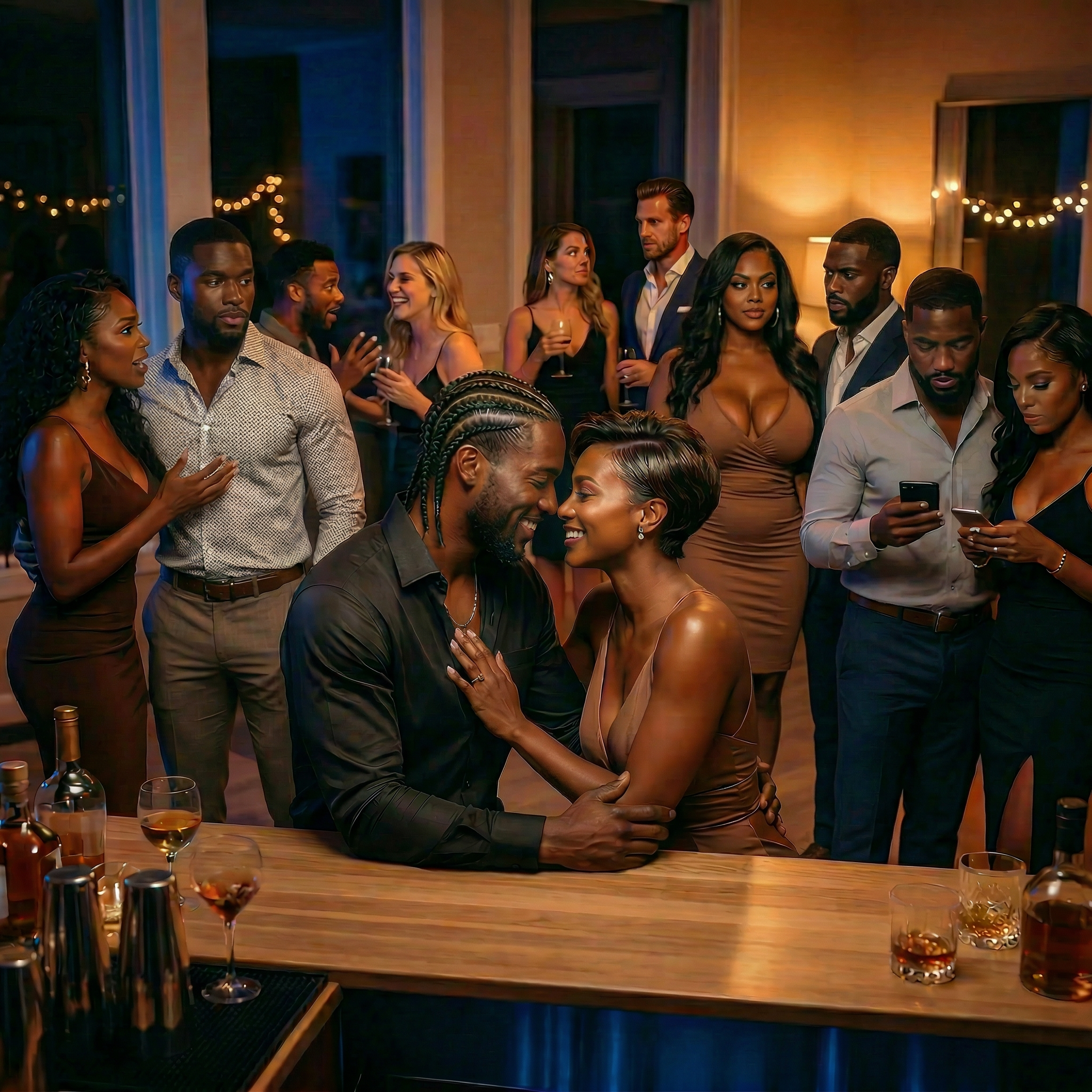
Exploring the complexities of relationships between Black men and Black women. In a world where Black love is tested daily, Spirit and Dom represent something quietly radical - two people who choose to do better, love better, and be better, together. From slowburnlove.com THE GENDER WARS: WTH IS GOING ON BETWEEN BLACK MEN AND BLACK WOMEN 4/05/2026. #blacklove #afrofuturism #SpiritandDom #SlowBurnLove #RomanceNovels #Booklover #BlackAuthors #GenderWars #BreakingCycles #BlackRomance
If you judged us by social media, you'd think Black men and Black women hate each other. But I live in the real world and I know that's a lie. So what the hell is going on?
A Black woman shares her dating standards and suddenly she's "too demanding." A Black man talks about his struggles and immediately becomes a cautionary tale. Someone posts a clip, somebody goes viral, and before sunset there are a hundred response videos and twice as many comments calling each other "broke," "bitter," or "unlovable."
Our timelines are flooded with "Black men vs. Black women" clips, podcasts, and think-pieces that feel more like propaganda than healing conversations.
We are in a gender war. And unlike traditional wars, nobody wins, we just keep shooting at the people we're supposed to love. The "gender war" is really just a race to the bottom, and the collateral damage is the community itself.
How We Got Here
Black men and Black women in America have both been shaped by centuries of systemic harm but in different ways that have never really been processed together. Slavery deliberately dismantled Black families. Jim Crow criminalized Black men. The welfare system financially penalized two-parent Black households. Mass incarceration pulled fathers out of communities on an industrial scale.
Black women stepped up because they had to. They became the backbone. And somewhere in that survival mode, a painful dynamic formed: Black women were praised for their strength and abandoned in their softness. Black men were demonized in the broader culture and then blamed within their own community for the fallout.
The friction we see online stems from unaddressed trauma and societal conditioning - not from the idea that Black men are trash or Black women are impossible. We are all swimming in unhealed trauma, patriarchy, social media clout-chasing, and historic divide-and-conquer tactics. Now everyone is exhausted, guarded, and online which is a terrible combination.
"You cannot heal in the same environment that wounded you. And the comment section is not a therapist."
The Algorithm Problem
Social media is getting paid off our pain. Outrage gets more clicks than love. A video of a Black woman saying "Black men ain’t sh.." gets shared ten times more than a video of a Black couple building something beautiful together. A Black man ranting about "hypergamy" gets ten million views. A Black man quietly showing up for his family? Crickets.
The gender war content machine is built on engagement, and engagement for a lot of social media sites is built on anger. Creators - some of them not even Black, not even American - are getting rich off of Black people's relationship pain. Social media algorithms feed hurting men content that tells them women are the enemy, and vice versa. We are fighting each other over content that was designed to make us fight each other.
Let that sit for a second.
The Honest Part
Both sides have real grievances and real blind spots.
Black women are not wrong that they often carry disproportionate emotional and financial labor in relationships. Their pain is frequently dismissed, their standards questioned, and their accomplishments weaponized against them. "You're too independent" is not a compliment dressed up as a complaint. And we also need to call out something painful: some Black women are so desperate for acceptance that they go along with the abuse co-signing misogynoir, tearing other Black women down – the “pick me” vibes. That is not solidarity. That is self-betrayal.
Black men are not wrong that they are stereotyped as threats, dismissed as emotionally unavailable, and expected to absorb generational pain while performing strength. Many Black boys are taught that softness equals weakness, so they never learn to process shame, fear, or rejection and then project their pain back onto Black women through control, withdrawal, or misogynoir. A lot of Black men are hurting. But unhealed does not mean they should be unaccountable.
The problem is that both sides increasingly choose their most extreme representatives as the face of the other — and then go to war with that caricature instead of the actual person in front of them. These all-or-nothing power struggles are really a clash between the need to be "right" and the deep-seated fear of being hurt again.
So What Do We Do
How do we actually fix it?
Healing these wounds is not a 24-hour news cycle fix. This is a slow burn. But here is where we start:
BLACK MEN
The Commitment to Healing
Commit to professional and spiritual growth. Prioritize therapy, men's groups, and spiritual practices over internet debates.
Practice real accountability. Engage with other men to confront patriarchy and address emotional absence directly.
Stop the digital dumping. Refuse to use podcasts and memes as a substitute for real emotional processing.
Protect through action. Checking your friends and unlearning misogynoir is the true definition of protection.
Build safe harbors. Focus on making your relationships a refuge rather than a war zone.
Redefine strength. Understand that real power is not about winning an argument against a Black woman.
Master your "Under-Feelings". Learn to communicate fear, sadness, and inadequacy instead of defaulting to your "top-feeling" of anger.
BLACK WOMEN
Redefining the Standard
Maintain your high standards. You can choose emotionally available partners without compromising your worth.
Refuse to mother grown men. Real partnership is about mutual maturity rather than taking on the role of a parent.
Believe in the beauty of Black love. Holding your boundaries does not mean giving up on the possibility of a healthy union.
Unfollow the gender war accounts. Protect your peace by removing content designed to spark conflict and division.
Stop feeding your spirit horror stories. Do not let online trauma overshadow the reality of healthy couples thriving offline.
Trust the real world over the screen. Look to the everyday examples of Black love that tell a much more hopeful story.
Address internal wounds. Co-signing content that degrades Black women just to fit in is a sign of a personal hurt that requires healing.